Overview
The Australorp is what you get when practical Australian farmers take the Orpington and ask it to work harder. Developed in the 1910s–20s from Black Orpington imports, it kept the calm temperament and dual-purpose frame but added serious laying power — a good hen gives 240–300 brown eggs a year, and the breed still holds its century-old world record of 364 eggs in a year. Quiet, glossy, and unflustered, it may be the most underrated backyard hen in the world.
Temperament & personality
Calm, tidy, and slightly shy until won over — then quietly devoted, in the Australian sense of standing near you without making a fuss. Australorps rarely bully, rarely panic, and rarely make much noise at all. They are the flock's steady citizens.
Appearance
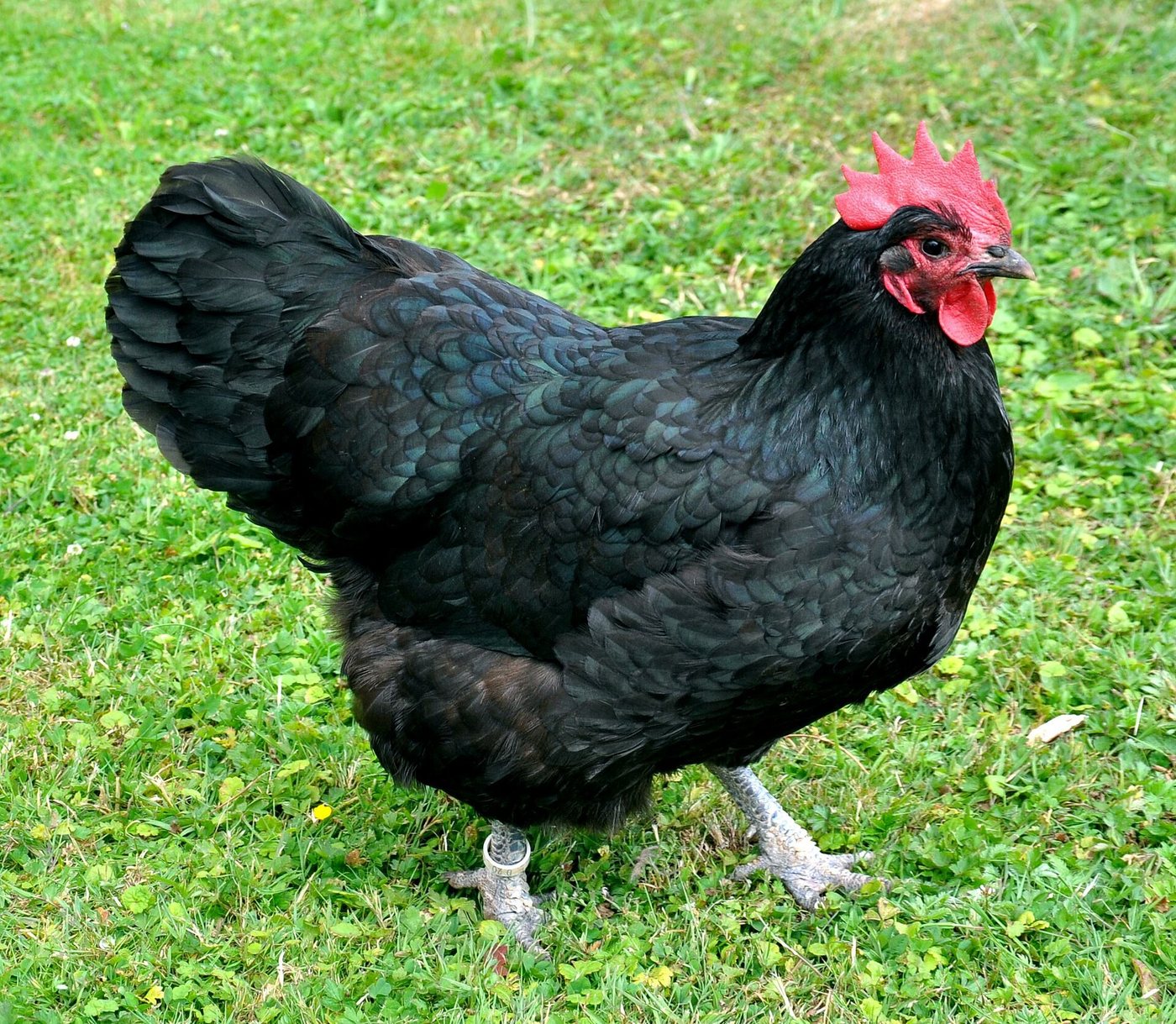
A stately, upright bird in beetle-green-black plumage that shimmers emerald in sunlight (white and blue varieties also exist). Red single comb and wattles contrast with a dark face, black legs, and — the field mark — the soles of the feet are white or pinkish, where the similar Jersey Giant shows yellow. Eyes are dark and prominent, giving an alert, glossy look.
Care & daily life
Undemanding: standard layer rations, room to range (they are keen, tidy foragers), and a dry coop. Their dark plumage absorbs sun, so guarantee shade and cool water in hot spells. Australorps are quiet birds that handle confinement politely, which, with their steady laying, is why they became a backyard institution in Australia and New Zealand. Otherwise, care is the universal list: mite checks, worming awareness, predator-proof nights.
Health & lifespan
The Australorp is generally known for the following health watch-points:
- Heat stress on hot, still days — black plumage absorbs heat; shade and water are essential
- Marek's disease — buy vaccinated stock
- Standard parasite checks: red mite loves a calm, full-feathered bird
- Obesity is uncommon in active birds but possible in confinement
- Reproductive wear in older heavy layers
Living with a Australorp
Australorps suit keepers wanting Orpington calm with better laying and less broodiness, including suburban flocks where quiet matters. They mix well, tolerate children, and live the standard 5–10 years, laying strongly for three or four. A shade-poor pen in a hot climate is their one real mismatch.
History
Australian breeders took imported English Black Orpingtons in the early 1900s and selected hard for utility: more eggs, earlier maturity, tighter feather, no loss of hardiness. The result — 'Australian Orpington', contracted to Australorp — was standardised in the 1920s and promptly set the world laying record of 364 eggs in 365 days, a mark achieved under official trial conditions without artificial light. The breed remains a byword in Australia and New Zealand for the sensible backyard hen.