Overview
If lizards had a golden retriever, it would be the bearded dragon. This flat, spiky Australian desert lizard is diurnal — active in daylight, like its owners — tolerant of handling, endlessly curious about its surroundings, and prone to endearing habits like waving one arm in slow circles. It has become the default first reptile for good reason, provided the keeper understands that 'easy' describes the animal's temperament, not its heating and lighting requirements.
Temperament & personality
Bearded dragons are calm, inquisitive, and notably people-aware: many learn to recognise their keeper, come to the glass at feeding time, and sit contentedly on a lap or shoulder for warmth. Males can be territorial toward other males and should be housed alone. 'Glass surfing' (frantic climbing at the walls) usually signals stress, boredom, or a setup problem rather than play — treat it as a message to check the enclosure.
Appearance
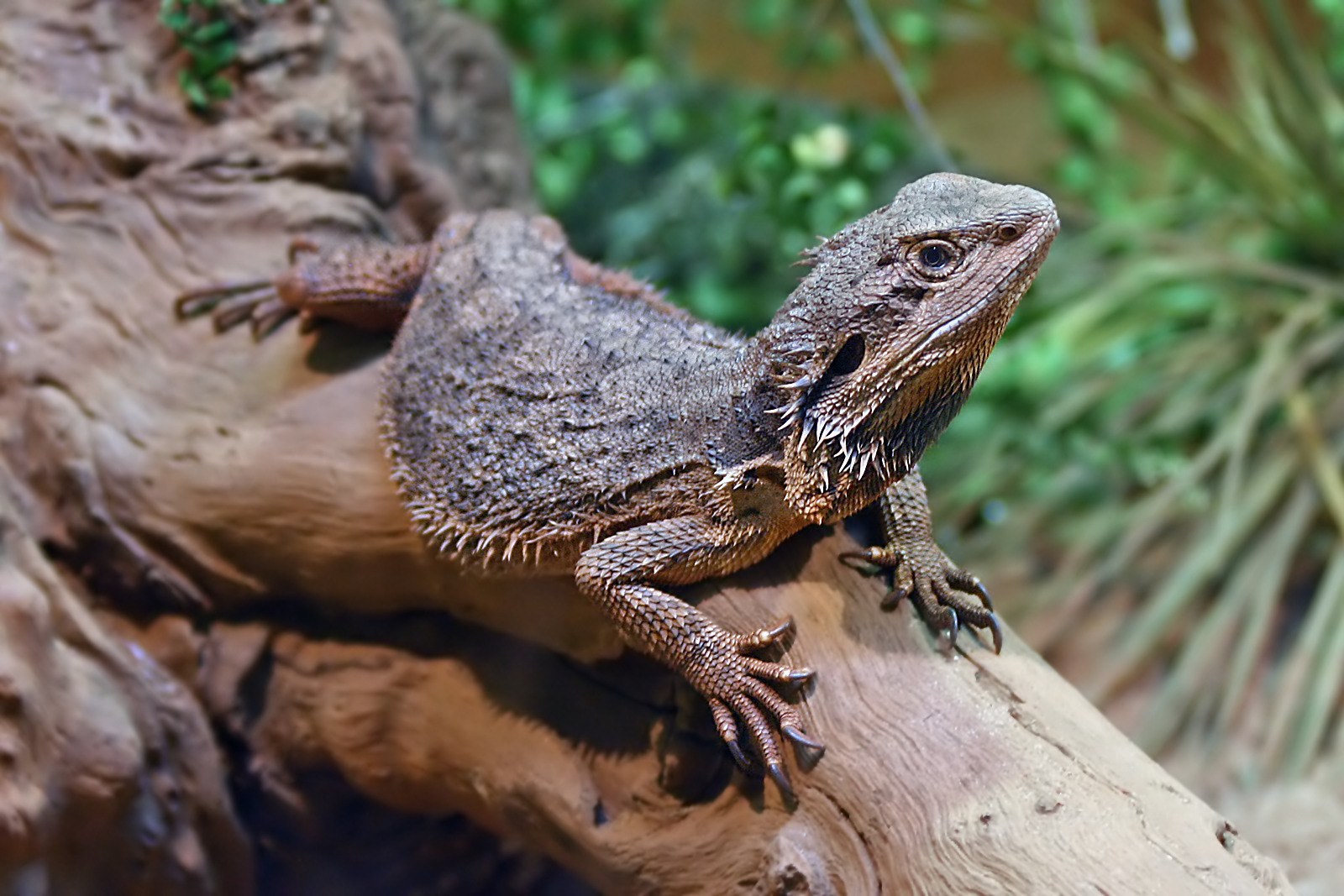
A broad, flattened lizard with a triangular head, rows of spiky scales along its sides and throat (the 'beard'), and rough, sandpapery skin. Wild-type colours run from tan and sandy brown to grey, but decades of captive breeding have produced orange, red, yellow, and near-white morphs, plus leatherback (smooth-scaled) and silkback varieties. When threatened or excited, the beard of spines under the chin puffs out and darkens to black — a display far more bark than bite.
Care & daily life
Bearded dragon care lives and dies by lighting and heat. Provide a proper temperature gradient with a basking spot at 100–110°F and a cool side in the low 80s, plus a high-quality tube UVB light on a 12-hour cycle, replaced on schedule — without UVB the dragon cannot process calcium properly no matter how good the diet is. Feed salads of collard or mustard greens, squash, and other vegetables daily, with live insects (dubia roaches, black soldier fly larvae, crickets) a few times a week for adults and daily for growing juveniles. Dust insects with calcium powder. Keep humidity low, offer a shallow water bowl, and spot-clean daily with a full substrate change on schedule.
Health & lifespan
The Bearded Dragon is generally known for the following health watch-points:
- Metabolic bone disease — soft, deformed bones from insufficient UVB light or calcium; the most common and most preventable dragon illness
- Impaction — gut blockage, usually tied to low temperatures, dehydration, or oversized food rather than substrate alone
- Respiratory infections from enclosures kept too cool or too humid
- Intestinal parasites, common in pet-trade animals — a fecal check at a first vet visit is wise
- Adenovirus ('wasting' disease in young dragons) and yellow fungus disease (CANV) occur in the pet population
Living with a Bearded Dragon
Bearded dragons suit families, first-time reptile keepers, and anyone who wants a lizard that is awake when they are. The honest commitment: a large front-opening enclosure, daily salads, live insect keeping, and lighting that must be right every single day for a decade or more. They are a poor choice if you want a pet you can leave for a week — light timers help, but feeding and checking are daily jobs.
History
All pet bearded dragons descend from animals exported from Australia before the country banned wildlife exports in the 1960s — Pogona vitticeps, the central bearded dragon, is the species behind the entire pet trade. Smuggled breeding stock reached the US and Europe in the 1970s–90s, and selective breeding since then has produced the rainbow of colour morphs sold today. Their placid temperament made them, alongside the leopard gecko, the defining beginner lizard of the modern hobby.