Overview
The chinchilla is the marathon runner of the small-pet list: where a hamster gives you two years, a chinchilla may give you fifteen or more. It is also the most specialised — a high-Andes animal that needs cool dry air, a strict hay-based diet, and dust instead of water. Get those three things right and you have a gentle, long-lived, evening entertainer with the softest fur on Earth. Get them wrong, especially heat and diet, and chinchillas decline fast.
Temperament & personality
Shy, intelligent, and quietly characterful. Chinchillas bond slowly, recognising their people by voice and routine, and express displeasure with impressive range — barks, squeaks, and a stand-offish spray of urine from annoyed females. They are athletes first: parkour off ledges, sideways wall-bounces, and high-speed laps are the nightly show. Affection is offered on chinchilla terms, which makes it feel earned.
Appearance
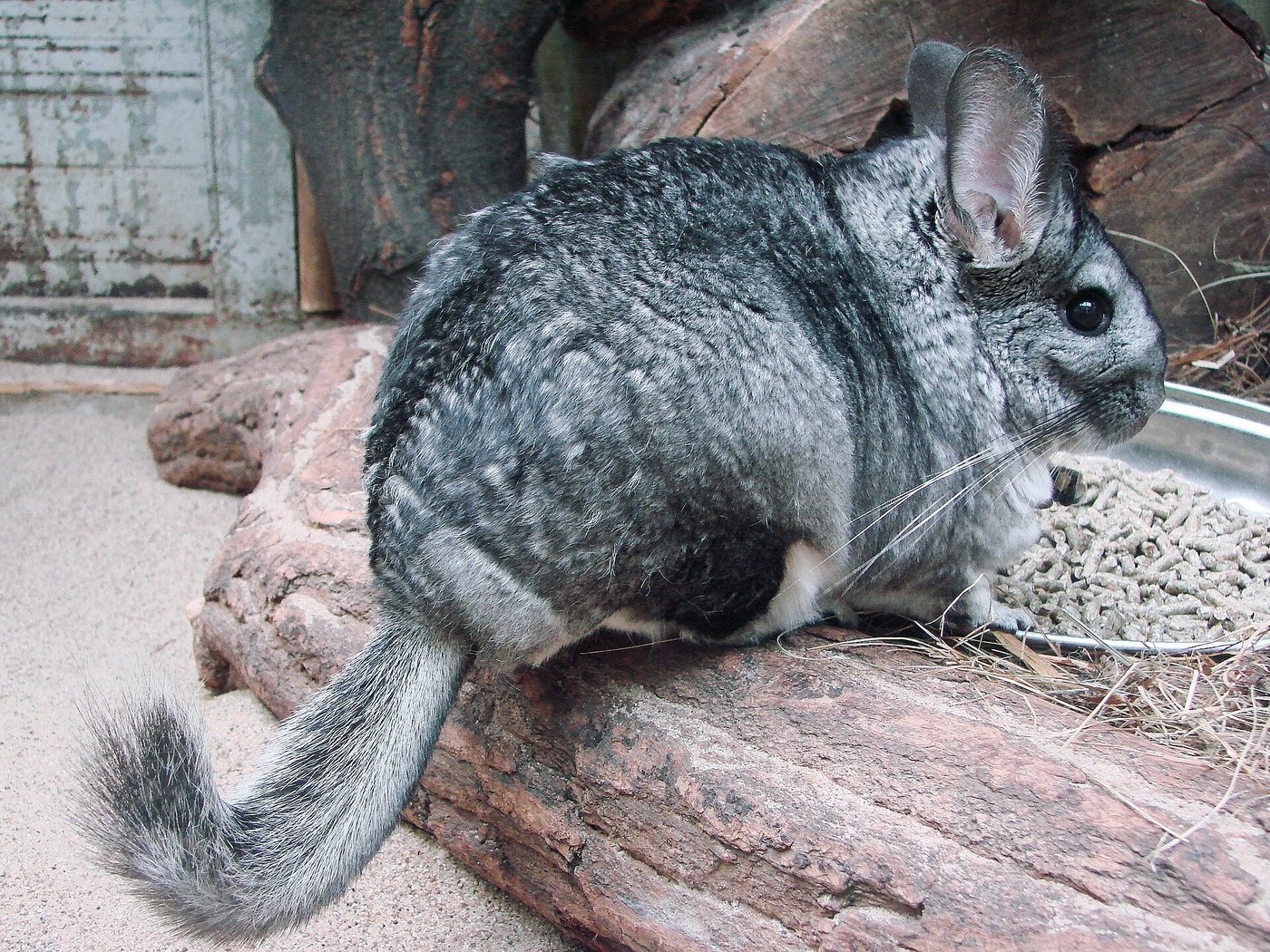
Built like a luxurious squirrel: a rounded body, huge dark eyes, oversized ears, a magnificent fluffy tail carried curled over the back, and the densest fur of any land mammal — up to 80 hairs per follicle, where humans manage one or two. Silver-grey is the standard colour; breeders also produce beige, ebony, violet, sapphire, and white. There are two types: the smaller, rounder mountain (breviloba) type and the larger, longer coastal (lanigera) type most pets descend from.
Care & daily life
Feed a hay-based diet: unlimited timothy or meadow hay, a measured spoon of chinchilla pellets, and almost no treats — a raisin now and then, not fruit-and-nut mixes. Provide dust baths in volcanic ash or fine pumice dust several times a week (never water), a large solid wheel (38 cm / 15 in), wooden ledges and chew sticks to wear down ever-growing teeth. Keep the room cool and dry, handle low and supported — ribs are delicate — and respect the midday sleep: chinchillas are evening animals.
Health & lifespan
The Chinchilla is generally known for the following health watch-points:
- Dental disease — all a chinchilla's teeth grow continuously; misalignment ('slobbers') is the species' biggest health problem
- Heatstroke above ~26°C — a true emergency for an animal that cannot sweat
- Gastrointestinal stasis from low-fibre or sugary diets
- Fur ring in males (hair constricting the penis) — needs regular checks
- Respiratory infections in damp or draughty housing; ringworm in the coat
Living with a Chinchilla
A chinchilla suits a cool, calm household with an evening rhythm — students, night owls, and adults who want a long-lived, mostly quiet companion. It does not suit hot homes without air conditioning, young children (delicate bones, long life), or anyone wanting a cuddly lap pet. The reward is a decade or more of watching a supremely athletic animal bounce off walls at dusk.
History
Named for the Chincha people of the Andes, chinchillas were hunted for centuries for a fur so dense that a single pelt required over a hundred animals. By the early 1900s both wild species were hunted nearly to extinction. In 1923 engineer Mathias Chapman brought 11 long-tailed chinchillas down from the Chilean mountains — enduring a year of gradual descent so the altitude change wouldn't kill them — and founded the breeding stock from which nearly all pet and farmed chinchillas descend. Wild chinchillas remain endangered today.