Overview
The degu is the small rodent that breaks the small-rodent rules: it is awake in the daytime, it talks — chirps, warbles, chatters, and alarm-barks in a repertoire researchers count in the teens — it lives in cheerful colonies, and it can learn its name and its keeper. Native to the Chilean foothills, degus combine a rat's intelligence with a chinchilla's dust-bathing charm. The one law of degu keeping is dietary: evolved on near-sugarless scrub, they develop diabetes and cataracts with shocking ease on ordinary pet treats. Keep the sugar out and the company in, and few small pets give more back.
Temperament & personality
Busy, bright, and companionable. Degus investigate everything, rearrange their cage furniture with conviction, greet their keepers vocally, and stack themselves into sleeping piles with their cage-mates. Taming is a food-and-patience project measured in weeks — hand-fed herbs turn most degus into shoulder-sitters that will groom your fingers and chatter at you. They are markedly calmer and more handleable than hamsters, and their daytime activity makes them unusually rewarding for children old enough to respect the no-treats rule.
Appearance
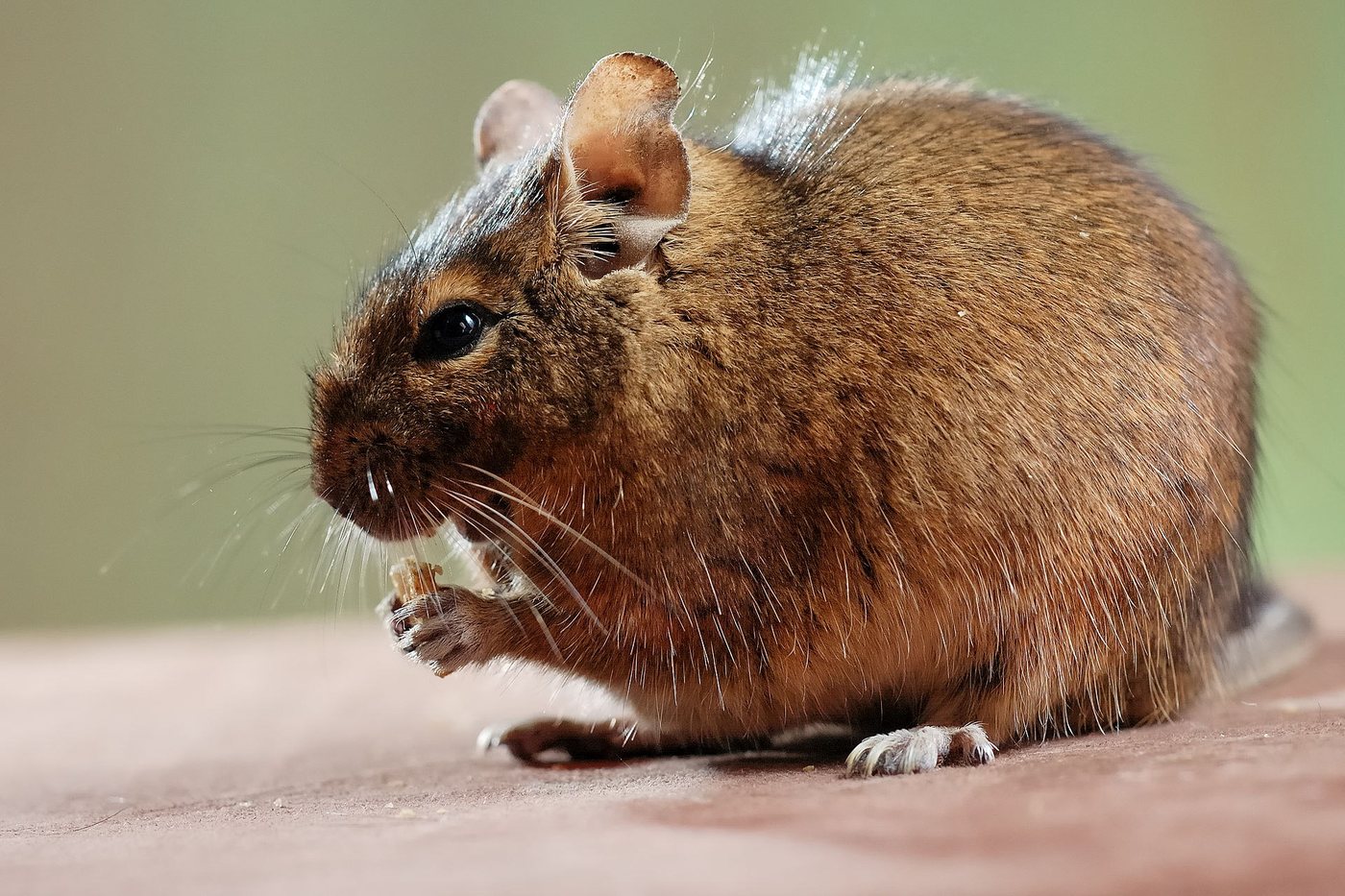
A sturdy, guinea-pig-shaped rodent in agouti-brown fur with a paler belly, largish rounded ears, bright dark eyes, and whiskers in constant motion. The tail — about as long as the body, thinly furred, ending in a small dark tuft — is the giveaway that this is no guinea pig. The teeth and the insides of the mouth are a startling orange-yellow. Adults are compact and surprisingly heavy in the hand for their size, with long hind feet for scrambling over rocks.
Care & daily life
Build the degu home like a small rat habitat with a hay rack: a large, barred, multi-level cage (metal — they chew through plastic) with solid floors, branches and ledges for climbing, a solid-surface exercise wheel of 11–12 inches or more, hide houses, and deep bedding for digging. Diet is the discipline: grass hay freely, a measured ration of degu-specific pellets (molasses-free — read labels, as many 'degu' foods still contain sugars), leafy greens and herbs, and essentially no fruit, no sweet vegetables in quantity, no sugary treats, ever. Provide a dust/sand bath of chinchilla sand several times a week for coat care, and remove it between sessions to keep it clean. Never lift by the tail — degus can shed the tail skin as an escape trick (degloving) and the tail does not regrow. Keep the cage away from direct sun and draughts.
Health & lifespan
The Degu is generally known for the following health watch-points:
- Diabetes and cataracts — the species' defining vulnerability, driven by sugar in the diet (including hidden molasses in feeds)
- Dental disease — continuously growing teeth plus a low-fibre diet is the classic route; hay is prevention
- Tail degloving — never lift by the tail; a degloved tail needs prompt vet care and does not regrow
- Bumblefoot (pododermatitis) on wire floors and in overweight animals
- Respiratory infections in dusty or draughty housing
- Obesity and liver problems on rich, sweet diets
Living with a Degu
Degus suit keepers who want a small pet that is awake when they are, genuinely social (with its own kind and, on its terms, with people), and interactive for 6–8 years — rat-like engagement with a guinea pig's shift pattern. The terms are strict: same-sex degu company, a big chew-proof cage, and a permanently sugar-free kitchen. They are poor pets where children will feed treats unsupervised, or for anyone whose schedule can't include daily interaction.
History
Degus live in the semi-arid scrub of central Chile, on the western foothills of the Andes, where extended family groups maintain burrow systems with sentries, food stores, and elaborate vocal communication — degus have one of the richest vocal repertoires of any rodent, with a dozen-plus distinct calls. Long used in research (their diurnal rhythm and sugar metabolism make them models for diabetes and Alzheimer's studies), they entered the pet trade in recent decades and are still converting keepers who meet them: a rodent awake in the daytime, that talks back.