Overview
Let us be honest first, because this species deserves it: a sugar glider is not a small pet in the way a hamster is a small pet. It is a nocturnal, colony-living, gliding marsupial that can live fifteen years, barks at night, needs a precisely balanced nectar diet, and becomes psychologically unwell if kept alone. For the right owner — experienced, nocturnal, patient — a bonded pair of gliders riding in a shirt pouch is one of the most rewarding sights in exotic keeping. For an impulse buyer, it is one of the commonest rescue stories there is.
Temperament & personality
Intense, social, and theatrical. A bonded glider treats its human as colony: riding in pockets, grooming hair, and crabbing (their chainsaw-like alarm call) at anything startling, while barking — like a tiny dog — to locate everyone at night. Within the colony there is constant touch, shared sleeping pouches, and scent-marking as social glue. Trust is built slowly through pouch time and food, and once built it is total.
Appearance
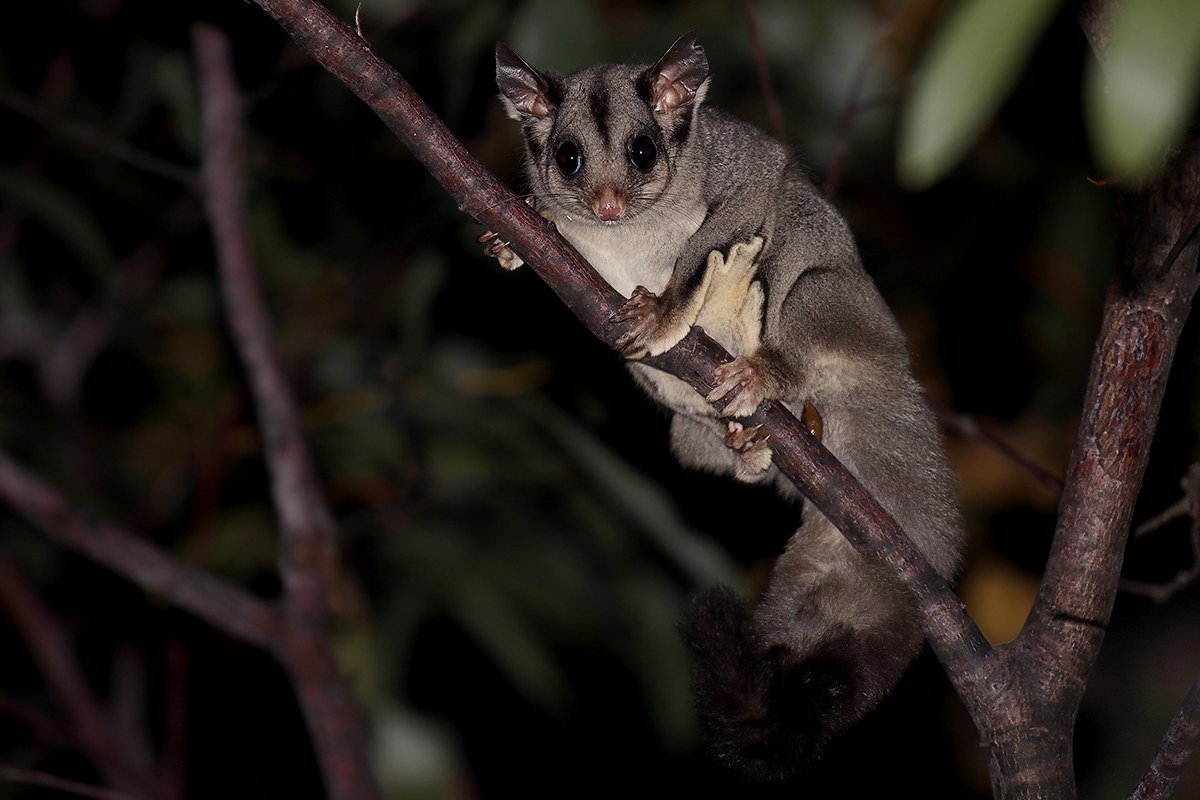
A tiny marsupial built for the night canopy: huge black eyes, large rotating ears, a soft grey-blue coat with a dark stripe down the back, a cream belly, and a long, furred, prehensile-ish tail used as a rudder. The signature feature is the patagium — a membrane of skin stretching from wrist to ankle that turns each glider into a living kite, gliding 50 metres or more between trees in the wild.
Care & daily life
Think in colonies and in years. Keep at least two. Feed an established glider diet (such as BML or HPW nectar mixes) with fruits, vegetables, and insects, and respect the calcium-to-phosphorus ratio religiously — dietary imbalance is the species' biggest killer. Provide a very large tall cage (bigger than the minimum above), a safe wheel, pouches, and branches; let them out nightly in a glider-proofed room or bonding tent. Expect barking at 3 a.m., scent-marking (males have forehead and chest glands), food flung artistically, and a bonding process measured in weeks of carrying them in a pouch against your chest. This is a parrot-scale commitment in a 100-gram body.
Health & lifespan
The Sugar Glider is generally known for the following health watch-points:
- Metabolic bone disease from calcium-deficient diets — the leading preventable killer; causes tremors, weakness, and fractures
- Self-mutilation and depression in gliders kept alone or under-stimulated
- Obesity and dental disease on sugary, fruit-heavy diets
- Hind-leg paralysis associated with severe calcium deficiency and poor diet
- Stress-related illness after rehoming or losing a colony-mate
Living with a Sugar Glider
Gliders suit experienced exotic keepers who are awake in the evenings and at peace with noise, smell, and a decade-long promise. They do not suit children as primary carers, light sleepers, frequent travellers, or anyone who wants a pet that is active when they are. Legality also varies — they are banned in California, Pennsylvania, Hawaii, and Alaska and permit-controlled elsewhere in the US, and heavily restricted in their native Australia, where keeping one generally requires a licence and they cannot be taken from the wild.
History
Sugar gliders (Petaurus breviceps) are marsupials, more closely related to possums than to any rodent on this page. Wild colonies of up to a dozen sleep together in leaf-lined tree hollows across coastal Australia and New Guinea, gliding between eucalyptus trees at night to feed on sap, nectar, pollen, and insects. Exported for the pet trade in the 1990s (largely from Indonesian breeding farms), they became a fad exotic — and then a staple of rescue centres, which is why honest profiles put their commitment level front and centre.