Overview
The blue-and-gold is the macaw of the popular imagination — and everything about it is large: three feet of cobalt and gold, a beak that cracks Brazil nuts, a voice built for rainforest canopy, an intellect and emotional life at the level of a young child, and a lifespan that will likely exceed your mortgage. Among macaws it is considered the most even-tempered and trainable, which has made it the most kept — and, when the reality of a half-century of screaming, chewing, devoted companionship lands, also one of the most surrendered. Both facts belong in the same sentence, always.
Temperament & personality
Blue-and-golds are the Labradors of the macaw world — boisterous, affectionate, clownish, and deeply bonded — with a macaw's full measure of stubbornness and volume. They play hard, cuddle hard, and protest exclusions at full power. Well-raised birds are confident and good-humoured; under-socialised or neglected ones become screamers, biters, and pluckers. They test boundaries like clever children and thrive on training, routine, and being treated as a household member rather than an ornament. The beak is not a weapon by intent, but it is industrial equipment and must be respected.
Appearance
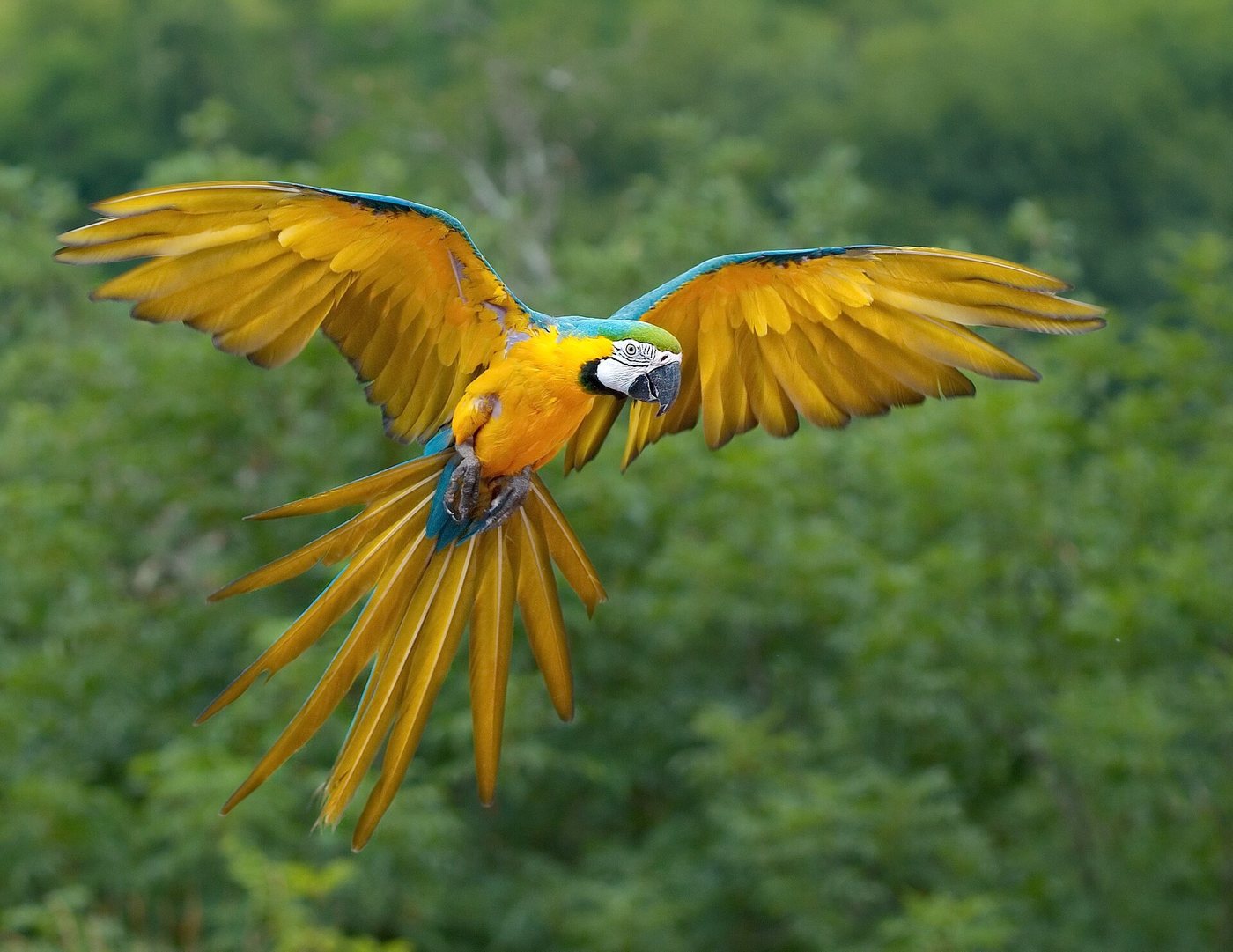
The classic pirate's parrot, and cinema did its homework: sky-blue crown, wings, and back; a golden-yellow chest and belly; greenish tones where the two meet; and a huge pale beak with a black lower mandible. The face is bare white skin ringed with tiny black feather lines, creasing into an expression when the bird is excited. Sexes look alike; at 30–36 inches, much of it tail, this is a bird you measure in feet, not inches.
Care & daily life
Everything is at macaw scale. The cage should be the largest available (about 40 × 30 × 40 inches minimum, bar spacing 1–1.5 inches) and honestly a walk-in aviary or dedicated bird room serves better; add a play stand, ropes, and a constant supply of hardwood to destroy. Several hours out daily, direct social inclusion, training with positive reinforcement, and showers or misting several times a week. Feed a quality large-parrot pellet base with generous vegetables, some fruit, and nuts (walnuts, almonds, macadamias) — macaws need more fat than most parrots. Annual avian-vet checks with bloodwork are standard for a bird expected to live half a century. Decide about noise realistically: the flock call goes through walls, floors, and neighbourly goodwill alike.
Health & lifespan
The Blue-and-Gold Macaw is generally known for the following health watch-points:
- Feather-damaging behaviour (plucking) from boredom, loneliness, or stress — the macaw's commonest welfare problem
- Psittacine beak and feather disease (PBFD) and proventricular dilatation disease (PDD)
- Aspergillosis and other respiratory disease; macaws are also associated with a pulmonary hypersensitivity that their powder can trigger in nearby birds and sensitive people
- Beak overgrowth and malformation, sometimes nutritional in origin
- Atherosclerosis and heart disease in older, sedentary birds on rich diets
- Bacterial infections (including chlamydiosis/psittacosis, which can pass to people)
Living with a Blue-and-Gold Macaw
A blue-and-gold suits a rare household: experienced parrot people, in detached housing, home for much of the day, with a bird room, an avian vet, and a 50-year plan including who takes the bird next. It does not suit apartments, first-time keepers, or anyone whose life will change shape over the coming decades in ways a macaw can't. Sanctuaries are full of macaws bought by people who loved the idea at 30 and met reality at 45 — the bird's longevity is the commitment, stated plainly.
History
Blue-and-gold macaws range from Panama through Colombia, Venezuela, Brazil, and Bolivia to northern Argentina, living in pairs and noisy family parties in forest and palm swamp. They have been traded as companions for centuries — macaw feathers and birds moved along pre-Columbian trade routes across the Americas. Wild populations have thinned under trapping and habitat loss (the species is listed as Least Concern but decreasing), commercial international trade is CITES-controlled, and virtually all legitimate pets today are captive-bred. Their reputation as the 'starter macaw' says more about their relative tractability than about any macaw being a starter bird.