Overview
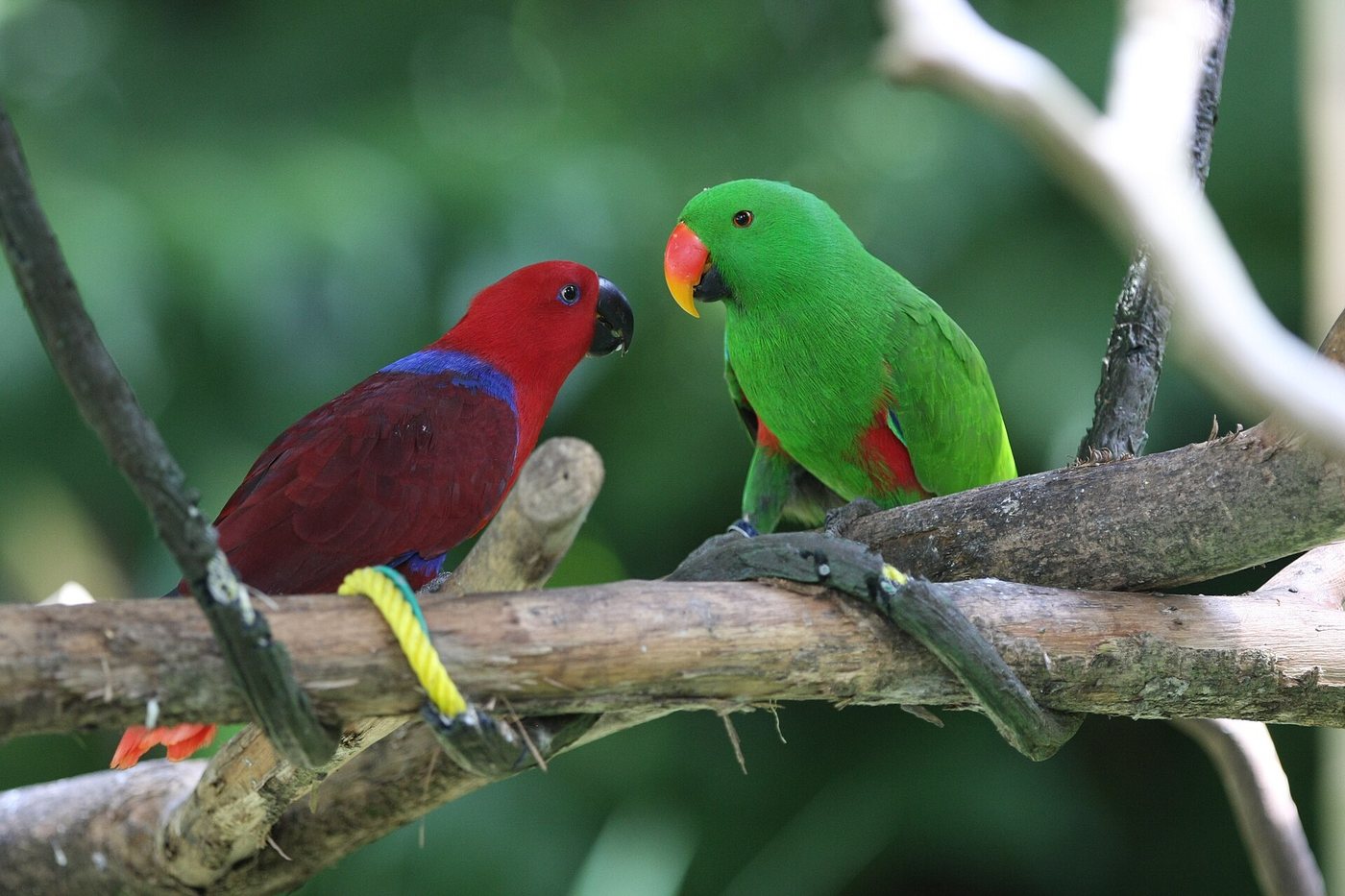
The eclectus is the parrot world's beautiful puzzle: a bird so sexually dimorphic that science filed the green males and scarlet females as different species, with a silky, hair-like plumage and a temperament calmer and more contemplative than most parrots. It is also the species with the most debated diet in aviculture. Eclectus evolved on a fruit-heavy canopy diet, and in captivity they are unusually reactive to artificial vitamins and additives — the standard 'complete pellet and vitamin supplement' regime that suits other parrots can drive their signature toe-tapping and wing-flipping. Keepers who feed fresh, varied food get a serene, long-lived companion; keepers who don't get a puzzle.
Temperament & personality
Eclectus are thinkers. Where a conure ricochets and a macaw performs, an eclectus observes — perched upright, watching the household with an almost regal stillness before deciding to participate. They bond quietly and loyally, can speak in a remarkably clear, gentle voice, and are less beaky-destructive than most parrots of their size. Hens can be determined and territorial around a favoured spot. They unsettle easily with change, favour routine, and are often described by owners as the most 'adult' of the pet parrots.
Appearance
The most dramatically two-tone bird in aviculture: males are brilliant emerald green with red and blue under the wings and a candy-corn orange-yellow beak; females — long mistaken for a separate species — are scarlet and royal purple with a black beak. Both wear a uniquely hair-like, silky feather texture quite unlike other parrots. At about 14 inches they are medium parrots with a notably dignified, upright posture.
Care & daily life
Diet is the eclectus discipline, and it is genuinely different from other parrots. Build the menu on fresh food: a wide spread of vegetables (leafy greens, corn, carrots, capsicum, sprouted seeds and legumes) and moderate fruit, rich in natural vitamin A, with a measured portion of pellets rather than pellets as the whole diet — heavily fortified, artificial-colour-laden diets are the ones keepers most often link to the species' toe-tapping and wing-flipping, so offer uncoloured pellets or a mostly-fresh menu, limited seed, and no vitamin supplements unless an avian vet directs them. Provide a cage around 36 × 24 × 36 inches (bar spacing ¾–1 inch), hours out daily, foraging toys (eclectus are thoughtful rather than destructive chewers), and bathing opportunities — they love water. They are calmer, more observant birds than most parrots and do best in steady households.
Health & lifespan
The Eclectus is generally known for the following health watch-points:
- Toe-tapping and wing-flipping — the species' signature syndrome, most often linked to excess synthetic vitamins/artificial additives in fortified diets; also consider stress and medical causes
- Feather-damaging behaviour, particularly in hens, when diet or hormones are off balance
- Vitamin A imbalance — this species sits on a knife edge: deficiency is harmful, but over-supplementation is a recognised eclectus problem too; natural food sources are the safer route
- Psittacine beak and feather disease (PBFD)
- Fatty liver disease and obesity in sedentary birds on rich diets
- Aspergillosis and respiratory disease in poor air
Living with a Eclectus
An eclectus suits a calm, organised keeper who enjoys the nutritional craft of parrot keeping and wants a long-lived, comparatively quiet, watchful companion rather than a boisterous clown. The 30–50 year horizon, the fresh-food routine, and sensitivity to household upheaval are the terms. They are generally poor fits for chaotic homes, heavy smokers (all parrots are), or owners who want a standard pellet-and-forget feeding regime — this is the species that most punishes autopilot diet.
History
Eclectus parrots inhabit the rainforests of Cape York (Australia), New Guinea, the Solomons, and nearby islands, feeding high in the canopy on fruit, nuts, leaf buds, and blossom — a fruit-rich wild diet behind their unusual captive nutrition. The extreme colour difference between the sexes confused science for decades; the sexes were described as separate species in the 18th–19th centuries. Several subspecies exist (the Solomon Island eclectus is the most common in aviculture). In the wild, females famously defend nest hollows in emergent trees for months at a time, fed by multiple males — one of the most unusual breeding systems of any parrot.