Overview
The sun conure may be the most beautiful small parrot in aviculture — and the most surrendered. Its sunset plumage and puppy-like devotion win hearts in the shop; its voice, engineered by evolution to carry across South American savannas, then tests the household for the next 25–30 years. Everything about keeping this species well flows from respecting both facts at once: a glorious, affectionate, very loud flock animal that needs its people close and its days full.
Temperament & personality
Suns are exuberant extroverts: playful, cuddly, theatrical, and utterly convinced that the flock — you — should be together at all times. They greet, they dance, they demand. The same intensity makes them prone to screaming for contact and to jealousy if excluded. With training, routine, and hours of inclusion, most suns are joyful companions; without them, they become the neighbourhood's loudest grievance. Speech is minimal; personality is maximal.
Appearance
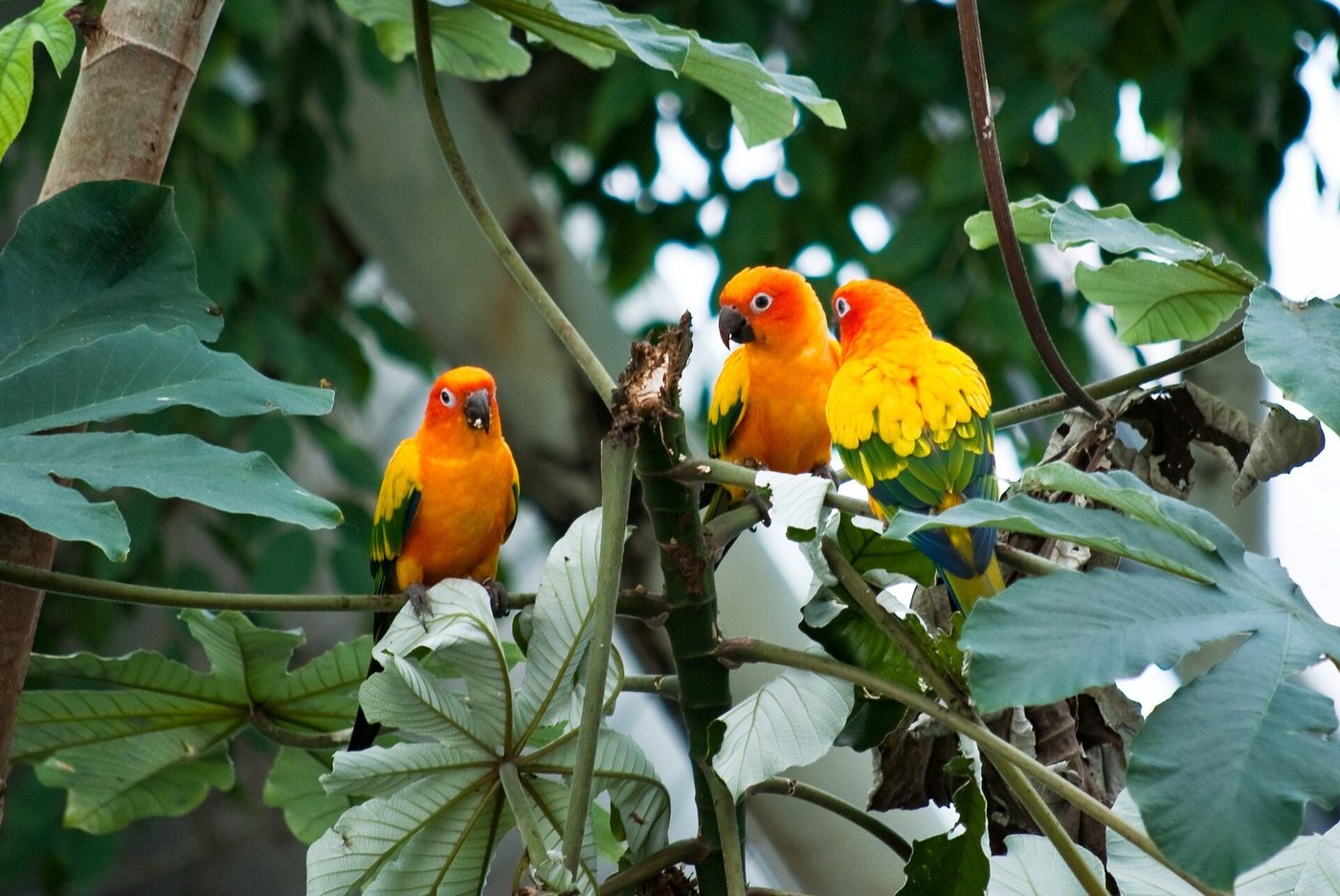
One of the most spectacular small parrots: adults are rich golden-yellow over most of the body, shading to orange on the face and underparts, with green flight feathers and a dark beak. Juveniles start mostly green and colour up over their first two to three years — a young sun conure looks like a different species from its parents.
Care & daily life
Suns need a large cage (at least about 32 × 23 inches, bar spacing ¾ inch), hours out daily, and an endless rotation of destructible wood toys — chewing is a core behaviour, not a vice. Feed pellets with vegetables, fruit, and some nuts and seed. Socialisation and training matter enormously: an unsocialised sun is a screaming, biting sun. The defining care decision is acoustic — this bird's call carries through walls, so housing must be chosen with neighbours honestly in mind.
Health & lifespan
The Sun Conure is generally known for the following health watch-points:
- Feather-damaging behaviour and screaming problems rooted in boredom or loneliness
- Psittacine beak and feather disease (PBFD)
- Proventricular dilatation disease (PDD)
- Aspergillosis and respiratory disease in poor air
- Obesity and fatty liver in sedentary birds on seed-heavy diets
- Chlamydiosis (psittacosis), which can pass to people
Living with a Sun Conure
A sun conure suits a detached house, a parrot-proofed room, and an experienced keeper who is home a lot and genuinely unbothered by noise — the bird will be a loud, adoring, high-energy family member for up to three decades. It emphatically does not suit apartments, shift workers who sleep days, or first-time bird keepers seduced by the colour. More suns are rehomed for noise than for any other reason; honesty before purchase is the whole game.
History
Sun conures come from a relatively small range in northeastern South America — Guyana, Suriname, French Guiana, and adjoining parts of Brazil and Venezuela — where flocks feed in savanna woodlands and make themselves heard over remarkable distances. Heavy trapping for the pet trade and habitat loss have made the species Endangered in the wild; virtually all pet suns today are captive-bred, and buyers should expect breeder paperwork. Their avicultural popularity surged from the 1990s as captive breeding became reliable.