Overview
The umbrella cockatoo is the extreme of the parrot-keeping spectrum: a large white cockatoo from Indonesia whose capacity for affection, theatre, and devotion is matched only by its volume, destructiveness, and emotional neediness. Baby umbrellas are famously cuddly; adult umbrellas are famously the most surrendered parrots in rescue. Both reputations are the same trait — a total, lifelong flock bond — seen at different ages.
Temperament & personality
Umbrellas are theatrical, tender, and intense: they dance, display with crest raised, learn routines, and seek physical closeness with a persistence no other pet bird matches. The same bird may be jealous, possessive of its chosen person, and inconsolable when excluded. They are intelligent problem-solvers who open latches, dismantle cages, and read households expertly. Owners describe the best of them as joyful toddlers and the cost of them as a lifestyle, not a hobby.
Appearance
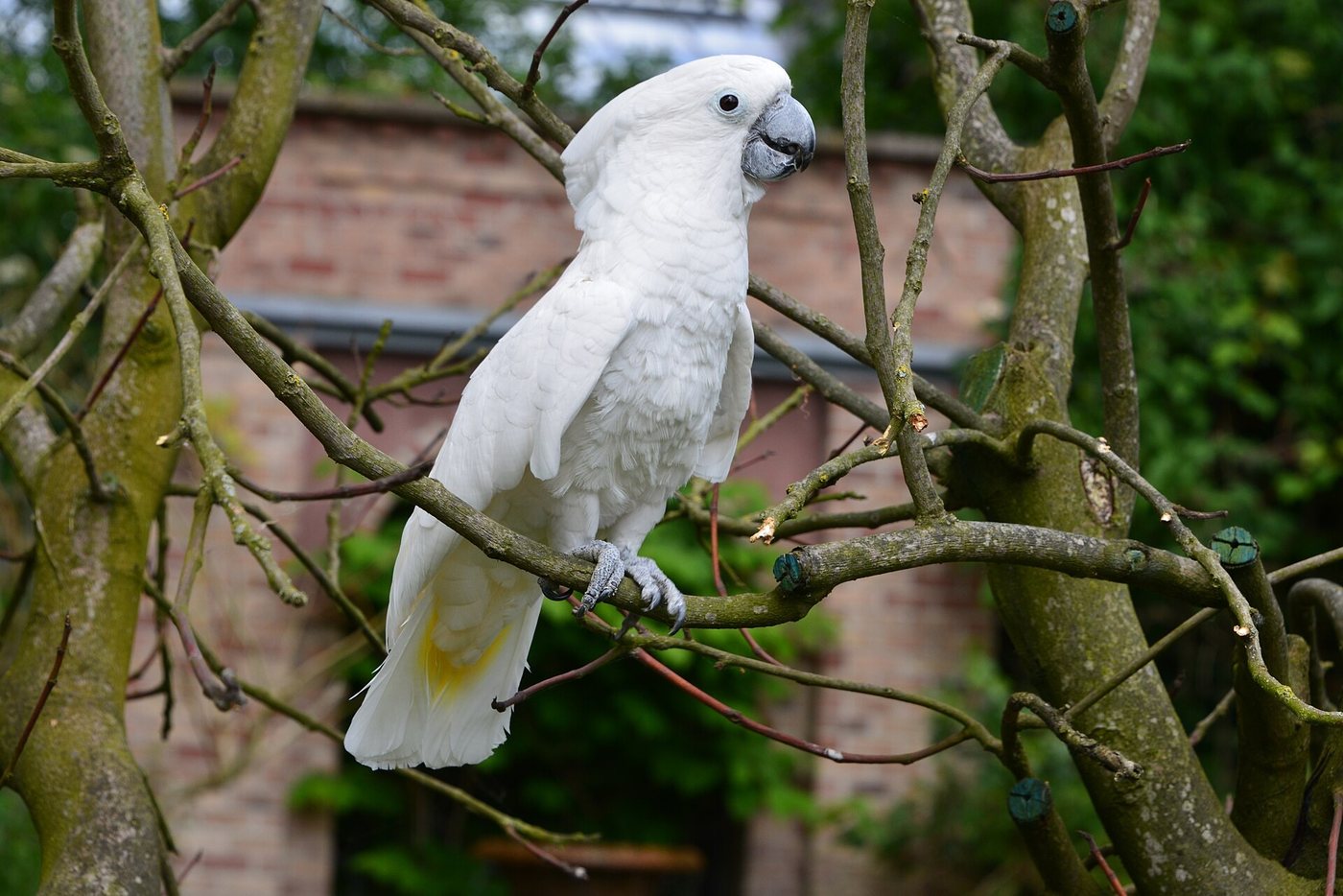
A large, imposing white cockatoo with a broad, expressive crest it raises like a sail, dark grey-black beak and feet, and a wash of pale yellow under the tail and wings. The eyes tell the sexes apart in adults: dark brown to black in males, reddish-brown in females. Juveniles resemble females until maturity.
Care & daily life
An umbrella needs one of the largest cages sold (about 40 × 30 × 40 inches minimum, bar spacing 1–1.5 inches), hours of supervised out time daily, and a mountain of destructible wood — this species' chewing drive dismantles furniture-grade timber for fun. Feed pellets with vegetables, fruit, and nuts. Structure, training, and boundaries are welfare essentials: cockatoos raised as cuddly babies and then denied constant contact as adults are the classic behavioural casualties. Powder down is heavy; bathing and air filtration matter. This bird should only be kept by someone who has planned for a 70-year commitment, including provisions in their will.
Health & lifespan
The Cockatoo (Umbrella) is generally known for the following health watch-points:
- Feather-damaging behaviour and self-mutilation — umbrellas are, sadly, the flagship species for stress plucking and skin-chewing
- Psittacine beak and feather disease (PBFD), to which cockatoos are highly susceptible
- Proventricular dilatation disease (PDD)
- Obesity, fatty liver, and lipomas on rich diets with too little activity
- Cloacal prolapse, associated with overly dependent hand-rearing and sexual frustration in pet birds
- Bacterial and fungal infections linked to stress and environment
Living with a Cockatoo (Umbrella)
An umbrella cockatoo suits almost nobody — and the honesty matters more here than anywhere on this site. The genuine fit is an experienced parrot keeper in a detached home, present most of the day, financially and emotionally equipped for a loud, destructive, devoted companion with the needs of a toddler for 60–70 years, and a written plan for the bird after their own lifetime. Everyone else is better served admiring them in reputable sanctuaries and zoos.
History
Umbrella cockatoos are endemic to the Maluku Islands (the Moluccas) of Indonesia, where they inhabit lowland forests and roost communally. Wild populations are declining under habitat loss and trapping, and the species is listed as Endangered, with international trade restricted. In aviculture they became famous in the late 20th century as the ultimate 'cuddle' parrot — a reputation that filled rescues a decade later, when keepers discovered that the neediness is lifelong. Sanctuaries for surrendered cockatoos now exist largely because of this species.