Overview
The American Wirehair is America's own rare treasure: a hardy, medium-sized cat wearing the only truly wiry coat in the cat world — springy, crimped, and utterly distinctive to the touch. It began as a single spontaneous mutation in a New York farm litter and was developed on the sound, no-nonsense American Shorthair pattern, which shows in its temperament: easygoing, affectionate, playful, and adaptable to almost any household. If you want a genuinely unusual cat that is also one of the healthiest and least demanding breeds alive, look here.
Temperament & personality
Easygoing and companionable, with a playful, slightly clownish streak. Wirehairs bond to the whole family rather than one person, join in games enthusiastically, and are famous purrers. They are active enough to be entertaining and calm enough to be restful — the classic 'just right' temperament — and they tolerate children, other cats, and dogs with minimal fuss.
Appearance
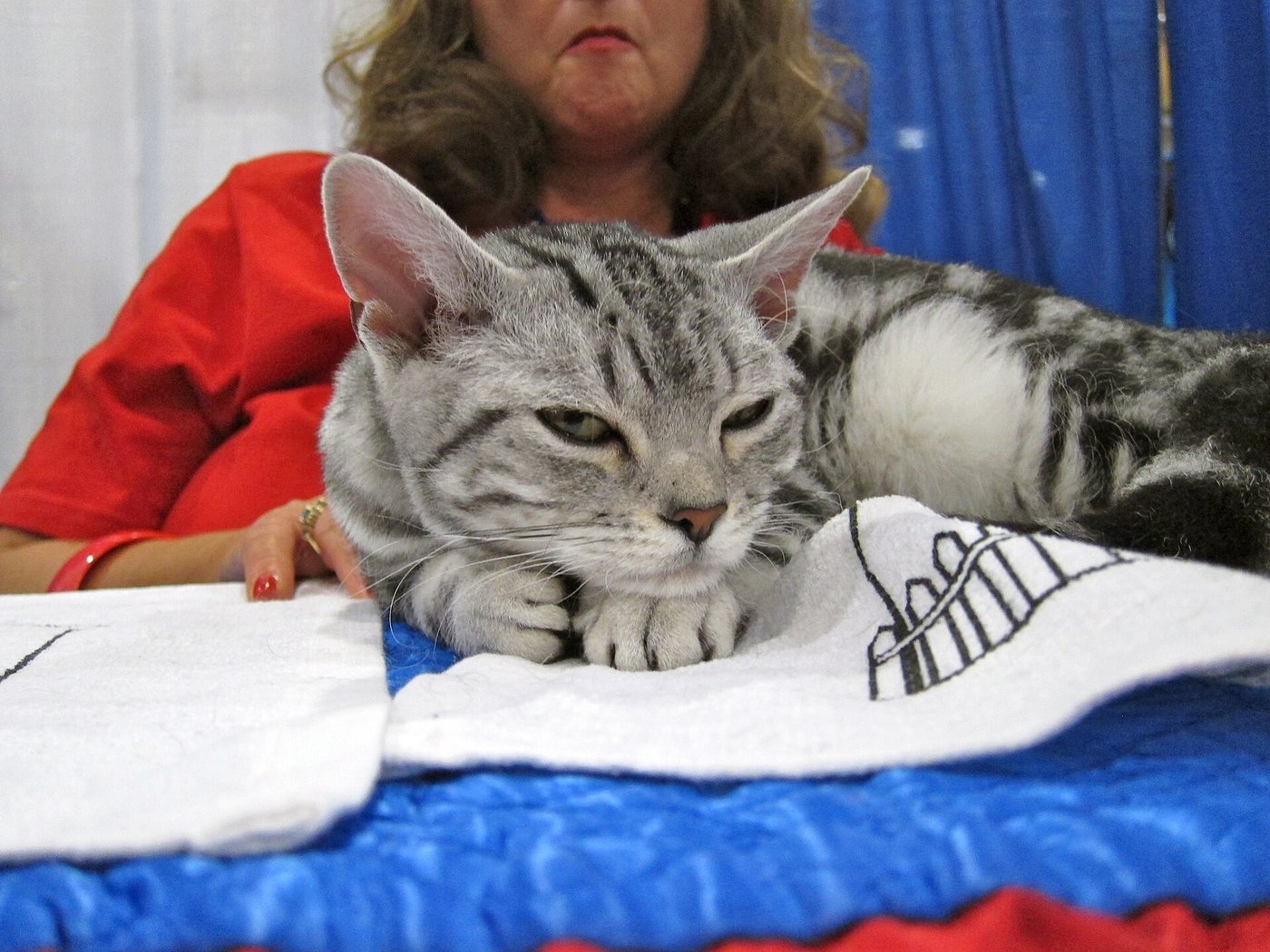
The American Wirehair looks like an American Shorthair that has been gently crimped: a medium, muscular, round-headed cat in which every type of hair — guard, awn, and down — is hooked, bent, or curled, producing a springy, resilient coat often compared to lamb's wool or fine steel wool. Even the whiskers are curly. The coat texture varies between individuals and changes as the cat matures; the best coats feel wiry and elastic rather than merely wavy. All colours and patterns occur.
Care & daily life
The paradox of the Wirehair is that its distinctive coat is best served by leaving it mostly alone: brushing and frequent bathing can damage or straighten the fragile crimped hairs, so groom rarely and gently, and bathe only occasionally or if your vet advises it for a greasier-skinned individual. Otherwise care is standard — weekly play sessions, scratch posts, dental attention, and weight watching. This is one of the lowest-maintenance coats in the pedigree world.
Health & lifespan
The American Wirehair is generally known for the following health watch-points:
- Among the healthiest of all pedigree breeds — no breed-specific inherited diseases are known
- Developed from ordinary farm and domestic cats, and that broad, unselected foundation shows in typical lifespans of 14–18 years
- Some individuals have oilier skin and may need an occasional bath; watch for ordinary feline skin irritation
- The wirehair gene itself is a simple dominant affecting hair structure only — it is not linked to skin or organ disease
- Routine issues only: dental disease, weight management, and the standard senior-cat checks
Living with a American Wirehair
American Wirehairs suit almost any home: families, singles, seniors, apartments. They are sturdy, even-tempered cats of moderate energy who play happily and then settle — a good choice for a first pedigree cat. Keep them indoors, give them ordinary play and scratching provision, and they will ask for little beyond company and a warm place to supervise from.
History
The breed traces to a single kitten born in 1966 on a farm in Verona, in upstate New York, where one red-and-white male in an ordinary litter had a sparse, wiry coat unlike anything seen before. Local breeder Joan O'Shea acquired him — Council Rock Farm Adam of Hi-Fi — and, working with other fanciers, established that the coat was a new dominant mutation and built a breeding programme on American Shorthair lines. CFA granted championship status in 1978. Numbers have never grown large: the American Wirehair remains one of America's rarest breeds, kept by a small circle of devoted breeders.