Overview
If cats had a debating society, the Siamese would chair it. One of the oldest recognised breeds, the Siamese combines striking looks — blue eyes, pointed coat, endless elegance — with the most outgoing personality in the cat world. This is a breed that narrates its day, supervises yours, and forms bonds of almost dog-like intensity. Owners rarely stop at one, and rarely switch breeds afterwards.
Temperament & personality
Affectionate, theatrical, and utterly people-focused. Siamese are intelligent problem-solvers that learn routines, open doors, and insert themselves into every activity from cooking to video calls. They are playful well into old age and thrive on interaction — fetch, puzzle toys, and training all suit them. The trade-off is neediness: a lonely Siamese is a loud, unhappy Siamese.
Appearance
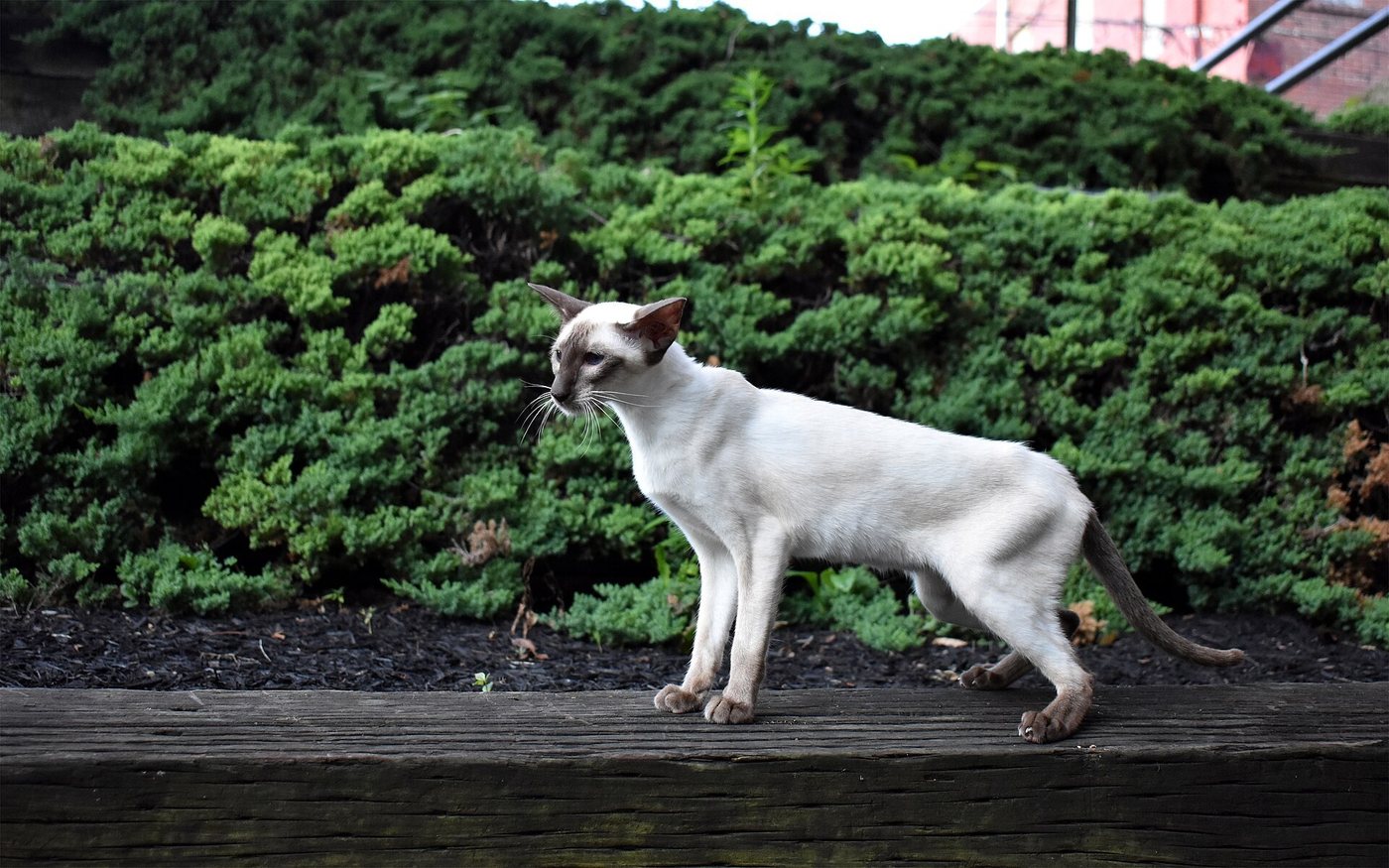
The Siamese is unmistakable: a long, svelte, tubular body on fine legs, a wedge-shaped head with enormous ears, vivid blue almond-shaped eyes, and a short coat shaded in 'points' — darker seal, chocolate, blue, or lilac on the ears, face, paws, and tail against a pale body. Two styles exist: the extreme modern wedge and the rounder, more moderate 'applehead' of the traditional cat. The pointing gene is temperature-sensitive, so Siamese kittens are born white and darken as they grow.
Care & daily life
The short, fine coat needs only a weekly brush or a rub with a damp hand. The real care requirement is company: Siamese bond intensely, hate being left alone, and do best with a companion animal or a human who is home a lot. Give them tall perches, interactive play, and conversation — they will insist on all three. Feed carefully, as the breed's lean frame shows extra weight quickly.
Health & lifespan
The Siamese is generally known for the following health watch-points:
- Progressive retinal atrophy (rdAc PRA) — an inherited blindness found in the breed family; a DNA test exists
- Mediastinal lymphoma — Siamese show a higher rate of this chest cancer, often in younger cats, than most breeds
- Asthma and bronchial disease are reported more often in Siamese than in the general cat population
- Amyloidosis (a protein-deposition disease affecting the liver) occurs in some Siamese lines
- Dental disease and crossed eyes / tail kinks (cosmetic breed-family traits) are also seen
Living with a Siamese
Siamese suit people who want a cat at the centre of household life: chatty, playful, and almost always in the same room as you. They are excellent with other cats and cat-friendly dogs and are happiest in pairs. They are a poor fit for anyone who works long hours away from home or wants an independent, low-key pet.
History
The Siamese is one of the oldest and most storied cat breeds. Pointed cats are described and illustrated in Thailand's Tamra Maew ('Treatise on Cats'), a manuscript tradition dating back centuries, where they were kept in temples and royal households. The first Siamese reached the West in the late 1800s — a pair was given to the British consul-general in Bangkok in 1884 — and the breed caused a sensation at London's Crystal Palace cat show in 1885. The CFA recognised the Siamese in the early 1900s, and selective breeding gradually produced today's two styles: the show wedge and the traditional applehead.