Overview
The Burmilla is the happy accident of the cat world: a breed founded by one unplanned mating between a Chinchilla Persian and a Burmese in 1981, which produced kittens of such beauty — silver coats, green eyes ringed in dark 'eyeliner,' and winning temperaments — that a new breed was inevitable. It keeps the best of both parents: the Burmese love of people and play, softened; the Persian's glamour, without the extreme coat or face. Sociable, mischievous, and still uncommon, the Burmilla is a connoisseur's family cat.
Temperament & personality
Playful, sociable, and gently mischievous. Burmillas stay kittenish well into adulthood, enjoy interactive games and high places, and follow their people with interest — though with less velcro intensity than a full Burmese. They are expressive talkers at moderate volume, get on well with children and other animals, and have a talent for inventing games (and minor trouble) when the household is dull. Owners describe an affectionate clown in a silver evening coat.
Appearance
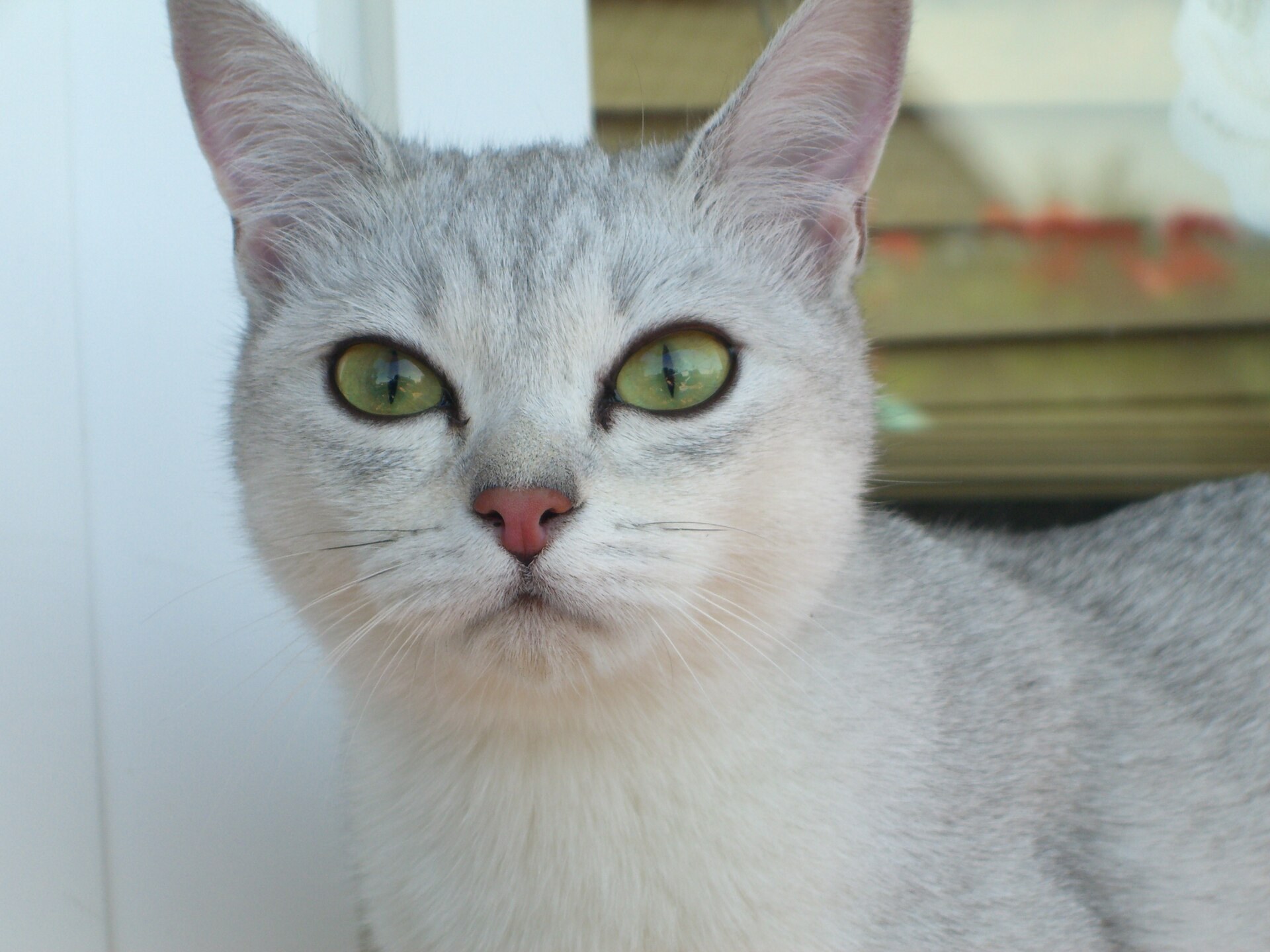
The Burmilla's calling card is its sparkling coat: a pure silver-white undercoat overlaid with delicate darker tipping or shading — black, brown, blue, chocolate, or lilac — that makes the cat seem to shimmer as it moves. The medium, muscular body is carried on legs with characteristically dark barring, and the large green eyes are outlined in dark pigment like eyeliner, above a brick-red nose also rimmed in dark. A longhaired variety, with a softer, flowing version of the same silvered coat, is recognised alongside the shorthair.
Care & daily life
The shorthair coat is easy: a weekly brush keeps it gleaming and removes loose hair; the longhair variety needs two or three sessions a week. Burmillas are athletic, playful cats who need climbing space, interactive toys, and people time — they are social creatures who do poorly if ignored. Add routine dental care, measured meals (they enjoy food), and this is a straightforward breed to keep in excellent shape.
Health & lifespan
The Burmilla is generally known for the following health watch-points:
- Generally healthy, with the hybrid vigour of a young breed built from two unrelated gene pools
- Polycystic kidney disease (PKD) is the key inherited risk, inherited from the Persian side of the pedigree; a DNA test exists and responsible breeders screen all breeding cats
- Allergies — skin and food sensitivities — are reported in the breed more often than average; discuss any family history with the breeder
- No other widespread breed-specific conditions are documented
- Routine priorities: dental care and weight control, as with most sociable, food-loving breeds
Living with a Burmilla
Burmillas are excellent family cats: sociable, playful, and people-focused without the full intensity of the Burmese. They suit households with children and other pets, adapt to apartments given climbing and play opportunities, and are best kept indoors. They want to be involved in household life and can be mischievous when bored, so interactive toys and company are part of the deal. A good all-rounder for owners who want an engaged, affectionate cat of moderate demands.
History
The Burmilla exists because of a cleaner's mistake. In 1981, at the English home of Baroness Miranda von Kirchberg, a Chinchilla Persian named Jemari Sanquist and a lilac Burmese named Bambino Lilac Fabergé were being kept apart pending planned matings to their own kind — until a door was left open between their quarters. The four silver kittens that resulted were so beautiful that von Kirchberg bred from them deliberately, blending 'Burmese' and 'Chinchilla' into a name and a breed. The GCCF and FIFe recognised the Burmilla as it spread through Europe and Australia, and CFA has recognised it in more recent years; it remains a connoisseur's breed, still uncommon in North America.