Overview
The Egyptian Mau ('mau' is simply Egyptian for cat) is a living piece of art history: a naturally spotted athlete descended from Cairo's street cats, with a cheetah-like build, a musical voice, and a famously devoted heart. Elegant, intelligent, and sensitive, the Mau forms intense bonds and brings real athleticism — and the occasional 3 a.m. sprint — to quiet homes.
Temperament & personality
Loyal, bright, and emotionally attuned. Maus learn their people's moods and routines, greet you with chortling conversation, and often select one person as their favorite while tolerating the rest with dignity. They are playful and athletic well into adulthood, cautious with strangers, and sensitive to noise and change. A happy Mau is a clown and a shadow; a bored one will redecorate.
Appearance
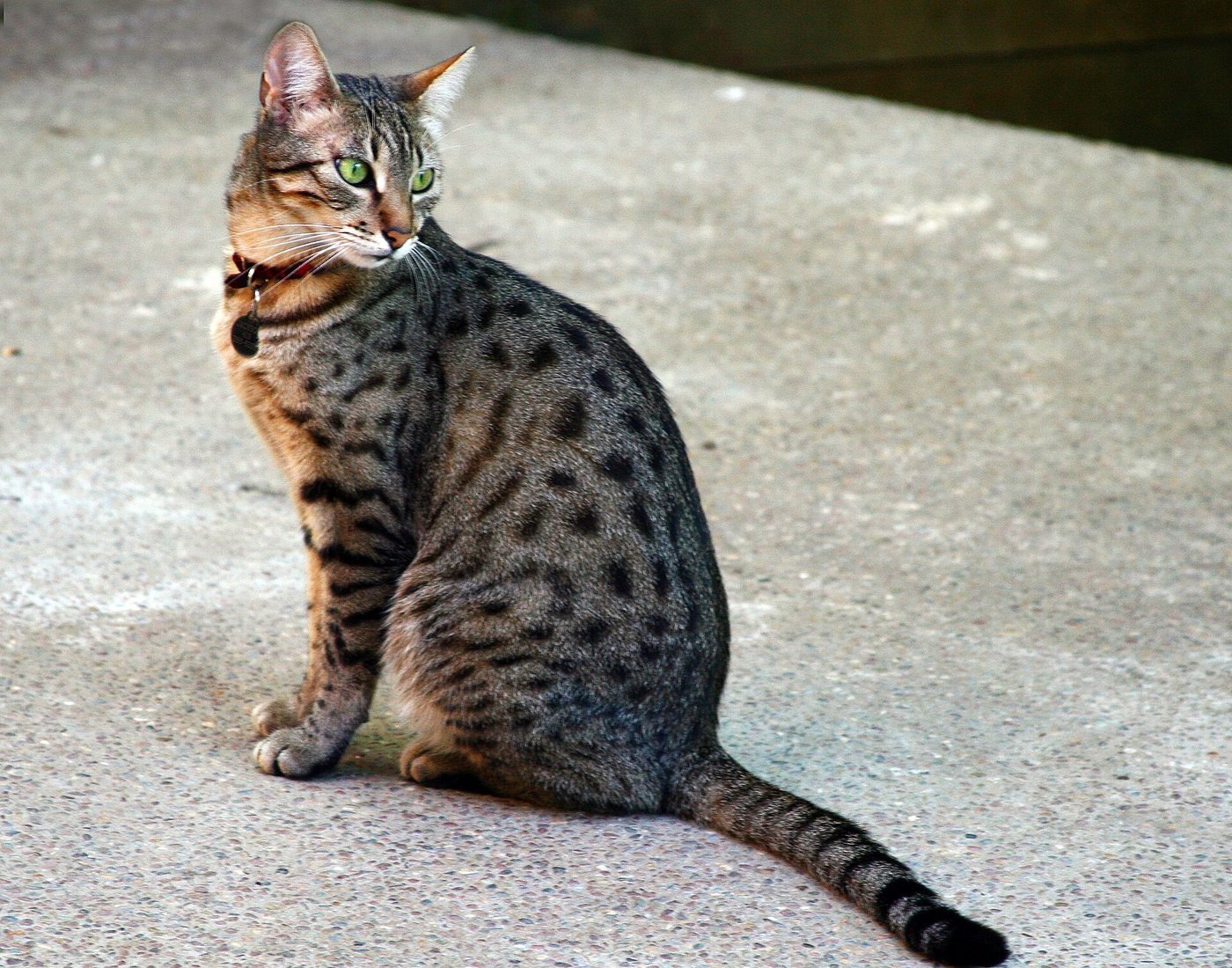
The only naturally spotted breed of domestic cat: random dark spots scattered over a short, satin-smooth coat in bronze, silver, smoke, or (rarely) blue, with a pale, spotted belly and characteristic mascara lines at the eyes and cheeks. The body is long, lean, and far more muscular than it looks — Maus are built like sprinters, with hind legs longer than the front and a loose flap of skin at the flank that allows extraordinary extension. Eyes are gooseberry green, large and almond-shaped.
Care & daily life
Grooming is trivial — a weekly rub-down keeps the satin coat gleaming. The real commitment is activity and attention: Maus need daily interactive play, climbing structures, and puzzle feeding to burn their considerable energy, and they bond so strongly that long daily absences suit them poorly. Feed carefully; the flank flap is normal anatomy, not fat, but the breed can still gain weight if under-exercised. Routine vet care and dental checks complete the picture.
Health & lifespan
The Egyptian Mau is generally known for the following health watch-points:
- Generally a healthy breed with a moderate gene pool; no single disease dominates
- Leukodystrophy — a neurological condition seen in some bloodlines historically; reputable breeders do not breed from affected lines
- Urinary tract stones (urate) have been reported at somewhat higher rates than average
- Feline asthma and allergies are occasionally seen, as in many breeds
- Obesity if under-exercised — an athletic breed that needs outlets for its energy
Living with a Egyptian Mau
Maus suit experienced, attentive owners in calm-to-moderate households — they reward devotion with devotion but startle at chaos, loud toddlers, and frequent upheaval. They thrive indoors with climbing furniture, window access, and daily play. Many are one-person cats in spirit, though polite to the rest of the household. If you want a cat that treats you as its whole world, the Mau obliges.
History
Spotted cats are the cats of ancient Egyptian art, and Maus descend from the street cats of Cairo that matched them. The modern breed begins with exiled Russian princess Nathalie Troubetskoy, who adopted spotted kittens in Cairo, carried the line to Italy, and emigrated to the United States in 1956 with three Maus — the foundation (with later imports) of the Western breed. CFA granted championship status in 1977. The Egyptian Mau remains rare: only a few hundred kittens are registered worldwide each year.