Overview
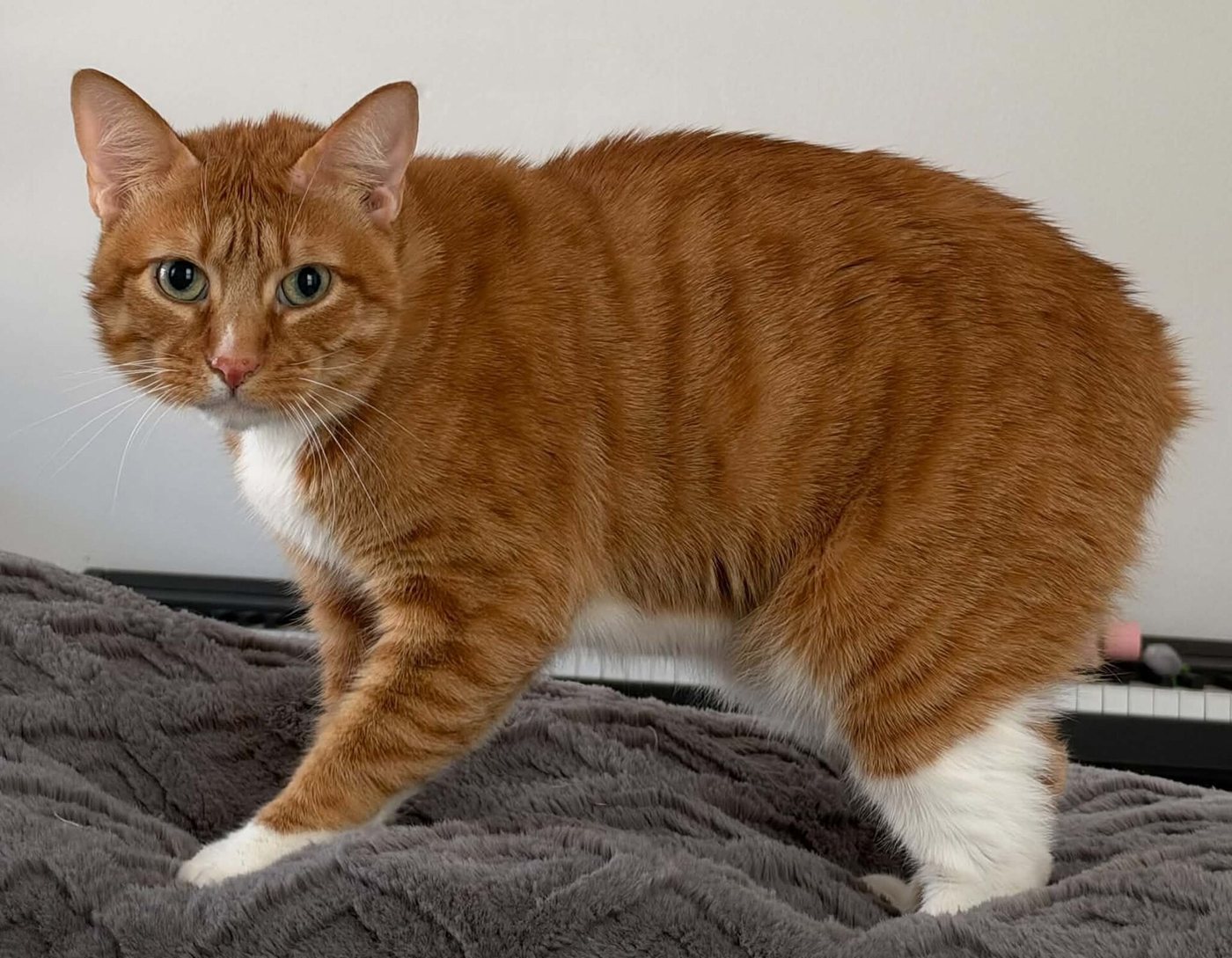
The Manx is one of the world's most recognisable cats — round, sturdy, and tailless, with a hopping, rabbit-like gait from hind legs longer than its front ones. Island-bred on the Isle of Man, the Manx combines a hunter's athleticism with a remarkably dog-like devotion: following its people, fetching toys, greeting at doors, and guarding its home with quiet confidence. It is also a breed with an honest health conversation attached, and this profile does not skip it — the tailless gene demands knowledgeable breeding.
Temperament & personality
Playful, calm, and deeply loyal. Manx cats tend to choose their family and commit — they follow, supervise, and join in, but without the frantic edge of some active breeds. They are intelligent and trainable, love interactive games and retrieving, and are unusually relaxed around dogs. Their voice is a soft trill used in conversation rather than complaint. Owners describe a steady, good-humoured cat that is kittenish in play and dignified at rest.
Appearance
The Manx is defined by what it lacks: a tail — completely absent in the classic 'rumpy' show type, though pet Manx may have a small stump ('stumpy') or even a near-normal tail ('longy'), all from the same litters. The body is compact and rounded — round head, round rump, deep chest — with hind legs noticeably longer than the front, giving a rabbit-like, slightly hopping gait. The coat is a distinctive double coat, short-to-medium with a soft, cottony feel, in virtually any colour or pattern.
Care & daily life
The double coat needs combing once or twice a week, more during seasonal shedding. Manx cats are muscular, active jumpers and climbers that need sturdy furniture and daily play — they are renowned retrievers of toys and enthusiastic hunters of anything that moves. Their powerful hindquarters and spinal peculiarities mean handling should support the whole body, and rough play around the rear spine is best avoided. Keep them indoors or supervised outdoors; they are capable hunters but their trust and the spine issue make free roaming unwise.
Health & lifespan
The Manx is generally known for the following health watch-points:
- Manx syndrome — the serious side of the tailless gene: a spectrum of spinal and nerve defects (including spina bifida, fused vertebrae, and bladder or bowel nerve problems) that can affect kittens when the gene is inherited from both parents; ethical breeders never breed two fully tailless ('rumpy') cats together
- Megacolon can develop in cats with spinal nerve involvement and needs veterinary management
- Corneal dystrophy has been reported in the breed
- Arthritis of the tail stump and spine can appear in older cats
- Otherwise generally robust — a sound adult Manx from screened lines is a healthy cat
Living with a Manx
Manx cats suit families and multi-pet homes that want an involved, playful companion — they are famously good with children and with dogs, and they bond deeply with their households. They need activity and play to stay fit, and they are best kept indoors or in secure outdoor spaces, given both their hunting talent and their trust in people. Buyers must do one piece of homework: choose a breeder who can explain their Manx syndrome prevention clearly, because that single factor decides the breed's health story.
History
Tailless cats are the Isle of Man's most famous export. Island folklore explains them colourfully — Noah shutting the ark door on a late cat's tail, or the cats losing tails escaping Spanish Armada wrecks — but the likely truth is a spontaneous mutation a few centuries ago that spread through the island's closed cat population, the way traits fix in isolated places. Manx cats were shown from the 1800s, were among the founding breeds of Britain's cat fancy, and remain the island's symbol, appearing on its stamps, coins, and tourism posters to this day.