Overview
The Turkish Angora is feline aristocracy with a working cat's spirit: one of the world's oldest natural breeds, refined by centuries in the Ankara region rather than by modern design. Beneath the floating, silky coat is an athlete — Angoras are superb jumpers and climbers that survey their homes from door tops and bookshelves — and an independent, intelligent mind that chooses its people and then commits completely. They are less demanding than the oriental breeds but far from aloof: an Angora supervises, plays, and comments, always with unmistakable grace.
Temperament & personality
Graceful, playful, and quietly willful. Angoras are famous for selecting a favourite person and following them with devotion, while treating the rest of the household with friendly tolerance. They are quick, curious, and fond of games that involve height and strategy, and they tend to remain kittenish for years. Unlike breeds that demand constant handling, the Angora's affection is a chosen gift — which owners find makes it all the more valued. Expect a cat that runs the home politely but unmistakably.
Appearance
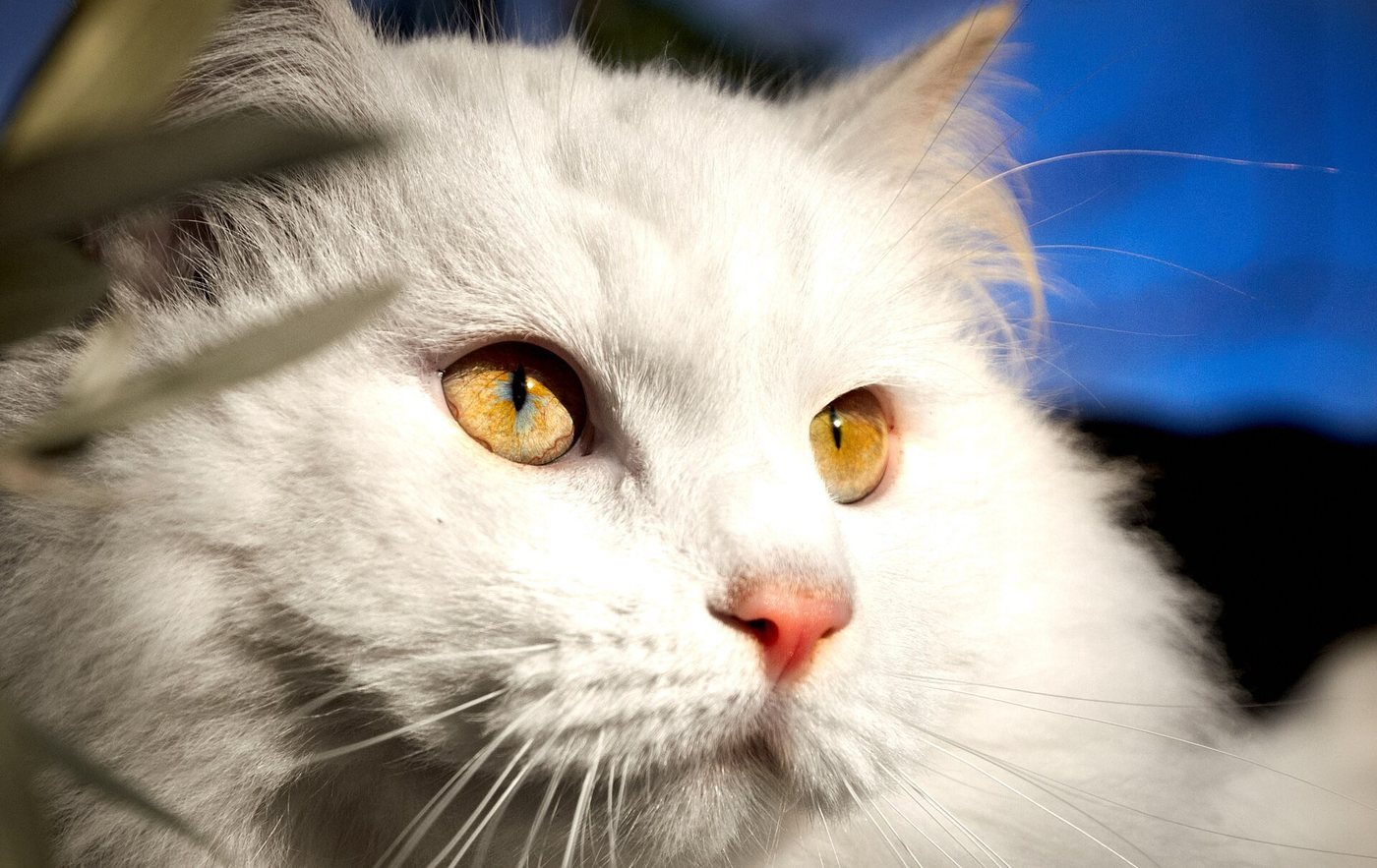
The Turkish Angora is a graceful, fine-boned cat with a long, plumed tail, a wedge-shaped head with a smooth profile, large almond eyes (blue, green, amber — or one of each), and tall, tufted ears set high on the head. The coat is single-layered, silky, and medium-long, longer at the ruff, britches, and tail, with almost no undercoat — which is why it rarely mats. White is the classic and most famous colour, but Angoras are now bred in a full range of colours and patterns.
Care & daily life
The single, silky coat is one of the easiest long coats to keep: comb once or twice a week to remove loose hair and prevent the occasional tangle, with more attention during the spring seasonal shed. Angoras are active, agile cats that need climbing furniture, high perches, and daily interactive play — they are famous for claiming the highest point in any room, including the tops of doors. Intelligent and busy, they appreciate puzzle toys and learning games. Routine ear checks and dental care round out a low-maintenance regime.
Health & lifespan
The Turkish Angora is generally known for the following health watch-points:
- Deafness in white, blue-eyed cats — linked to the dominant white gene; BAER hearing testing is standard practice for white breeding cats, and odd-eyed whites may be deaf on one side
- Hypertrophic cardiomyopathy (HCM) occurs at low rates; screening is available
- Ataxia in kittens — a hereditary neurological condition reported in the breed historically; responsible breeders avoid affected lines
- Otherwise a notably hardy, natural breed with few inherited problems thanks to its landrace origins
- Dental disease is the routine watch-point in older cats
Living with a Turkish Angora
Turkish Angoras suit active, interactive homes that appreciate a cat with opinions and altitude ambitions. They bond closely — often choosing a favourite human — and get along with other pets, usually while quietly assuming leadership of them. Apartment or house makes little difference; perches, play, and company are the requirements. Because of the hearing consideration, white Angoras in particular should be indoor cats, and any Angora appreciates a secure, enriched indoor world.
History
The Turkish Angora is one of the oldest natural longhaired breeds, documented in the Ankara region of Turkey for centuries — longhaired white cats were being traded across Europe from Turkey as early as the 1600s, and 'Angora' became the generic word for a longhaired cat for generations. The breed nearly vanished into other longhair populations, but the Ankara Zoo maintained a protected breeding colony of white Angoras — odd-eyed, blue-eyed, and amber-eyed — and controlled exports from the 1960s allowed breeders abroad to rebuild the breed from genuine Turkish stock. It remains a national treasure in Turkey.