Overview
The American Eskimo Dog — the Eskie — is a German spitz that became an American family institution. Beautiful, brainy, and built to work a crowd, it spent decades as one of the most popular performing dogs in circuses and travelling shows. At home it is a devoted, watchful, often hilarious companion in three convenient sizes, provided its owners can meet the grooming bill and the exercise requirement that come with a true working spitz temperament.
Temperament & personality
Playful, perky, and eager to please — among the most trainable of the spitz breeds, and one of the most people-oriented. Eskies are watchful and can be reserved with strangers until introduced, but they are not aloof with family; expect a dog that wants to be in the middle of everything. They are clever problem-solvers who bore easily, and boredom plus their strong voice can make them enthusiastic alarm-barkers if not trained.
Appearance
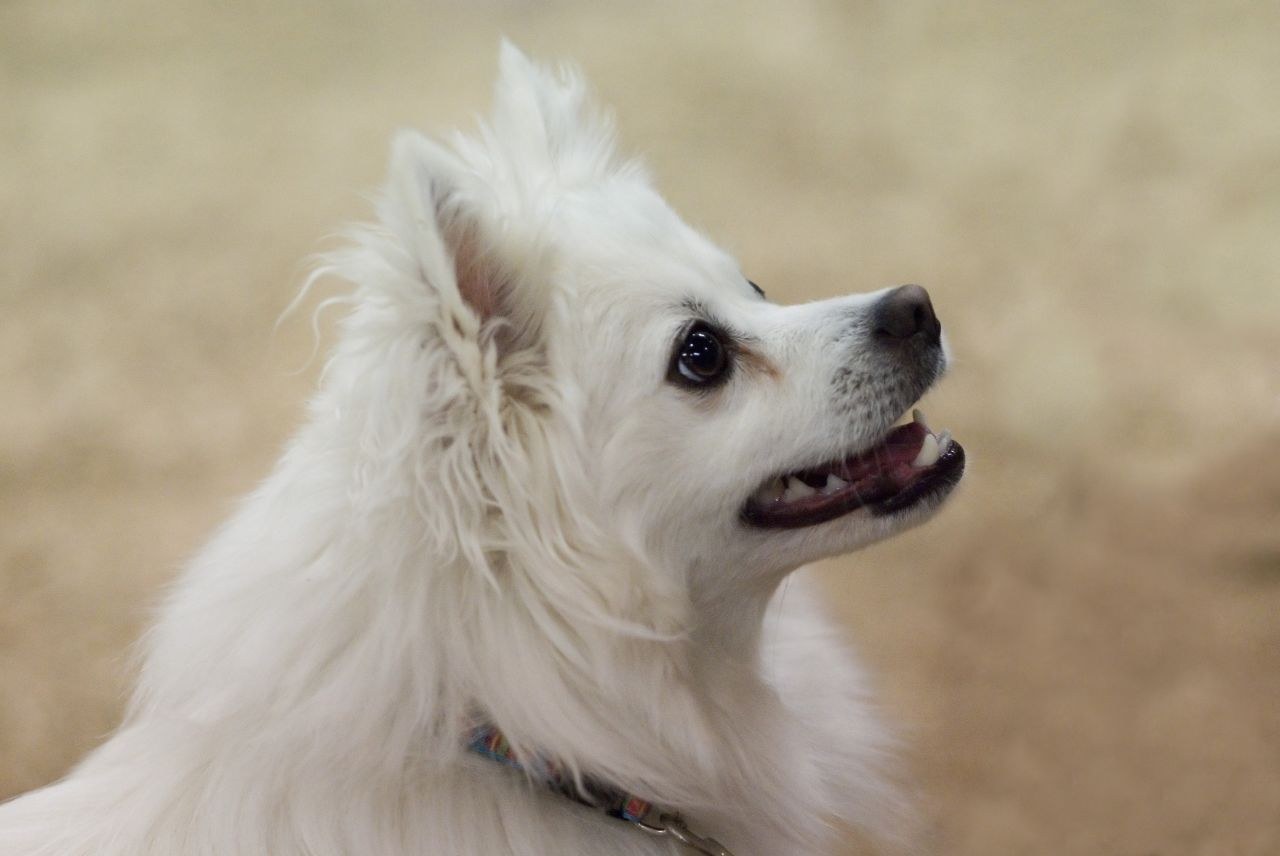
A cloud of dog: a profuse, always-white double coat, dark almond eyes with black 'snow nose' pigment, upright ears nearly hidden in fur, and a tail plumed over the back. The three sizes — Toy, Miniature, and Standard — are identical in look, differing only in height. The bright, smiling expression is pure spitz.
Care & daily life
Budget one to one and a half hours of activity a day — Eskies are athletic, agile, and were literally circus performers; trick training is ideal mental work. Grooming is the real commitment: brush two or three times a week to the skin, expect heavy shedding, and never shave the coat, which insulates in both directions. They are enthusiastic barkers, so train a reliable 'quiet' early. Feed carefully; this is a breed that gains weight easily.
Health & lifespan
The American Eskimo Dog is generally known for the following health watch-points:
- Hip dysplasia
- Progressive retinal atrophy (DNA-testable)
- Patellar luxation, especially in the Toy and Miniature sizes
- Diabetes mellitus occurs more often than in the average breed
- Legg-Calvé-Perthes disease in smaller dogs, and a tendency to gain weight easily
Living with a American Eskimo Dog
Eskies fit active families in houses or apartments alike, in any size class scaled to the space. They are people dogs who want company and a job — tricks, agility, obedience — and they make excellent watchdogs, sometimes noisily so. Cold weather delights them; summer heat needs managing. They are a fine choice for owners who want a trainable, cheerful family dog and can live with white hair on dark furniture.
History
German immigrants brought their beloved Spitz dogs to America in the 1800s, where they became farm dogs and family companions. During the First World War the breed's German name became a liability, and kennels rebranded it the American Eskimo Dog. Its intelligence and trainability made it a circus favourite — an Eskie named Pierre walked the tightrope with Barnum & Bailey. The AKC recognized the breed in the Non-Sporting group in 1995.