Overview
If dogs were rated by work ethic, the Australian Cattle Dog would top the table. Bred to control half-ton cattle in the outback — biting heels, ducking kicks, working all day in the heat — it is compact, iron-tough, and smarter than most owners initially bargain for. It bonds intensely, usually to one person, and treats life as a series of jobs to be assigned and completed. Few breeds reward an active, structured home more; few punish a lazy one faster.
Temperament & personality
Alert, curious, and pleasant in the standard's words — but intense in practice. Cattle Dogs are famously one-person loyal, naturally suspicious of strangers, and constantly evaluating situations. They are superb problem-solvers, which means they learn household rules and how to bend them. Puppies need firm, fair socialization to keep protectiveness from becoming reactivity. Adult dogs are steady, brave, and deeply attached — a shadow that wants a job in your life.
Appearance
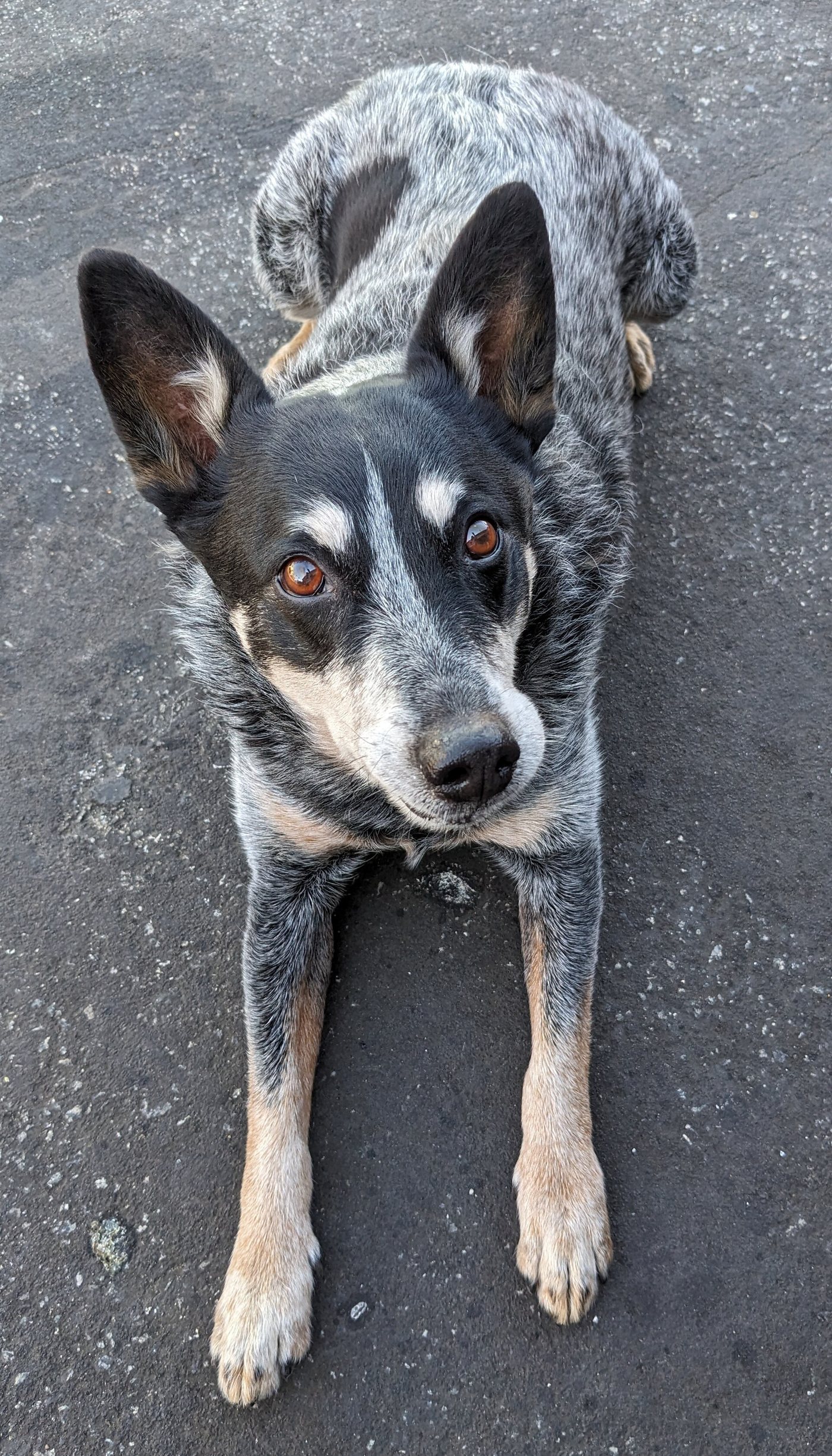
A tough, compact, medium dog with a weatherproof double coat ticked in blue (blue heeler) or red speckle (red heeler), a broad head, pricked ears, and an expression of permanent, evaluating intelligence. Born white, puppies develop their colour in the first weeks. The build is symmetrical and tireless-looking — no wasted angles anywhere.
Care & daily life
This is an athlete with a work ethic: two hours or more of exercise and real work or training a day. Fetch alone is not enough — they need problems to solve, commands to learn, and a job in the household routine. Training should be consistent and reward-based; the breed will out-think a repetitive or heavy-handed owner. The coat is low-maintenance — a weekly brush and a bath when rolled in something — but shedding is steady. A secure fence and keeping them leashed near livestock and bikes, which they may try to herd, are basic management.
Health & lifespan
The Australian Cattle Dog is generally known for the following health watch-points:
- Progressive retinal atrophy (prcd type, DNA-testable)
- Congenital deafness in one or both ears — BAER hearing testing is standard for puppies
- Hip and elbow dysplasia
- Primary lens luxation, an inherited eye emergency
- Generally a hardy breed; keeping them lean protects joints under a very active life
Living with a Australian Cattle Dog
Best on farms, acreages, and with serious runners, hikers, and dog-sport competitors. A Cattle Dog in a sedentary apartment is a management problem, not a pet — they will herd children, chase bikes, and remodel furniture. In the right active home they are shadows: loyal to one or two people above all, watchful, and ready at any hour. This is a breed for owners who want a partner, not an ornament.
History
In the 1800s, Australian settlers needed a dog that could drive half-wild cattle over vast, harsh distances. They crossed imported collies with the native dingo, then refined the mix with Dalmatian and kelpie blood, producing a silent, tireless heeler with legendary stamina. The breed produced Bluey (1910–1939), still the verified oldest dog on record at 29 years. The AKC recognized the Australian Cattle Dog in 1980.