Overview
The Bernese is the gentle giant of the Swiss Alps: a tricolour farm dog that herded cattle, hauled milk carts to market, and then came home to be the family's companion. Few breeds combine this much size with this little edge. The shadow over the breed is its lifespan — cancer, particularly histiocytic sarcoma, claims far too many Berners far too young, and honest breeders now select hard for longevity.
Temperament & personality
Good-natured is the standard's first word, and it holds: Berners are calm, patient, and notably kind with children. They are alert without being reactive, reserved with strangers without suspicion, and eager to please in a quiet, steady way. Males in particular can mature slowly, staying puppylike well past their second birthday.
Appearance
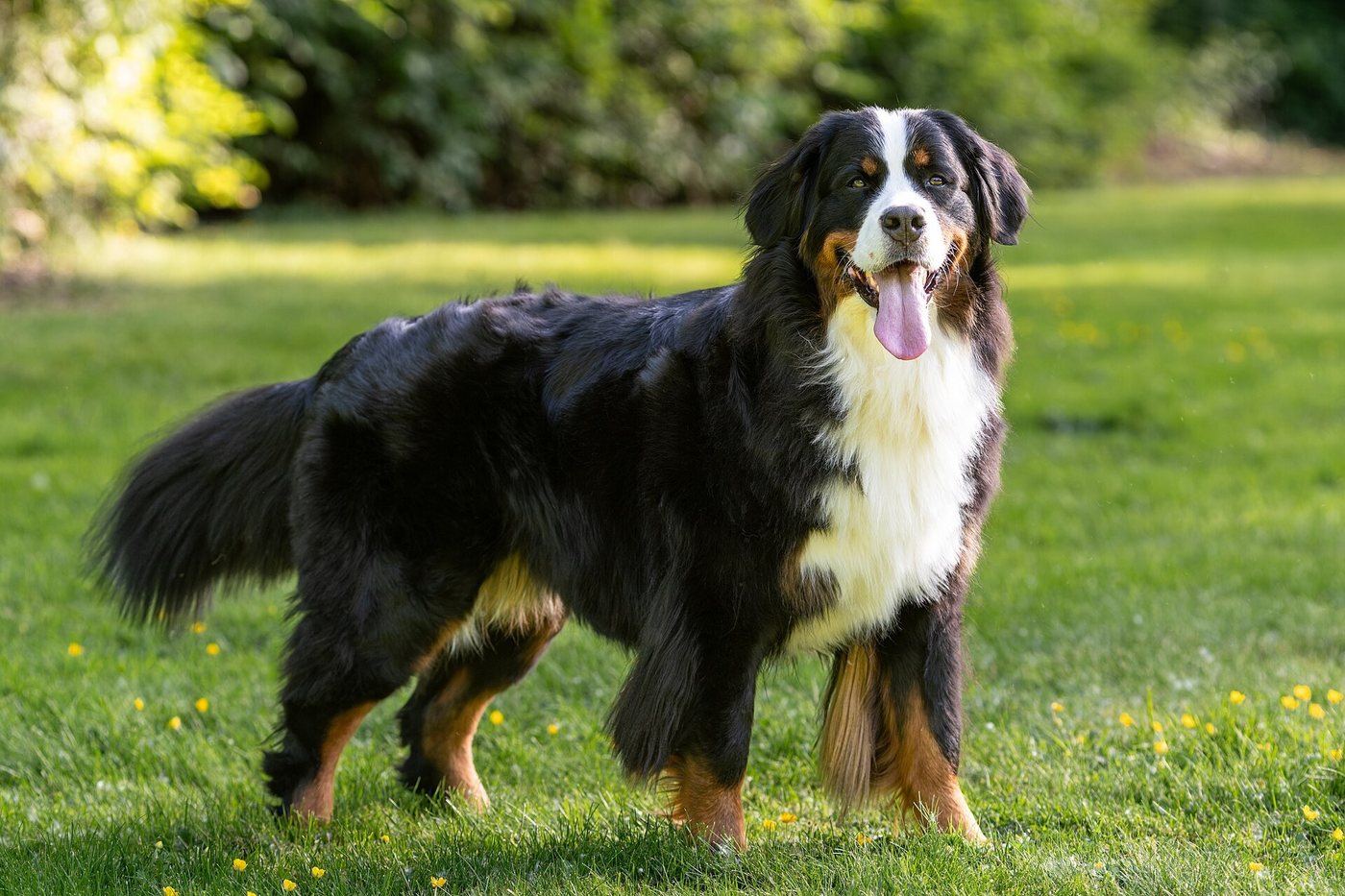
A large, sturdy, tricolour farm dog: jet black coat with rich rust and clear white markings in a distinctive pattern — white blaze, chest, feet, and tail tip against black with rust accents. The thick double coat and gentle, expressive eyes complete one of the most handsome profiles in the dog world.
Care & daily life
Dogs bred for cold Alpine farms need about an hour of moderate exercise daily and relief from heat — they are uncomfortable and at risk in hot weather, so cool living is a welfare issue. The thick coat sheds heavily, especially seasonally; brush several times a week. Cart-pulling, drafting, and gentle hiking in cool weather are perfect activities.
Health & lifespan
The Bernese Mountain Dog is generally known for the following health watch-points:
- Cancer dominates the breed's health picture, particularly histiocytic sarcoma
- Hip and elbow dysplasia
- Bloat risk as a large, deep-chested breed
- Degenerative myelopathy occurs (DNA-testable)
- Von Willebrand's disease appears in some lines
Living with a Bernese Mountain Dog
Berners fit rural and suburban homes with cool climates and owners ready for size, shedding, and a heartbreakingly short decade. They are family-centred dogs that want to be indoors with their people, not kennelled outside — despite the farm heritage, the modern Berner is a house dog at heart.
History
One of four Swiss mountain breeds, the Berner was the all-purpose farm dog of the canton of Bern: herding cattle, pulling carts loaded with milk and cheese to market, and guarding the farm. Industrialisation nearly ended the breed in the 1800s; fanciers rebuilt it from surviving farm dogs, and it was recognised internationally in the early 1900s.