Overview
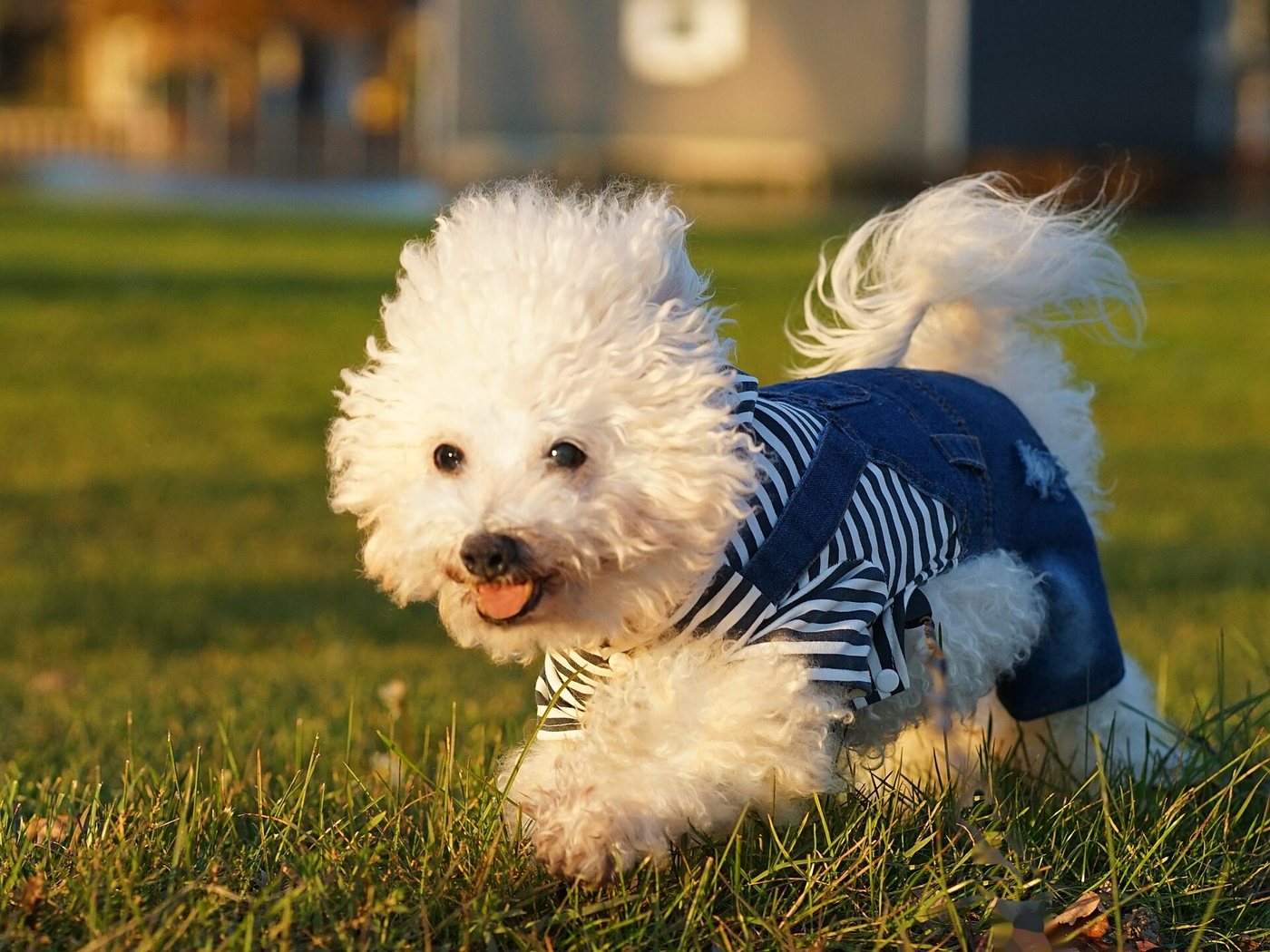
The Bichon Frise is a professional charmer: a small white dog bred for centuries purely to be delightful company, and exceptionally good at the job. Behind the powder-puff looks is a sturdy, lively little dog with a performer's instinct — the breed once survived hard times as a circus and street act, and it still plays to an audience whenever it can find one.
Temperament & personality
Playful, curious, and almost relentlessly cheerful. Bichons are sociable with people and other dogs, quick to learn tricks, and sensitive enough that they wilt under harsh handling. Many go through a famous puppyhood 'buzz' — sudden joyous sprints around the house. They bond closely and dislike solitude, so households where someone is home most of the day suit them best.
Appearance
A small, sturdy dog made almost entirely of white fluff: a double coat with a soft undercoat and a silky, springy outer coat that stands away from the body in the classic 'powder puff' outline. Dark, round eyes and a black nose and lips stand out against the white. Any colour other than white is a fault — a true Bichon is a snowball with a face.
Care & daily life
Moderate exercise — around an hour a day of walks and play — keeps a Bichon fit and cheerful; they are adaptable and love games indoors too. Grooming is the real work: brush and comb to the skin several times a week and book a clip every four to six weeks, or the coat mats quickly. Tear staining under the eyes is common and needs regular gentle cleaning; keep teeth brushed, as small breeds are prone to dental disease.
Health & lifespan
The Bichon Frise is generally known for the following health watch-points:
- Patellar luxation (loose kneecaps)
- Allergies and skin problems — a common Bichon complaint
- Bladder stones, particularly calcium oxalate
- Cataracts and other eye conditions
- Dental disease and, in some lines, liver shunts and heart conditions
Living with a Bichon Frise
Bichons suit almost any home — apartment, house, city, or suburb — as long as someone is around for much of the day; they are deeply people-oriented and prone to separation anxiety when left alone too long. They are a good choice for first-time owners and for allergy-sensitive households prepared for the grooming bill.
History
The Bichon descends from the small white lapdogs of the Mediterranean — the Barbet and water spaniel family that also produced the Maltese, Bolognese, and Havanese. Sailors carried them around the trading world; they were favourites at the French court in the 1500s, fell from fashion, survived as street and circus performers, and were formalised as the Bichon à Poil Frisé in the 1930s. The AKC recognised the breed in 1972.