Overview
The Bloodhound possesses the finest nose in the dog world — around 300 million scent receptors, more than any other breed — and centuries of breeding devoted entirely to following a scent trail wherever it leads. A Bloodhound's trailing evidence has been accepted in courts of law, and the breed remains the gold standard for search-and-rescue and police tracking. At home, this formidable worker is a gentle, patient, drooling softie with the deepest voice in the neighbourhood.
Temperament & personality
Bloodhounds are friendly, tolerant, and notably good-natured with children and other animals — they were bred to work in packs and it shows. They are also deeply independent: a Bloodhound on a scent is a Bloodhound in another world, deaf to commands, which makes recall unreliable and secure fencing non-negotiable. At home they are calm, affectionate, and clownish, with a stubborn streak and a bay that carries for remarkable distances.
Appearance
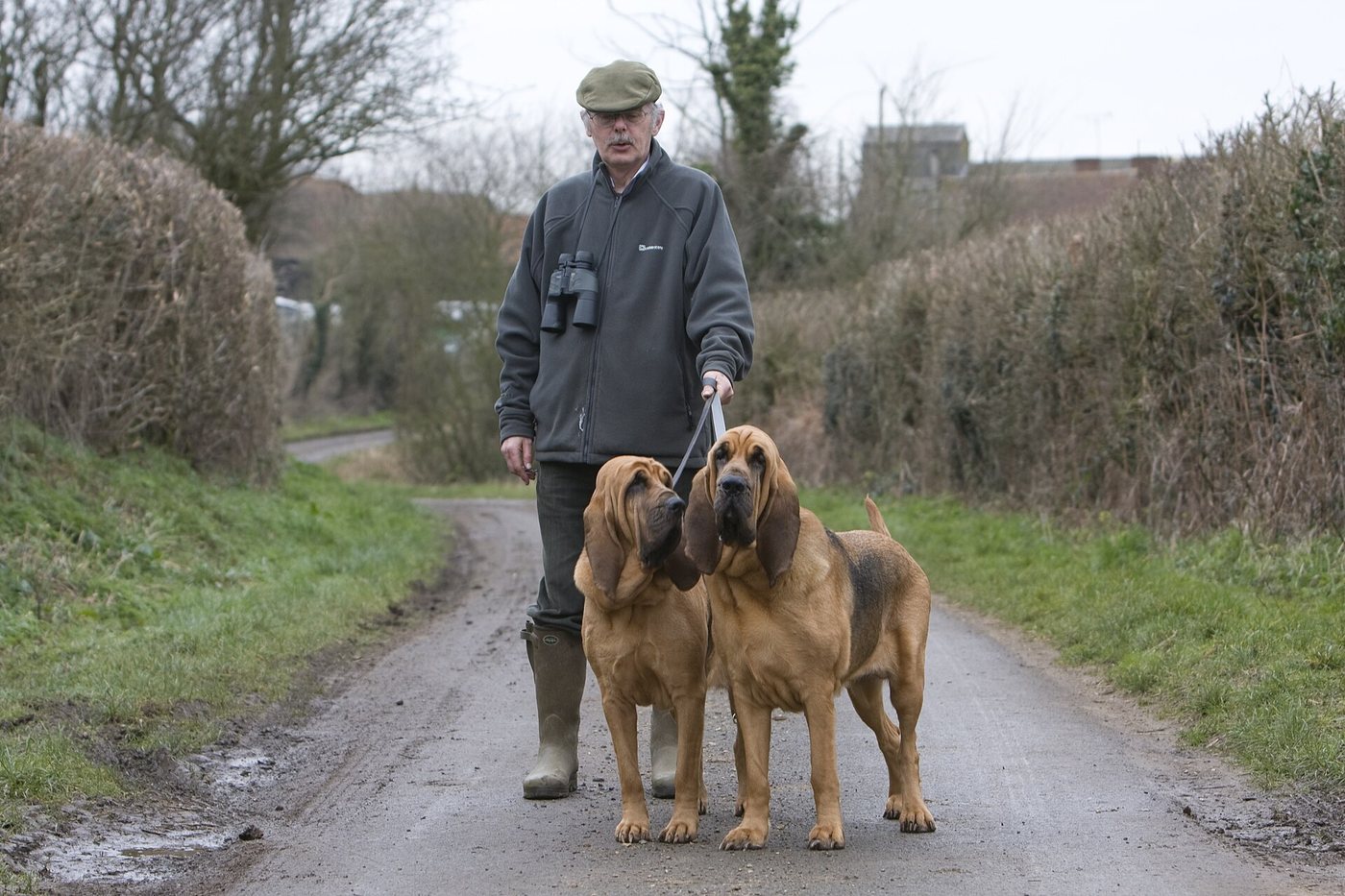
A large, powerful hound with the most distinctive head in dogdom: long, narrow skull, deeply sunken eyes with a solemn expression, enormous low-set ears that hang in folds, and loose, wrinkled skin around the head and neck — all of it functional, funnelling scent toward the nose. The short, dense coat is black-and-tan, liver-and-tan, or red. Everything about the dog is built low-slung and enduring rather than fast.
Care & daily life
Give one to one and a half hours of exercise a day — long, interesting walks where the nose can work are this breed's idea of heaven; scent games and tracking training make superb outlets. Keep a Bloodhound on lead or in genuinely secure fencing at all times outdoors. Weekly brushing controls shedding; the long ears need regular cleaning to prevent infection, and skin folds should be kept clean and dry. Feed measured meals and respect bloat discipline: no vigorous exercise around feeding.
Health & lifespan
The Bloodhound is generally known for the following health watch-points:
- Bloat (gastric dilatation-volvulus) — Bloodhounds are among the highest-risk breeds; this is a life-threatening emergency and the breed's leading health concern
- Hip and elbow dysplasia
- Ear infections, driven by the very long, heavy ear flaps
- Eye conditions including entropion and ectropion (eyelids rolling in or out)
- Hypothyroidism and skin-fold dermatitis occur
Living with a Bloodhound
Bloodhounds suit patient households with space, secure fencing, and neighbours who can tolerate the bay — rural and suburban homes fit best. They are gentle and wonderful with children, happy with other dogs, and calmer indoors than their size suggests. They are not city-apartment dogs, not off-lead dogs, and not for the house-proud: drool and a distinctive hound odour are part of the contract.
History
The breed descends from the hounds kept by monks at the Abbey of St. Hubert in the Belgian Ardennes from around the 7th–9th centuries — meticulously bred scent hounds given as gifts to kings. Brought to England around the Norman Conquest, the 'blooded hound' (meaning aristocratically bred, not bloodthirsty) was refined into the modern Bloodhound. In America, Bloodhounds became legendary man-trailers — the famous Nick Carter logged over 600 finds and criminal captures in the early 1900s.