Overview
The Bluetick Coonhound is an American original: a cold-nosed trailing hound bred to work raccoons through swamps and hardwood forests at night, then announce the tree with a voice designed to carry a mile. Off duty, it is a mellow, affectionate, faintly clownish housedog with a stubborn streak and a nose that rules its life. It asks for space, exercise, and understanding neighbours — and repays with loyalty and entertainment in equal measure.
Temperament & personality
Smart, devoted, and tenacious. A Bluetick at work is all business — methodical, determined, and indifferent to weather or distance. At home the same dog is gentle, sociable, and fond of the sofa, with a hound's independent streak: it will consider your request after it finishes the scent it is working. They are typically friendly with people and dogs, and their easygoing nature makes them pleasant companions once their considerable exercise needs are banked for the day.
Appearance
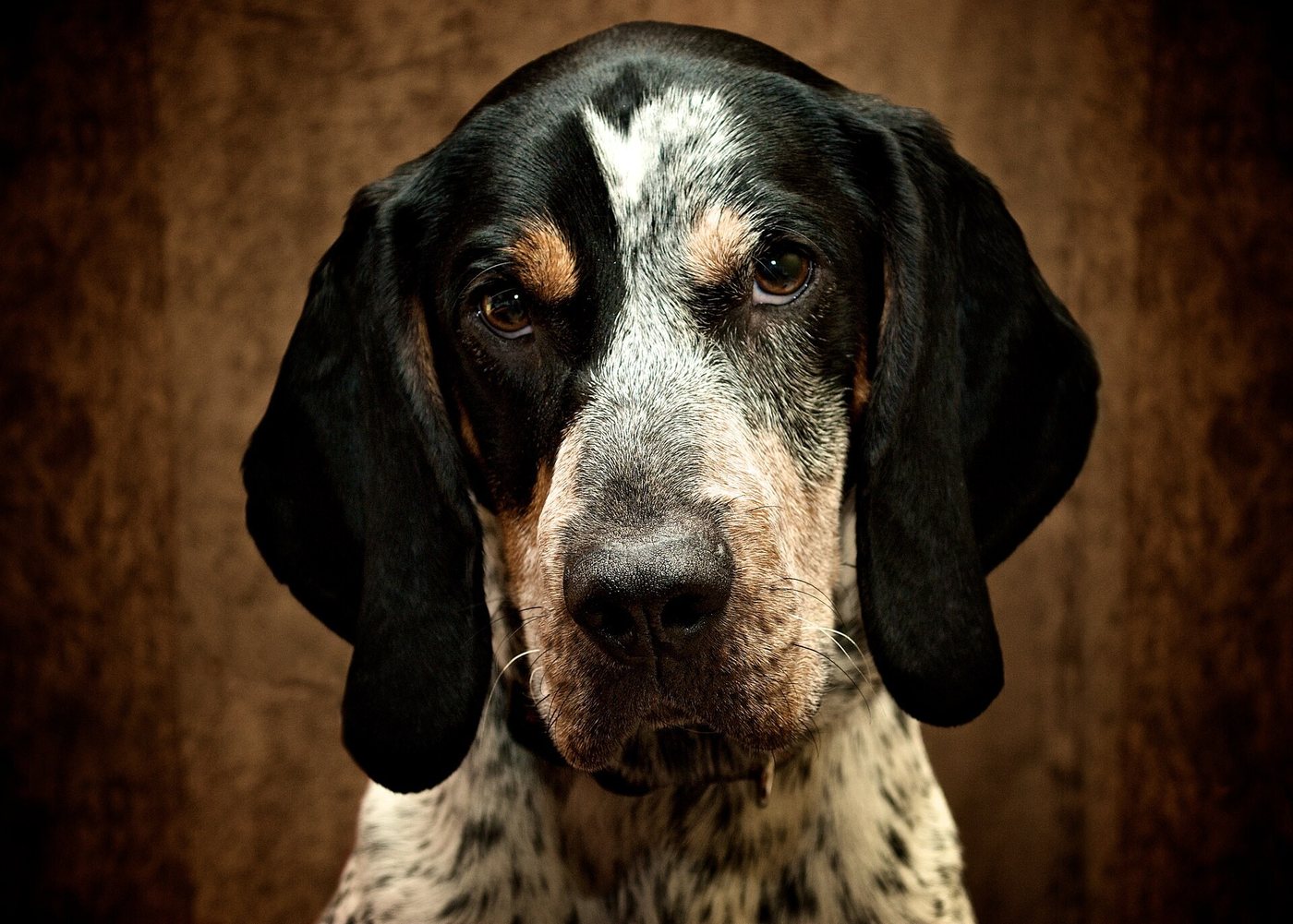
A big, handsome hound built for a night's work: deep chest, long ears, pleading brown eyes, and a glossy coat of black and blue-grey ticking — the 'blue' that gives the breed its name — usually with tan markings and a white blaze. The overall look is that of a classic American hunting hound, right down to the long, carried-high tail.
Care & daily life
Blueticks need at least an hour and a half of exercise a day, with chances to follow a scent — tracking games, long hikes, and secure off-leash areas. Keep them leashed or fenced: a good scent overrides recall, fences, and traffic sense. Training is a long game of patience with a nose-led, independent hunter. Coat care is easy — a weekly brush — but ears need regular checking and cleaning, and the famous voice means close neighbours are a genuine consideration. Feed to condition; working hounds burn calories, retired ones store them.
Health & lifespan
The Bluetick Coonhound is generally known for the following health watch-points:
- Hip dysplasia
- Bloat (gastric dilatation-volvulus) — a risk in a big, deep-chested hound
- Ear infections, a routine issue for long-eared scent hounds
- Patellar luxation and hypothyroidism occur in the breed
- Keep working dogs lean — obesity compounds every joint risk
Living with a Bluetick Coonhound
Blueticks belong in rural or spacious suburban homes with room to run and tolerant neighbours — the bay is glorious at a distance and less so through a wall. They are affectionate, easygoing family dogs indoors once exercised, and they usually live happily with other dogs. First-time owners in cities should think twice; hunters, hikers, and hound lovers will find a devoted, amusing, deeply American dog.
History
The Bluetick was developed in Louisiana and across the American South, crossing French Grand Bleu de Gascogne hounds — famous for their cold noses — with English Foxhounds and local coonhound stock. For years blueticked dogs were registered as English Coonhounds; fanciers of the blue pattern separated them, with the UKC recognizing the Bluetick Coonhound in 1946 and the AKC following in 2009. It remains best known as the mascot of the University of Tennessee.