Overview
The Boxer is a working breed in a comedian's body: a German guard and messenger dog that never entirely grew up. Muscular, athletic, and fearless when it counts, the Boxer spends most of its life being a joyful clown — wiggle-dancing at greetings, boxing the air with its paws, and treating family life as a team sport it fully intends to win.
Temperament & personality
Boxers are bright, loyal, and notably playful well into old age — 'Peter Pan' is the breed cliché because it is accurate. They are patient and protective with children, alert watchdogs, and sensitive to their people's moods. Energy is the headline: this breed does not suit owners who want a dog that decorates the home quietly.
Appearance
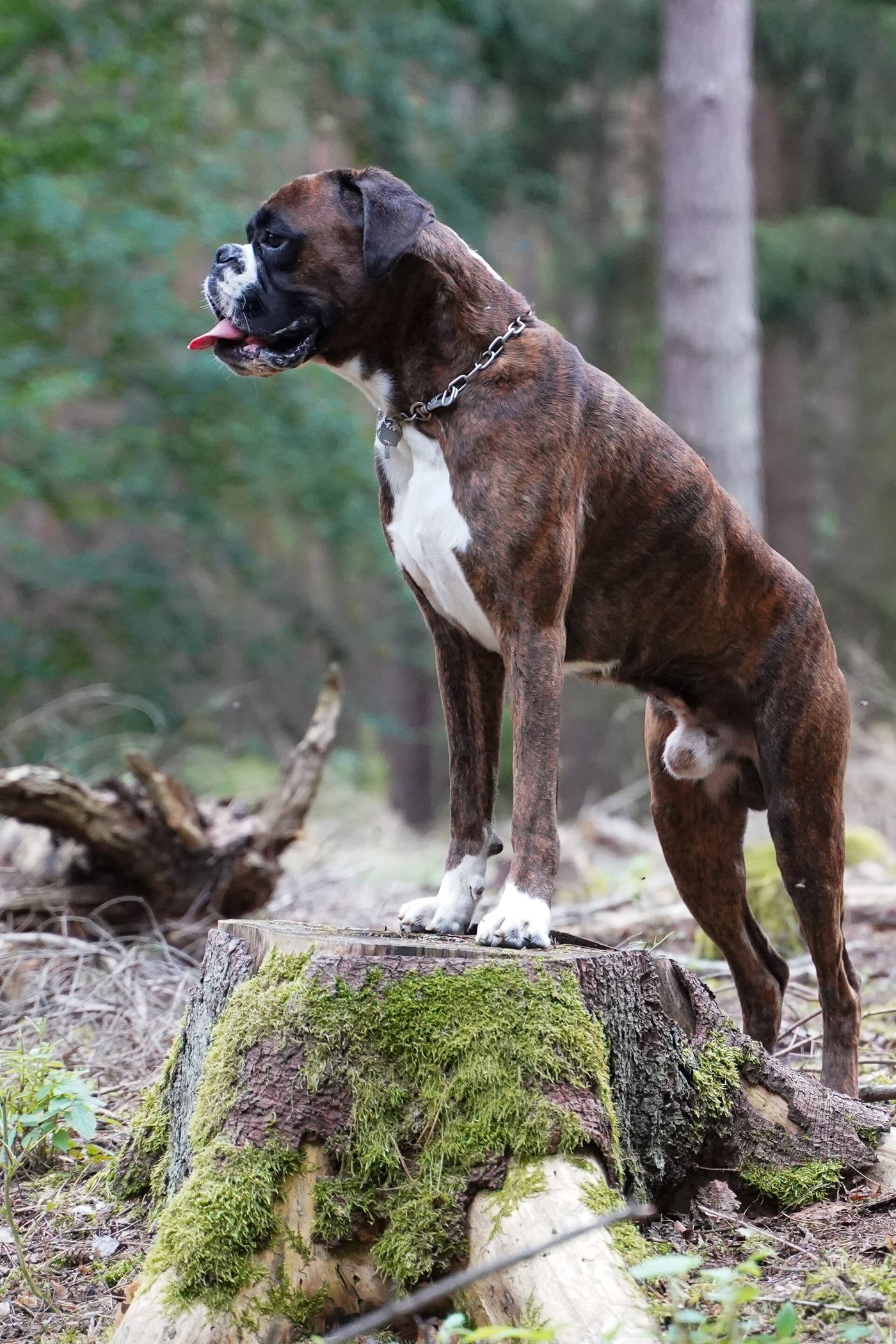
A medium-large, muscular dog with a short square head, dark eyes full of expression, an undershot jaw, and a short glossy coat in fawn or brindle, with or without white markings. Natural ears are drop; tails may be docked or natural depending on country. The build is athletic and clean — nothing about a Boxer is exaggerated except its energy.
Care & daily life
Give one and a half to two hours a day of exercise and play, with heat discipline — the short muzzle makes hot weather dangerous. Training should be consistent, upbeat, and started early; Boxers are smart, strong, and creative. Grooming is minimal. Mental work matters: a Boxer with games, training, and family involvement is a delight; a bored Boxer is a demolition crew.
Health & lifespan
The Boxer is generally known for the following health watch-points:
- Cancer rates are notably high, including lymphoma and mast cell tumours
- Heart conditions: aortic stenosis and Boxer cardiomyopathy (ARVC)
- Bloat risk as a deep-chested breed
- Hip dysplasia and degenerative myelopathy occur
- Hypothyroidism is relatively common
Living with a Boxer
Boxers fit active families with time, humour, and tolerance for exuberance and drool. They need to live indoors with their people, do best with a yard to burn energy in, and are a poor match for sedentary homes or hot climates without air conditioning.
History
The Boxer was developed in Germany in the late 1800s from the now-extinct Bullenbeisser, a hunting dog that seized large game, crossed with Bulldogs and other breeds into a versatile working dog. It served as a messenger and pack dog in both World Wars and became a leading police, military, and family breed — the name possibly from its habit of 'boxing' with its front paws in play.