Overview
The Flat-Coated Retriever is the optimist of the gundog world — a glossy black or liver retriever whose tail rarely stops and whose youthfulness lasts so long it is nicknamed the Peter Pan of the breeds. It is also the breed where honesty matters most: Flat-Coats carry a significantly elevated risk of cancer that shortens their average lifespan, and any profile that skipped that fact would fail its readers. Joyful, talented, and devoted — with a real price attached.
Temperament & personality
Cheerful, exuberant, and deeply people-oriented. Flat-Coats mature late — expect a large puppy for two to three years — and stay playful for life. They are sensitive to their owners, train willingly with reward-based methods, and are sociable with people and dogs alike. The flip side is demand: this breed wants in on everything and sulks constructively (chewing, digging) when left out.
Appearance
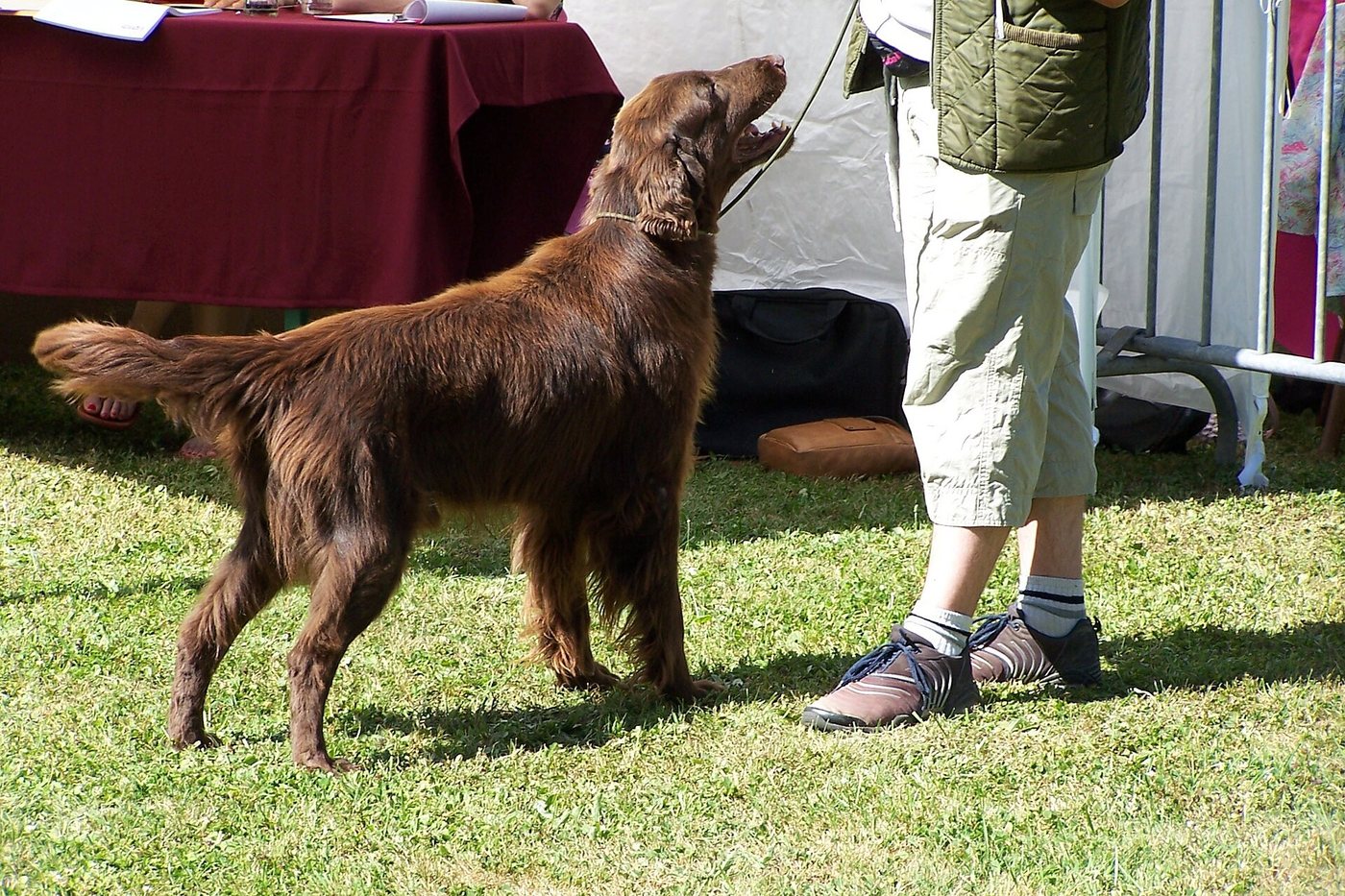
A sleek, athletic retriever with a glossy, dense, lying-flat coat in jet black or rich liver, a longish elegant head, and bright, intelligent eyes. The Flat-Coat looks like a Labrador crossed with a setter — lighter and racier than a Lab, with feathering on the legs and tail and a constantly wagging, youthful air.
Care & daily life
One and a half to two hours of exercise a day, with retrieving and swimming high on the list — this is a working gundog with energy to spare well into middle age. The coat needs brushing once or twice a week and tidying of feathering. Train early and kindly: Flat-Coats are sensitive, slow to mature, and famously exuberant — channel the joy rather than crushing it. Because of the breed's cancer burden (see health), keep the dog lean, know its normal lumps, and do not skip annual vet checks.
Health & lifespan
The Flat-Coated Retriever is generally known for the following health watch-points:
- Cancer — stated plainly: the Flat-Coat has a genuinely elevated cancer burden. Breed health surveys consistently find cancer the leading cause of death, with roughly half of Flat-Coats in some studies dying of it
- Histiocytic sarcoma — an aggressive cancer to which this breed is notably predisposed, often affecting joints and limbs
- Hemangiosarcoma and osteosarcoma also occur at higher-than-average rates; lymphoma is reported
- Hip dysplasia and patellar luxation
- Eye conditions including progressive retinal atrophy, glaucoma, and cataracts
Living with a Flat-Coated Retriever
Flat-Coats suit active, experienced homes that can give a big, joyful dog two hours of purpose a day and can face the breed's lifespan honestly. They are wonderful family dogs, poor kennel dogs, and miserable when under-exercised. If you want a decade-plus companion guaranteed, this is a gamble; if you want boundless optimism per year, few breeds match it.
History
The Flat-Coat was the gamekeeper's retriever of Victorian England, developed from St. John's water dogs, setters, and collie-type stock into the dominant retriever of the late 1800s. The Labrador and Golden overtook it in the 20th century, and the breed nearly vanished after the Second World War before devoted breeders rebuilt it. It remains the connoisseur's retriever — and the breed community is unusually open about its cancer problem, funding research through health surveys.