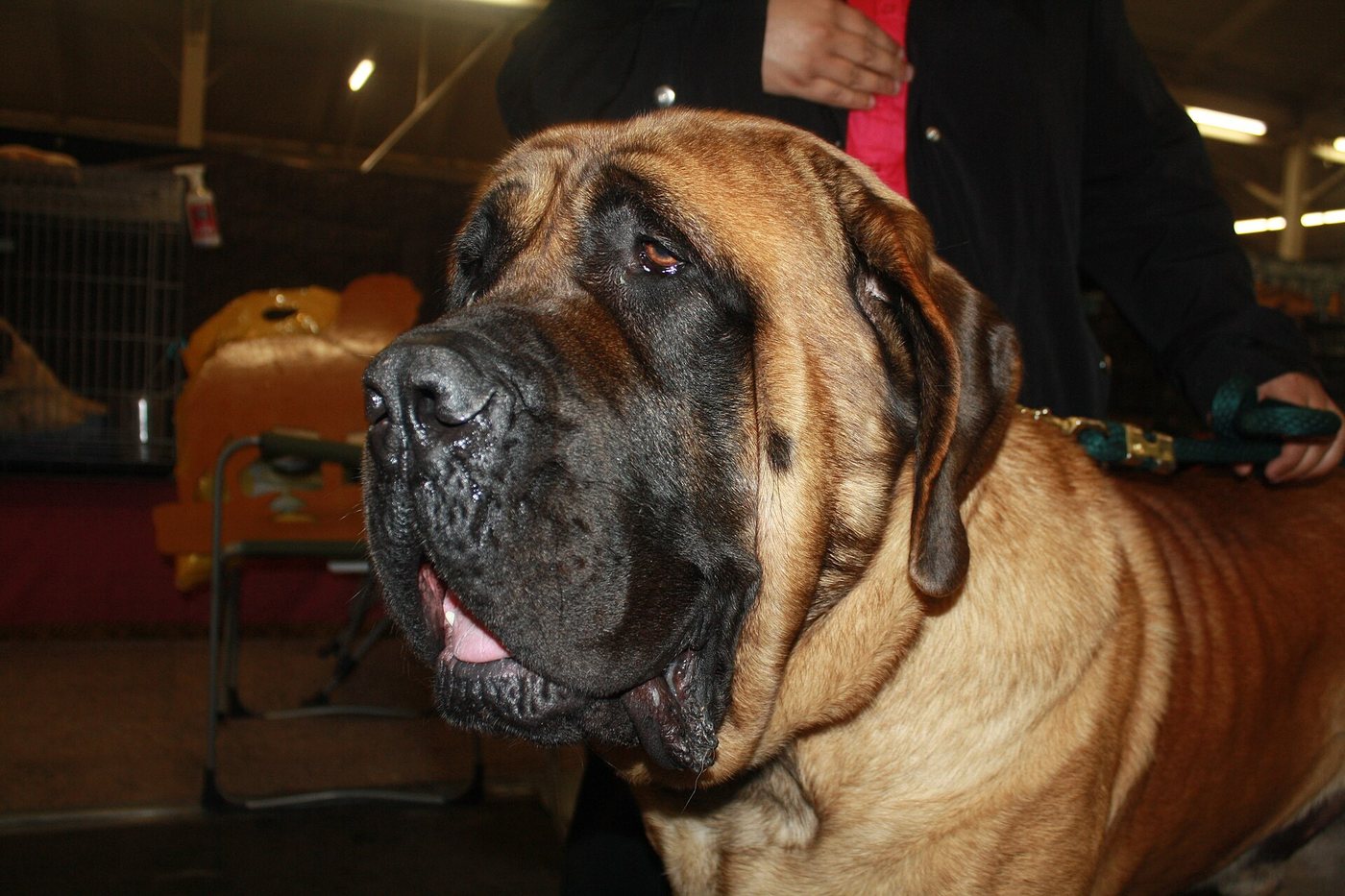
Overview
The Mastiff (often called the English or Old English Mastiff) is among the heaviest breeds in existence — a dog whose sheer mass was its original job description, guarding estates and households by presence alone. Modern Mastiffs are famously good-natured: calm, dignified, and devoted, with courage that shows itself by standing between their family and trouble rather than by aggression. They are gentle giants in temperament and giants in every practical sense too.
Temperament & personality
Calm, steady, and deeply attached. A Mastiff puppy is clumsy and playful; the adult is a dignified couch companion who keeps quiet watch over the house. They are sensitive dogs that respond poorly to harsh handling and strongly to calm consistency. Strangers are assessed, not greeted — the breed's guarding instinct is real but typically measured, which is why early socialization matters so much.
Appearance
The archetypal giant: an enormous, rectangular dog with a massive head, a short muzzle, small dark eyes, and a short, dense coat in fawn, apricot, or brindle. Everything about the Mastiff is built to scale — wide chest, heavy bone, and a tail carried low. Despite the imposing outline, the expression should be one of calm dignity rather than ferocity.
Care & daily life
About an hour a day of unhurried exercise is right for adults — steady walks, never forced running, and strict moderation for puppies, whose growth plates are vulnerable to over-exercise and overfeeding. Feed a giant-breed diet and keep the dog lean; fat giants break down early. Grooming is simple (a weekly brush), but budget for the unglamorous extras: drool on clothes and furniture, giant-sized beds, crates, collars, and a vehicle the dog fits in.
Health & lifespan
The Mastiff is generally known for the following health watch-points:
- Bloat (gastric dilatation-volvulus) — a life-threatening emergency; know the signs and your nearest emergency vet
- Hip and elbow dysplasia
- Cancer, especially osteosarcoma and lymphoma
- Cystinuria (a kidney-stone condition, DNA-testable) and hypothyroidism
- Entropion and other eyelid problems; progressive retinal atrophy is DNA-testable in the breed
Living with a Mastiff
Say it plainly, because breeders who love Mastiffs do: this is a short-lived, expensive dog. Six to ten years is the honest span; food, vet care dosed by the hundredweight, and giant-sized everything will cost far more than a typical dog; and drool is a lifestyle. They also need floors and stairs their joints can handle, a home where someone is around, and training done early — you cannot physically manage an untrained 200-pound adult. Owners who accept all that get a calm, devoted, quietly protective companion unlike any other dog.
History
Mastiff-type dogs are ancient — heavy guarding and war dogs appear in records going back thousands of years, and Britain's mastiffs were famous by Roman times. A Mastiff famously guarded her wounded knight at the Battle of Agincourt in 1415, founding the Legh family line of Lyme Hall. The modern breed was standardised in Victorian England and, like other giants, nearly died out after the Second World War, rebuilt partly with North American stock.