Overview
The Newfoundland is the gentle giant of the sea: a Canadian working dog engineered by fishermen's necessity into one of nature's great rescue animals — web-footed, double-coated against icy water, and possessed of an instinct to pull struggling swimmers to safety. On land that same dog is sweetness itself: patient, devoted, and so trusted with children that literature made it the archetypal nursemaid dog. Owning a Newfie means drool, fur, and a decade of enormous love.
Temperament & personality
Sweet, patient, and devoted — the standard's three words are unusually literal. Newfoundlands are calm, tolerant, and deeply attached, with a watchful protectiveness that shows as presence rather than aggression. They are intelligent and trainable, though rarely in a hurry, and they respond to kindness far better than pressure. Few dogs are as emotionally steady.
Appearance
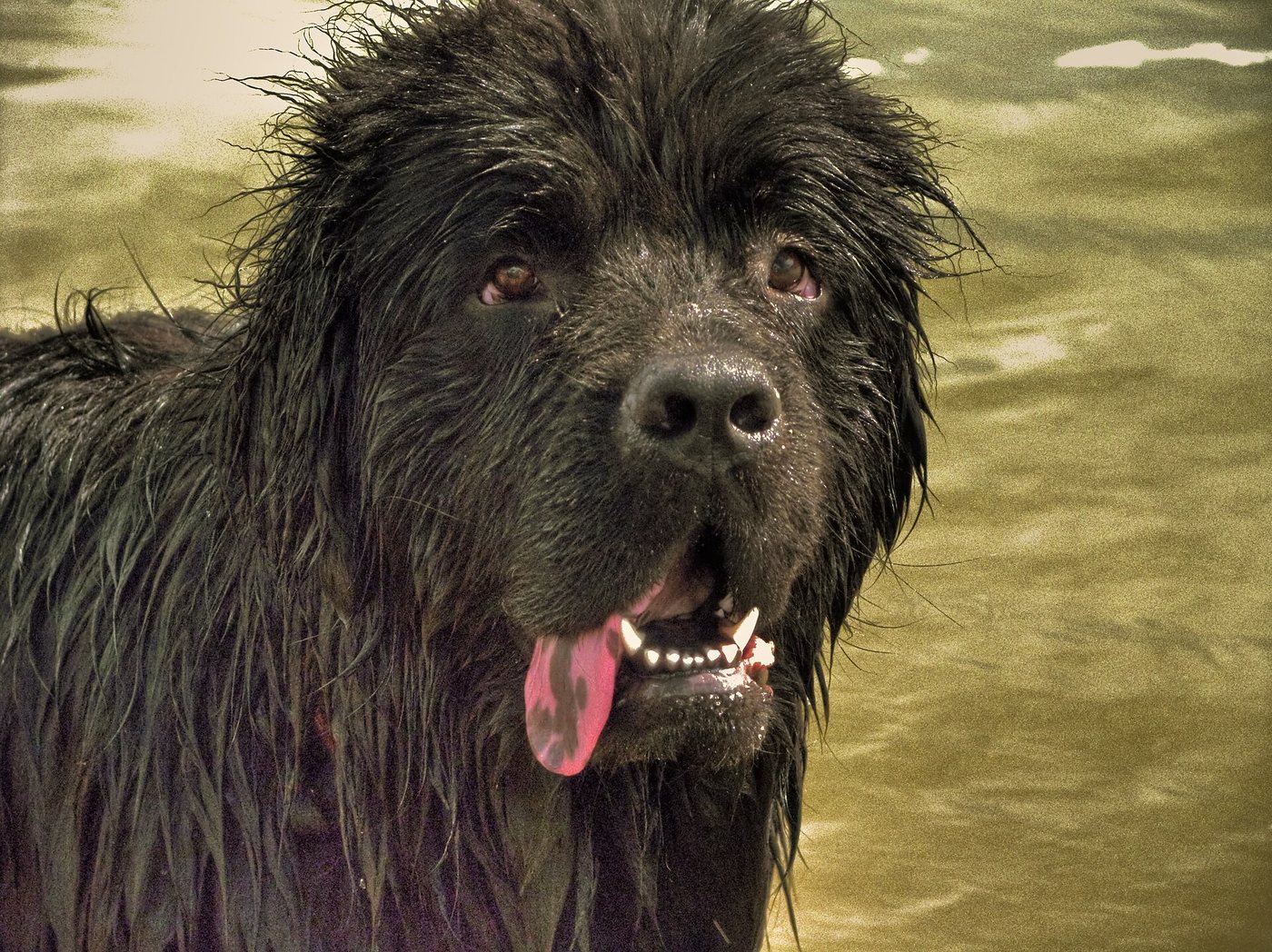
A massive, sweet-faced water dog: a huge broad head with a kindly, almost bear-like expression, deep chest, and a thick, oily double coat that is nearly waterproof — black is classic, with brown, grey, and the white-and-black Landseer pattern. Webbed feet and a powerful, rudder-like tail complete the equipment of a dog literally built to swim into freezing seas and haul people and nets ashore.
Care & daily life
Give about an hour of gentle exercise a day — swimming is the perfect Newfie workout, kind to joints and true to the breed's soul. Puppies need carefully limited exercise and stairs to protect growing joints. The coat needs brushing a few times a week and produces seasonal mountains of fur; drool is constant and legendary. Feed for slow, controlled growth in puppies — giant joints pay for fast growth.
Health & lifespan
The Newfoundland is generally known for the following health watch-points:
- Subvalvular aortic stenosis (SAS) and dilated cardiomyopathy — heart screening of breeding dogs is the breed's top priority
- Hip and elbow dysplasia
- Cystinuria, an inherited kidney-stone condition (DNA-testable)
- Bloat (GDV) as a giant, deep-chested breed
- Cruciate ligament tears are common in this heavy breed
Living with a Newfoundland
Newfoundlands fit calm, spacious, water-loving households with giant-breed budgets and a tolerance for drool and fur. They are gentle, undemanding companions indoors, magnificent with children, and devoted without being demanding. Heat and stairs are their enemies; a lake, a family, and a cool floor are their paradise.
History
The breed was forged on Canada's Newfoundland coast, where fishermen needed a dog that could haul nets and timber, pull carts, and — famously — dive into freezing Atlantic water to rescue the drowning. Newfoundlands served as ship's dogs across the maritime world; a Newfoundland named Seaman travelled with Lewis and Clark, and in 1919 one was credited with pulling 20 shipwreck survivors to shore through surf no boat could cross. Lord Byron loved his Newfoundland Boatswain so much that the dog's monument at Newstead Abbey is larger than the poet's own.