Overview
The Weimaraner — the Grey Ghost — is Germany's aristocratic all-purpose gundog: a silver-grey athlete bred to hunt birds and big game alike, then return home to live as a house dog at its master's side. That dual heritage explains everything about the modern breed: the stamina of a field dog, the brains of a problem-solver, and an almost physical need to be with its people. It is a magnificent dog for the right life and a genuine handful for the wrong one.
Temperament & personality
Friendly, fearless, and obedient in the standard's words — and intense in the owner's experience. Weimaraners are smart, strong-willed, and famously attached, earning the 'velcro dog' label honestly. They need early, thorough training and socialisation; an under-stimulated Weimaraner applies its intelligence to escape artistry, counter-surfing, and interior demolition.
Appearance
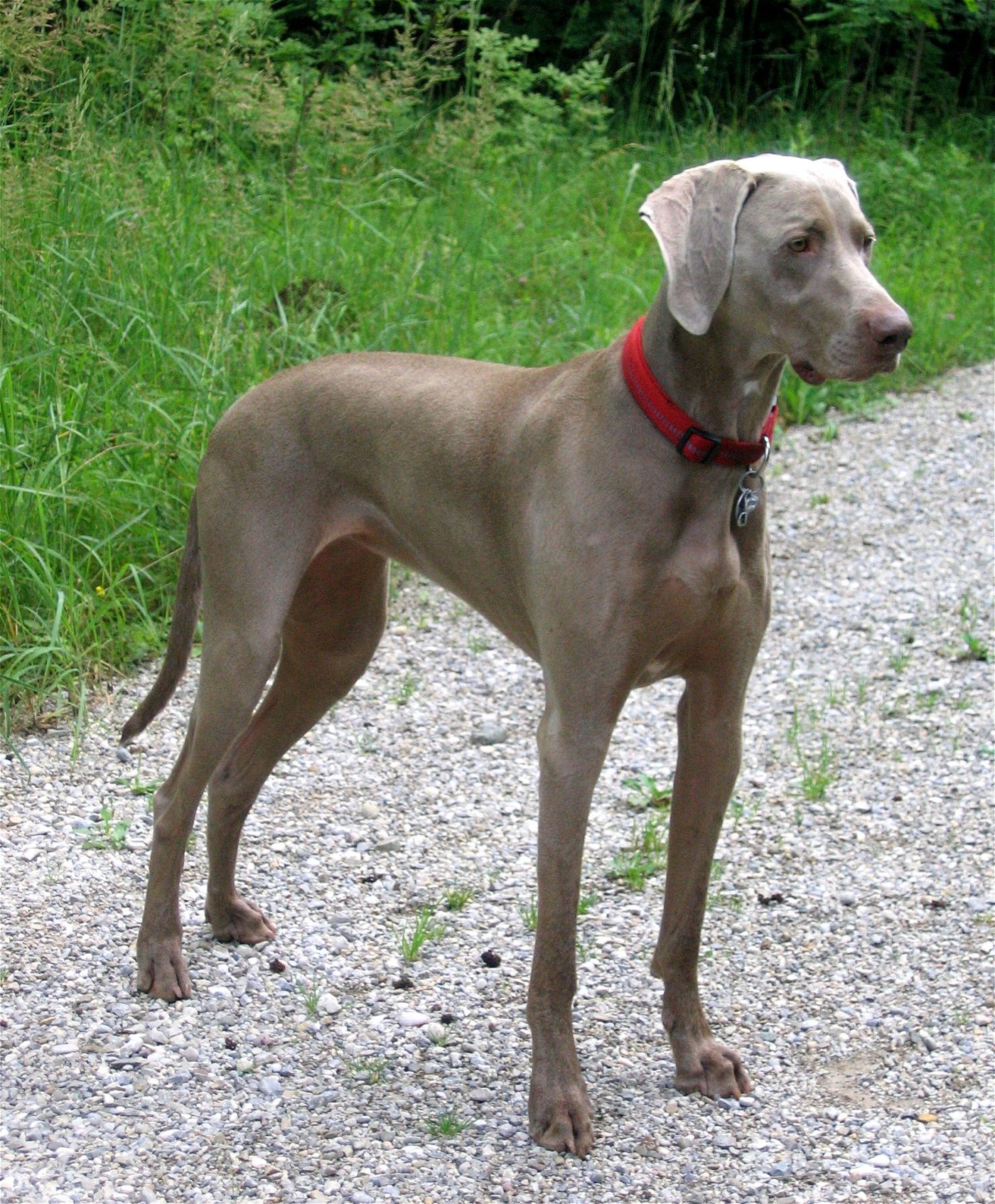
A dog of striking, aristocratic elegance: a long, lean, chiselled head, deep-set amber or blue-grey eyes, and a short, fine coat in solid silver-grey — every shade from light silver to deep charcoal. The coat's unique colour, neither quite grey nor brown, is the breed's signature. The build is pure athlete: deep chest, tucked waist, long effortless stride.
Care & daily life
This breed wants one and a half to two hours of real exercise a day — running, hiking, swimming, field work — plus training that keeps its brain employed. Weimaraners are velcro dogs that bond intensely and can develop separation anxiety and destructive habits if left alone and under-exercised. The short coat needs minimal grooming: a weekly brush and routine nail and ear care.
Health & lifespan
The Weimaraner is generally known for the following health watch-points:
- Bloat (GDV) — the breed's most serious risk; the deep chest and high energy demand careful feeding routines
- Hip dysplasia at moderate rates
- Hypothyroidism occurs in the breed
- Entropion and other eye conditions are screened for
- Separation anxiety is a behavioural health issue in this breed, not just a quirk
Living with a Weimaraner
Weimaraners belong to genuinely active, experienced homes — hunters, runners, hikers — where the dog works daily and sleeps indoors as family. They are miserable as kennel or yard dogs and risky around cats and small animals. In the right home, few breeds are more devoted or more fun.
History
The breed was developed in early 1800s Germany by noblemen of the Weimar court who wanted one dog that could hunt everything — pointing, retrieving, and tracking large game — and then come home to live in the house. For decades the German club guarded the breed so strictly that puppies were nearly impossible to export; an American, Howard Knight, finally brought breeding stock to the US in the 1930s–40s, and the 'Grey Ghost' became a sporting sensation.