Overview
The Westie is Scotland's answer to the question of how much personality fits in a 17-pound dog: a white earthdog bred to go down into rocky dens after foxes and badgers, and to come out ready for the next one. That working past survives as confidence, cheerfulness, and a cheerful conviction that the Westie is the most important person in any room. It is one of the most popular terriers in the world precisely because it packages true terrier spirit in a manageable, merry size.
Temperament & personality
Loyal, happy, and entertaining. Westies are friendlier and less scrappy than many terriers, but the breed's independence and prey drive are fully intact — a Westie will chase anything small that runs, and negotiate any command it finds uninteresting. They are bright and food-motivated, so training succeeds when it feels like a game the dog is winning.
Appearance
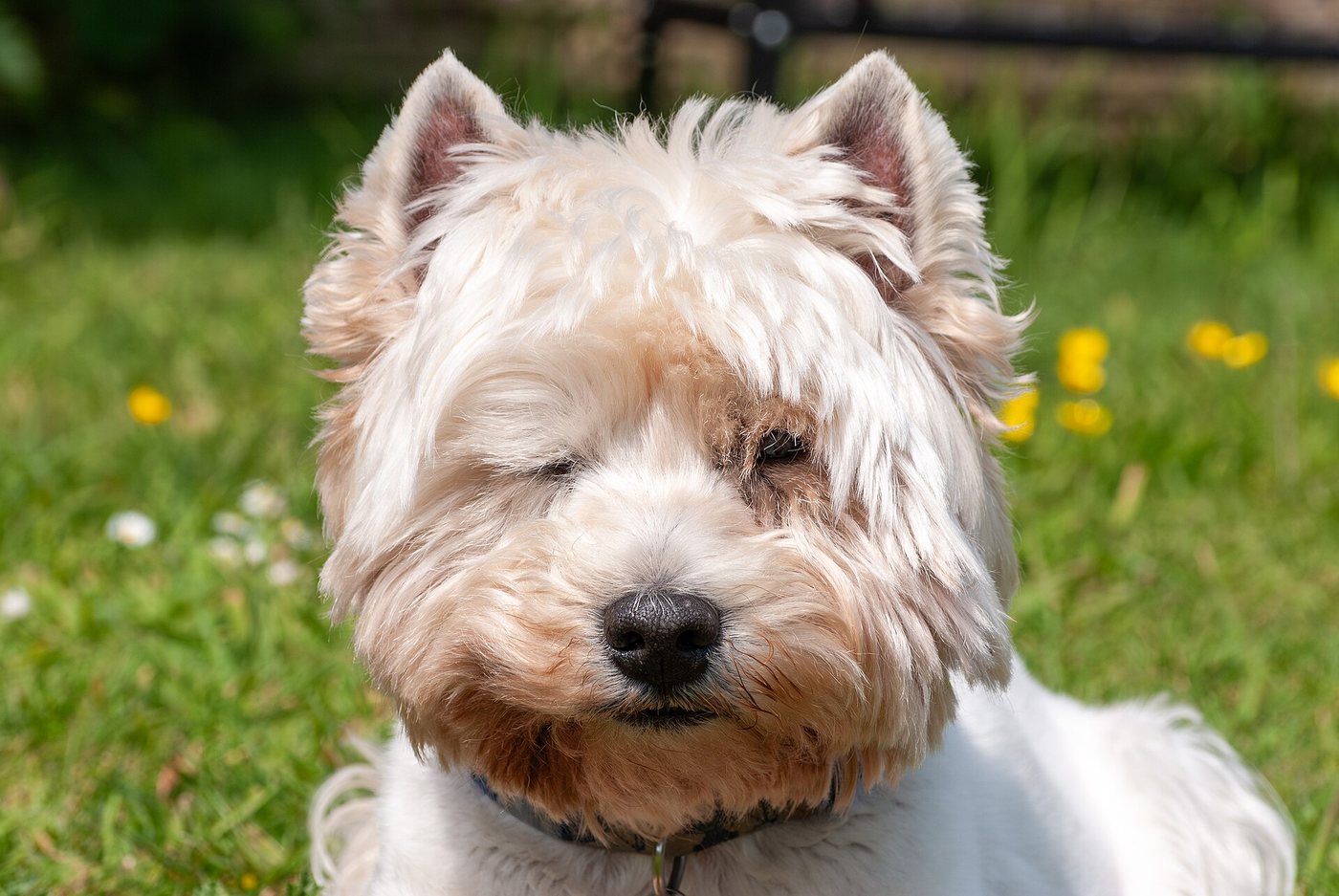
A sturdy, compact terrier wearing a double coat of pure white — a harsh, straight outer coat over a soft undercoat — with a cheerful, fox-like face, small erect ears, dark eyes full of mischief, and a carrot-shaped tail carried jauntily upright. The white coat was practical, not decorative: it let hunters distinguish dog from quarry in Scotland's rocky dens.
Care & daily life
Give about an hour of exercise and play a day — Westies are energetic little dogs that need real activity and, true to terrier design, a place to dig or a game that substitutes for it. The coat needs brushing a few times a week and either hand-stripping (for the classic harsh texture) or clipping every few months. Train with upbeat consistency; bribery works, battles don't.
Health & lifespan
The West Highland White Terrier is generally known for the following health watch-points:
- Skin disease is the breed's major issue — allergies and atopic dermatitis are common and can require lifelong management
- Craniomandibular osteopathy ('Westie jaw'), a painful puppy jaw condition, occurs in the breed
- Legg-Calvé-Perthes disease and patellar luxation occur at small-breed rates
- Copper-associated liver disease and bladder stones are reported
- White shaker syndrome occurs occasionally
Living with a West Highland White Terrier
Westies fit a wide range of homes — apartments and houses, families and singles — provided they get real exercise, training, and company. They are hardy, adaptable little dogs with big-dog attitudes, best for owners who enjoy a companion with opinions. Their prey drive means care around small pets and off-leash freedom only in secure areas.
History
The Westie belongs to Scotland's family of cairn-type earthdogs, bred for centuries to hunt fox, badger, and vermin among the rocky cairns of the Highlands. Legend fixes the breed's white colour to a tragedy: a Colonel Malcolm of Poltalloch shot his favourite reddish-brown terrier mistaking it for a fox, and bred thereafter only for white dogs he could never mistake. The Poltalloch Terrier became the West Highland White Terrier, recognised by the AKC in 1908.