Overview
The Whippet is a study in contrast: a racing dog capable of roughly 35 miles per hour — the fastest breed of its size — that spends most of its life as a professional lounger. Developed by working-class breeders in Victorian England for coursing and racing, the Whippet is a small Greyhound in all but size: gentle, quiet, clean, and deeply attached to soft furniture and its people's laps. Owners often describe them as the easiest of all breeds to live with.
Temperament & personality
Whippets are sweet, sensitive, and undemanding companions. They are affectionate without being clingy, quiet without being timid, and they greet strangers politely rather than exuberantly. Their prey drive is real — outdoors, a squirrel or rabbit can override all training — but indoors many live peacefully with cats they have been raised with. They dislike cold, rain, raised voices, and being left out of the warmest spot in the house, in roughly that order.
Appearance
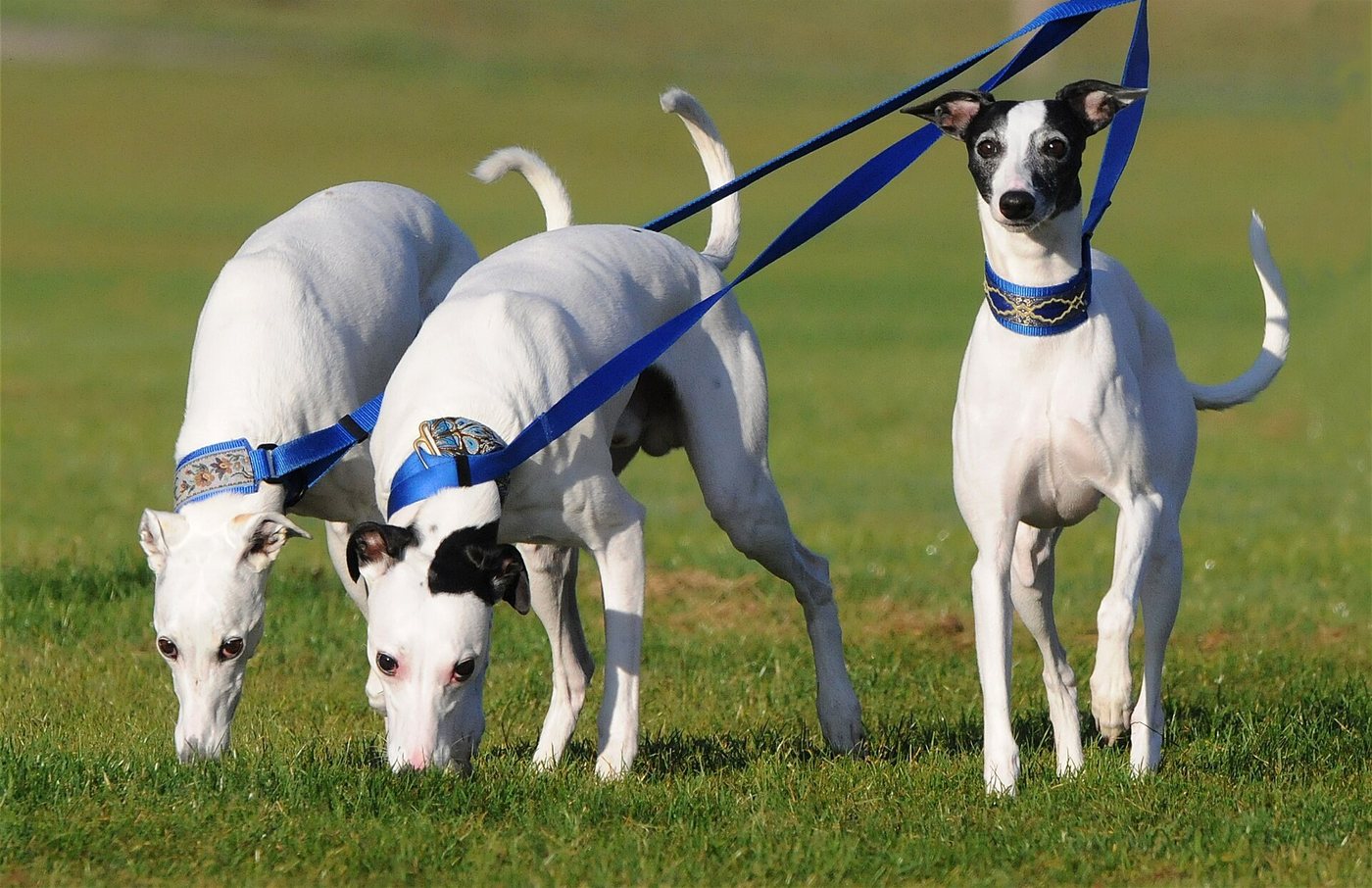
A miniature Greyhound: a deep chest, dramatically tucked waist, arched loin, long neck, and fine, close coat in nearly every colour and pattern imaginable. The head is long and lean with rose-shaped ears folded back. Everything about the silhouette speaks of speed, yet the expression is soft and gentle. Whippets have very little body fat and feel the cold, so coats and blankets are practical necessities, not fashion.
Care & daily life
About an hour of exercise a day, built around opportunities to sprint off-lead in a securely fenced area — a Whippet that has had its run is content to sleep for hours. Never trust one off-lead near roads or game; the chase instinct is instantaneous. Grooming is minimal: a weekly brush and occasional bath. Provide warm bedding and a coat for cold weather, and feed carefully — the breed's outline makes weight changes obvious, which is actually helpful.
Health & lifespan
The Whippet is generally known for the following health watch-points:
- One of the healthiest of all breeds overall, with low rates of most inherited disease
- Heart disease, particularly mitral valve disease, is the main condition screened for in older Whippets
- Eye anomalies occur occasionally; breeding stock should be eye-tested
- Deafness is rare but reported, mostly in predominantly white dogs
- Sighthounds can be sensitive to some anaesthetics — remind your vet of the breed's lean physiology
Living with a Whippet
Whippets are superb apartment and city dogs — quiet, clean, virtually odour-free, and moderate in their needs — and equally happy in country homes with secure fencing. They suit singles, couples, and families with gentle children. Their two firm requirements are a fenced place to run and a warm, soft place to sleep, ideally involving your furniture and possibly your bed.
History
Whippets were created in the industrial north of England in the 1800s, when working men crossed small Greyhounds with terriers and other breeds to produce an affordable racing and rabbit-coursing dog — 'the poor man's racehorse.' Dogs raced down lanes at rags or lures ('snap dog' racing, from the speed of the snap at the rag), and the breed was recognized by the AKC in 1888. Its gentle temperament has since made it as beloved a pet as it was a racer.