Overview
The goldfish is the world's most famous fish and its most wronged. A thousand years of Chinese breeding produced an intelligent, social, long-lived animal; the modern trade sells it as a disposable bowl ornament, and most die as juveniles in water that poisons them. Housed properly — and 'properly' means real volume, real filtration, and cool clean water — a goldfish becomes a genuine pet: greedy, recognisable, interactive, and capable of outliving the tank stand it sits on twice over.
Temperament & personality
Goldfish are the Labradors of the aquarium: cheerful, food-obsessed, and sociable to the point of comedy. They learn feeding times and faces, crowd the glass in anticipation, root through substrate like tiny pigs, and uproot plants as a hobby. Single-tails are athletic and boisterous; fancies are slower, clumsier, and often hand-tamed. What goldfish are not is solitary or decorative — they visibly do better with their own kind and with something to do.
Appearance
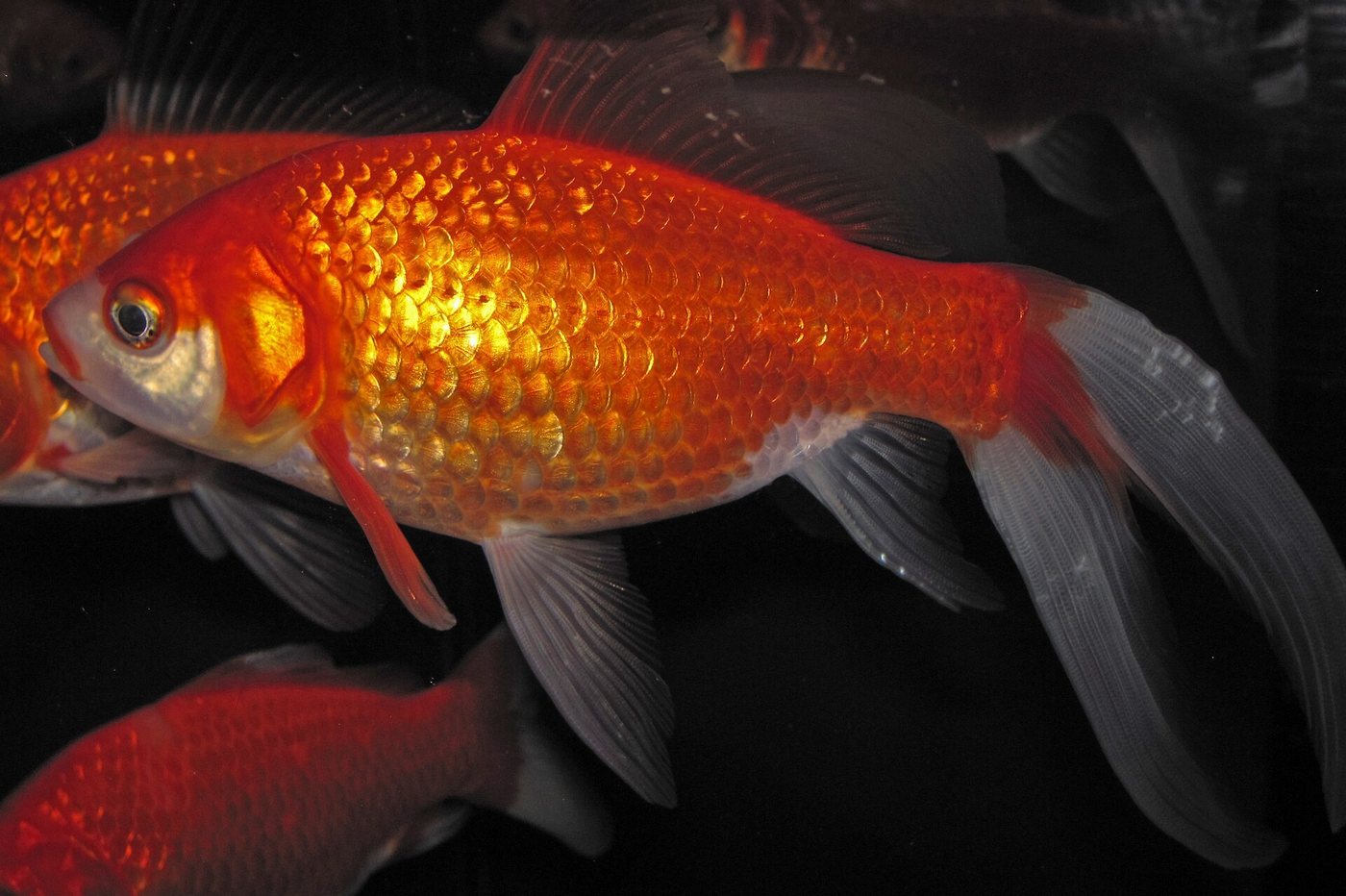
Two fish wear this name. Single-tailed 'common,' comet, and shubunkin goldfish are sleek, athletic torpedoes built like their wild carp ancestors, in orange, red, white, calico, and sarasa patterns. Fancy goldfish are the same species reimagined by breeders: egg-bodied ranchu and oranda (with fleshy head growths called wen), telescope and bubble eyes staring skyward, flowing double tails on fantails and ryukins. Colour ranges across red, orange, white, black, chocolate, and calico. Whatever the shape, the bright, food-focused expression is unmistakable.
Care & daily life
Think stocking first: the water volume and filtration must match a heavy, messy, oxygen-hungry fish — most experienced keepers run filtration well beyond the tank's rating, and weekly water changes of 30–50% are routine, not heroic. Feed sinking or soaked foods (fancies especially can gulp air with floating food, upsetting their swim bladders): quality pellets or gel food, plus peas, leafy greens, and occasional bloodworms, in amounts finished in a couple of minutes, twice a day. Keep the water cool-room-temperature rather than tropical, provide strong aeration, and decorate minimally — bare or sand-bottomed tanks with rounded ornaments suit clumsy fancies that bruise and tear fins on sharp decor.
Health & lifespan
The Goldfish is generally known for the following health watch-points:
- Ammonia and nitrite poisoning in small or uncycled tanks — the number one killer by a wide margin
- Swim bladder disorders, especially in round-bodied fancies fed floating food
- Ich, fin rot, and fungal infections exploiting stressed fish
- Constipation from dry, air-gulped diets — a squeeze of pea is the folk remedy with actual logic behind it
- Dropsy and bacterial ulcers in chronically poor water
Living with a Goldfish
Goldfish suit keepers with real space: a 40–75+ gallon filtered tank for fancies, or a pond for commons and comets, and a willingness to keep the same fish through a decade or more of moves and life changes. They reward that with surprising charm — recognising feeders, begging in formation, grazing contentedly. They are a terrible choice for small tanks, children's bedroom bowls, or anyone shopping for a pet measured in months rather than years.
History
Goldfish are domesticated crucian carp, first bred for colour in China over a thousand years ago — Tang and Song dynasty ponds held red-gold fish as living ornaments, and by the Ming era the fancy forms were being developed in bowls and tubs that shaped their breeding. They reached Japan, then Europe in the 1600s–1700s, then everywhere. Almost every goldfish myth — the bowl, the three-second memory (false; they learn routines for months), the disposable fairground prize — dates from the cheap Victorian-era trade, not from the fish itself.