Overview
The American Quarter Horse is the most numerous breed of horse in the world, and its résumé explains the popularity: the fastest horse alive over a quarter of a mile, the cowboy's working partner for two centuries, and one of the calmest, most forgiving mounts a beginner can buy. Bred from colonial sprinters and refined on Western ranches, it remains the default answer to almost every 'what horse should I get?' question in North America.
Temperament & personality
Sensible is the breed's defining word. Quarter Horses are typically calm, willing, and quick to settle — 'cold-blooded' in temperament compared with the hot breeds, though individuals vary and performance lines can be sharper. They are famously forgiving of rider mistakes, which combined with their versatility makes them the backbone of lesson programs, therapeutic riding, and family barns across the continent.
Appearance
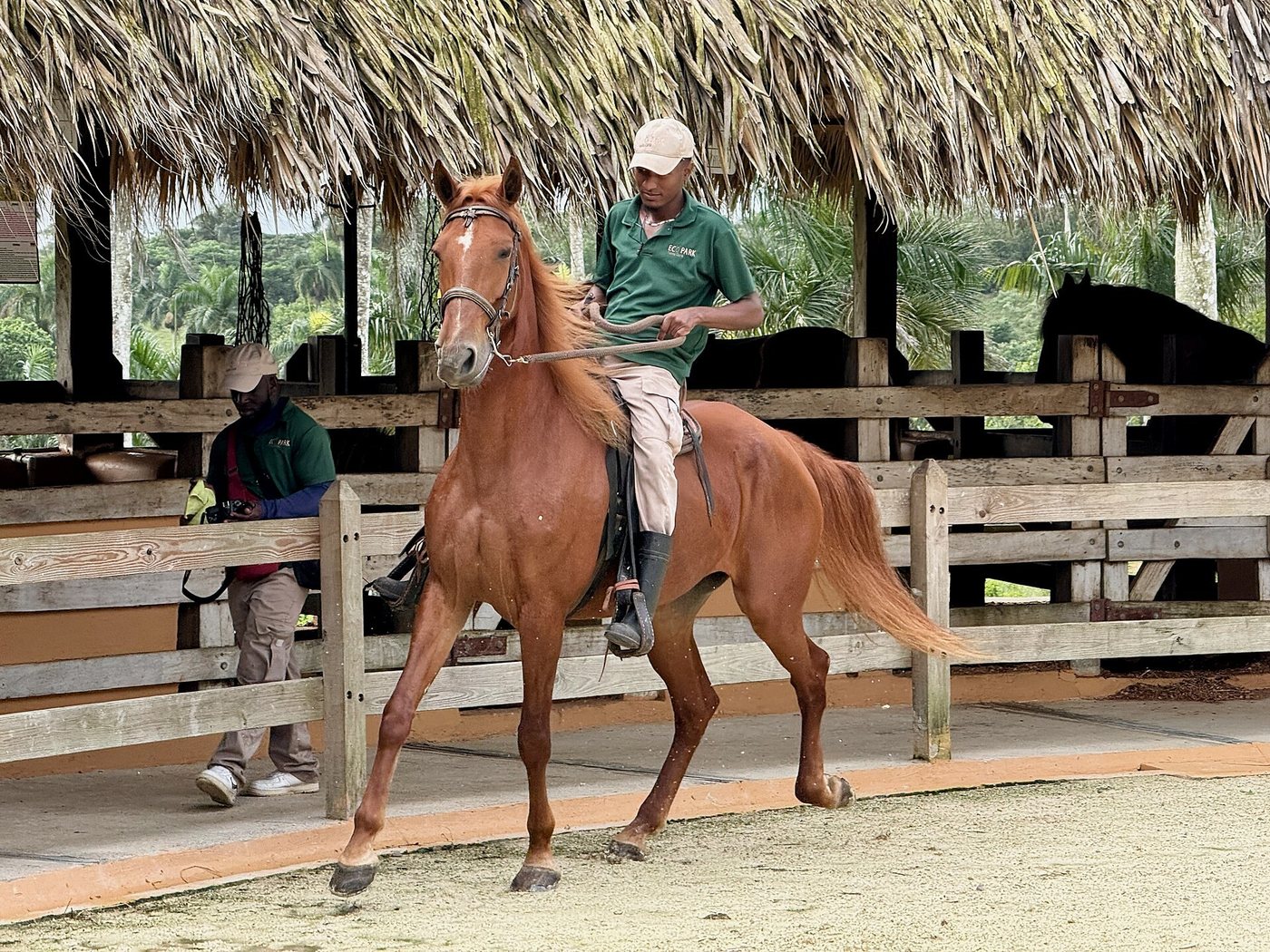
A compact, heavily muscled horse built for power over short distances: deep chest, powerful hindquarters, a refined head with a straight or slightly dished profile, and a calm expression. The hindquarter muscling is the breed's trademark — it is, quite literally, a bodybuilder among horses.
Care & daily life
Quarter Horses are famously easy keepers — many thrive on good forage with minimal concentrates, and weight must be watched. They need daily turnout, regular hoof care, and exercise matched to their job; the breed's downside is that easy keeping plus rich pasture invites obesity and laminitis. Training is generally straightforward thanks to the breed's willing mind, though young horses should not be worked hard on joints before maturity.
Health & lifespan
The American Quarter Horse is generally known for the following health watch-points:
- HYPP (hyperkalemic periodic paralysis) — an inherited muscle disorder traced to one influential sire; DNA testing is standard practice
- GBED (glycogen branching enzyme deficiency) — fatal in foals; DNA-testable
- HERDA — an inherited skin disorder of certain cutting-horse lines; DNA-testable
- PSSM1 (polysaccharide storage myopathy) — a muscle condition managed largely through diet and regular exercise
- Navicular syndrome and other front-foot lameness are the common everyday veterinary issues
Living with a American Quarter Horse
The Quarter Horse suits the widest range of owners of any breed: beginners, families, ranchers, competitors in a dozen disciplines, and trail riders who want an unflappable partner. Like all horses it is a 25–30-year commitment needing land or boarding, daily care, and real work or exercise — but within horse ownership, this is the lowest-drama way in.
History
The breed began in colonial America, where English Thoroughbreds were crossed with the tough Spanish-derived horses of the early settlers to produce a sprinter raced over a quarter of a mile. As settlement moved west, the same horse — fast, calm, and a natural at cattle — became the cowboy's mount. The American Quarter Horse Association was founded in 1940 in Fort Worth, Texas, and the breed grew into the largest registry on Earth, with millions of horses recorded.