Overview
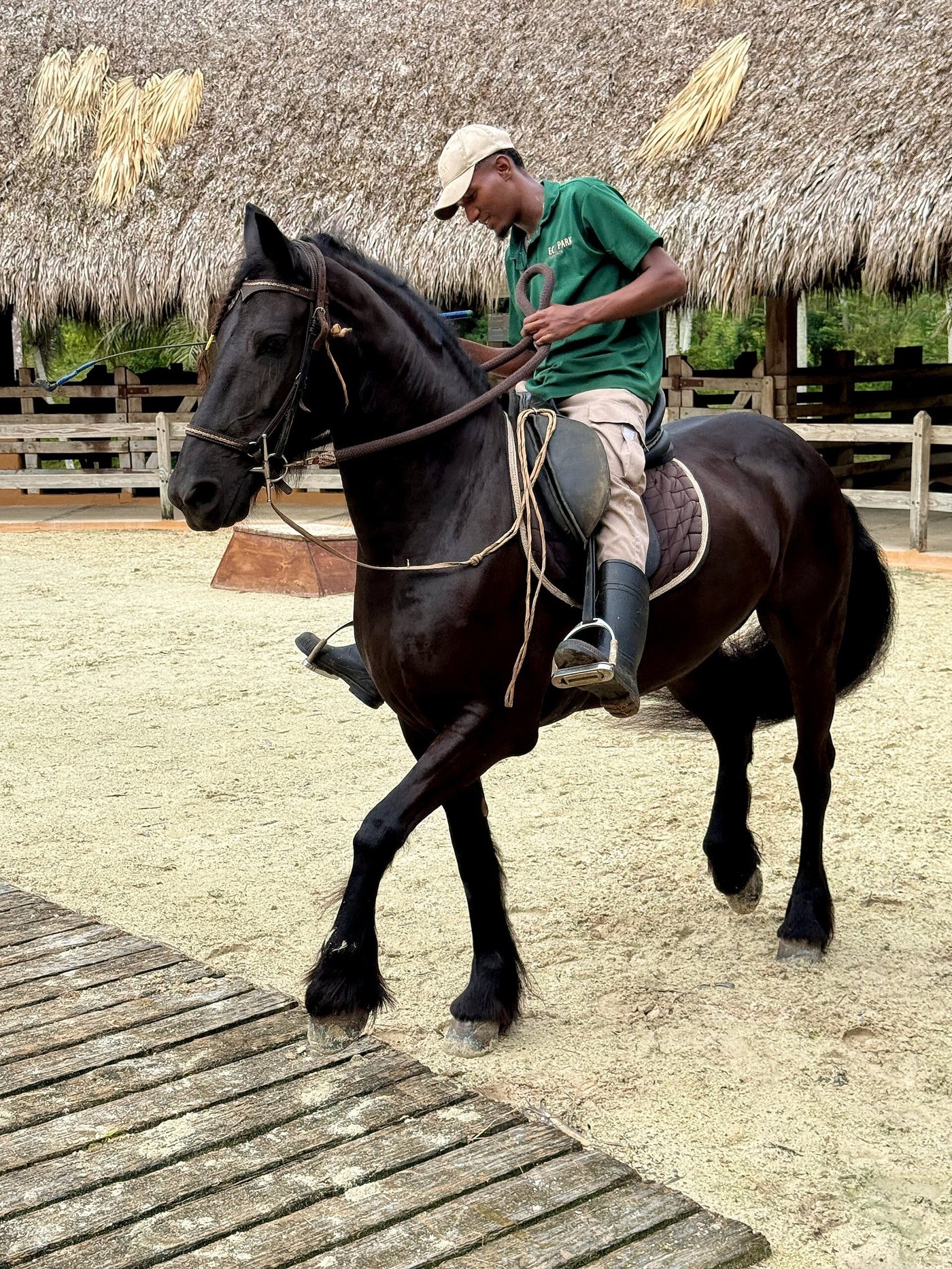
The Friesian is the film star of the horse world: coal-black, extravagantly maned, and moving with a high, proud trot that looks like slow-motion pageantry. Once the war and carriage horse of Friesland in the Netherlands, it survived near-extinction in the early 20th century to become one of the most recognisable and coveted breeds on Earth — the horse of movie battles, wedding carriages, and dressage arenas alike.
Temperament & personality
Behind the drama is a sweetheart: Friesians are known for gentle, willing, people-pleasing temperaments, steady enough for many amateur riders and famously fond of their humans. They are honest workers in harness and under saddle, neither as hot as a Thoroughbred nor as phlegmatic as a true draft. Their sensitivity is emotional rather than spooky — they bond, they try, and they thrive on praise.
Appearance
A dramatic, high-stepping black horse with a long, thick mane and tail and heavy feathering around the fetlocks. The head is fine and expressive with small ears, the neck thick and crested, the body compact and powerful. Friesians are always black — even a reddish tinge from sun-bleaching is penalised in the show ring, and no white beyond a tiny star is permitted for full registration.
Care & daily life
Friesians need consistent work to stay fit — they are easy keepers that gain weight on modest rations, so forage-based diets with measured feed are the rule. The mane, tail, and feather need real grooming time and the feather must be kept dry and inspected, as it hides skin trouble. They are notably heat-sensitive for a driving breed: in hot climates, work in the cool hours and watch conditioning carefully. Hoof care every 6–8 weeks and attention to the feathered legs' skin are standing chores.
Health & lifespan
The Friesian is generally known for the following health watch-points:
- Dwarfism and hydrocephalus occur as inherited conditions in the breed's small gene pool; DNA testing is available and used by the studbook
- Aortic rupture and aortic valve issues are reported at higher rates than in most breeds
- Megaesophagus occurs in the breed and is suspected to have a genetic component
- Chronic dermatitis of the feathered lower legs ('scratches' under the feather) needs vigilant management
- Retention of the placenta in mares is notably more common than in other breeds
- Heat intolerance and anhidrosis (reduced sweating) are practical concerns in warm climates
Living with a Friesian
Friesians suit drivers, dressage riders, and romantics who want a horse that turns heads at every outing — and who accept the running costs of that theatre: grooming time, black-coat care, higher purchase prices, and heat management. They are a 20-plus-year commitment best kept where summers are moderate or facilities are good. Few breeds reward their owners with more sheer presence per day.
History
Friesians come from Friesland in the northern Netherlands, where the type was shaped over centuries as a war horse, then a trotting carriage horse — Frisian 'harddravers' were famous racers under saddle and in harness in the 18th and 19th centuries. Mechanisation nearly killed the breed: by the early 1900s only a handful of stallions remained. Careful rebuilding by Dutch breeders, and a late-20th-century love affair with the breed in film and dressage, restored it worldwide. The KFPS studbook, founded in 1879, remains one of the strictest in the horse world.