Overview
The Appaloosa is America's spotted original: a stock horse selectively bred by the Nez Perce long before breed registries existed, valued for intelligence, stamina, and coats that look hand-painted. Modern Appaloosas work ranches, show in both Western and English tack, pack into the mountains, and star in parades — a breed whose hardiness survived war, dispersal, and near-extinction to become one of the most popular in the United States.
Temperament & personality
Appaloosas carry a reputation for brains and opinions: smart, brave, sometimes stubborn horses that bond to their people and test riders who aren't paying attention. Owners tend to describe them as characters — funny, self-assured, and loyal. The Nez Perce bred for sense as much as speed, and the modern breed keeps a level-headed willingness that makes it a favourite trail and family horse, provided the rider appreciates a partner rather than a machine.
Appearance
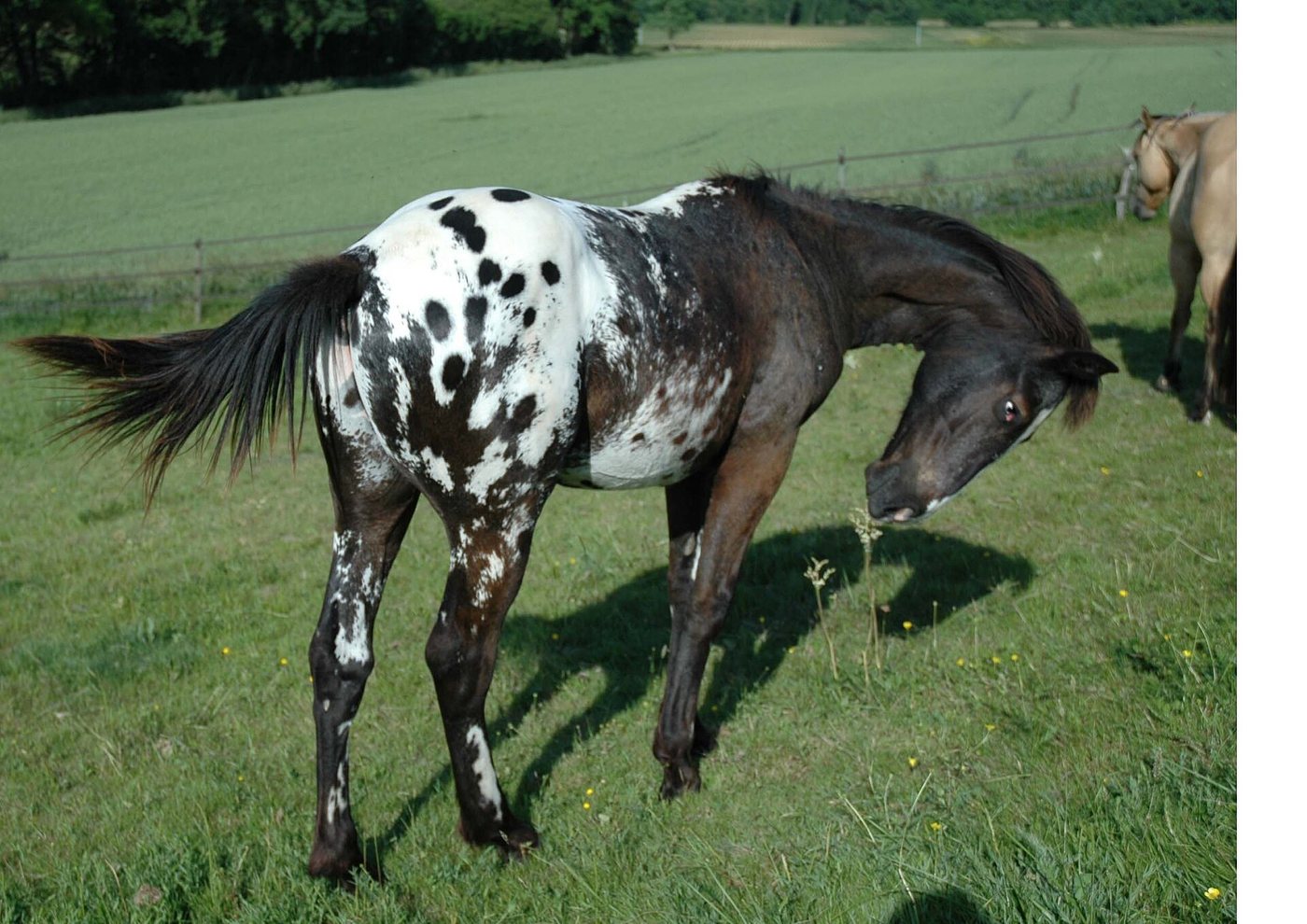
A stock-type horse wearing one of three bold coat patterns: blanket (a white 'blanket' over the hips, usually with dark spots), leopard (white over the whole body with dark spots throughout), or snowflake/roan variations. Solid-coloured Appaloosas also occur and are registrable. Mottled skin, striped hooves, and white sclera around the eye are breed characteristics found in most patterned horses.
Care & daily life
Appaloosas are hardy, easy-keeping saddle horses with the standard care of their type: forage-based feeding with weight control, daily turnout, hoof care (the striped hooves are normal, not a defect), and a normal exercise program. Sun management matters for pink-skinned horses: lightly pigmented areas, especially around the eyes and muzzle, sunburn readily and benefit from fly masks and shade. Vision should be checked regularly — this breed's known eye conditions make an annual eye exam a genuinely good idea.
Health & lifespan
The Appaloosa is generally known for the following health watch-points:
- Equine recurrent uveitis (ERU) — Appaloosas are affected at rates several times higher than most breeds; it is the leading cause of blindness in horses
- Congenital stationary night blindness in leopard-patterned horses (linked to the leopard complex gene, TRPM1)
- HYPP has been documented in Appaloosas with certain Quarter Horse ancestry — testing is available
- Sunburn on pink, lightly pigmented skin, especially around eyes and muzzle
- Otherwise a hardy breed with the standard stock-horse concerns (weight, joints, feet)
Living with a Appaloosa
Appaloosas suit riders who want a hardy, versatile, unmistakably individual horse: trail riders, Western and English pleasure competitors, ranch hands, and families. They are generally easy keepers across a 25–30-year life, asking the standard horse commitment of land or board, daily care, and work — with sun and eye vigilance as the breed-specific extras.
History
The Appaloosa's spotted ancestors arrived in the Americas with the Spanish, but the breed was made by the Nez Perce (Niimiipuu) of the Pacific Northwest, who practised genuinely selective breeding — rare among the era's horse cultures — for speed, sense, and the striking coats. After the Nez Perce War of 1877 the horses were scattered and the type nearly lost; a registry founded in 1938 in Idaho rebuilt the breed from surviving stock, and the Appaloosa became Idaho's state horse and a fixture of Western riding.