Overview
The Belgian is the heavyweight champion of the horse world: no breed is more massive, and individuals have held the records for both the tallest and the heaviest horses on Earth. Developed in the low, rich farmland of Brabant in Belgium and refined in North America into a sorrel, blond-maned specialist, the Belgian was built to pull — ploughs, wagons, and, in modern pulling competitions, sledges loaded with astonishing tonnage — and to do it all with a famously placid, workmanlike mind.
Temperament & personality
Belgians are the strong, silent type: calm, patient, docile, and remarkably gentle for animals that can weigh more than a family car. They were selected for a century to work all day beside farmers and to be handled by whoever was available, and it shows in their tolerance and steadiness. They are rarely dramatic; a Belgian's whole philosophy is to lean into the collar and get on with it.
Appearance
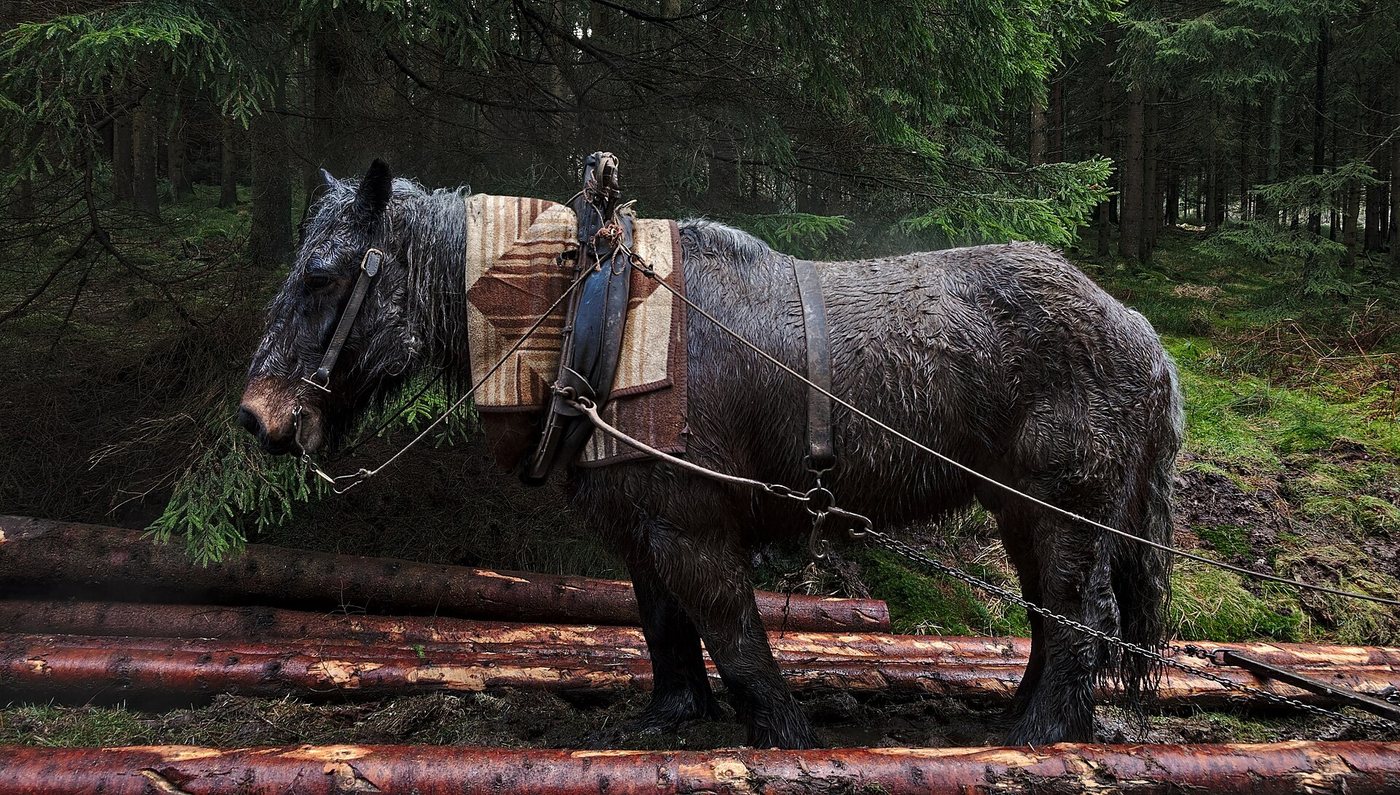
The American Belgian is one of the most recognisable horses alive: a deep sorrel or chestnut body, a pale flaxen mane and tail, a white blaze and socks, and white feathering kept shorter than the British breeds'. The body is compact but enormous — short, deep, and heavily muscled, with a relatively refined head on a thick, crested neck. European Brabants are heavier and more powerfully built still, with roan, bay, and black common.
Care & daily life
Everything is supersized: feed bills (though Belgians are efficient for their mass), stalls, trailers, shoeing by draft farriers, and veterinary work scaled to a ton of horse. The lower legs need daily discipline — feather and skin must be checked and kept dry, because this breed carries real leg-disease burdens. Regular work or exercise is not optional: a fit, working Belgian is a healthy one, and idle drafts on lush pasture founder. Young horses should grow slowly on balanced rations to protect joints under enormous weight.
Health & lifespan
The Belgian Draft is generally known for the following health watch-points:
- EPSM/PSSM (equine polysaccharide storage myopathy) — exceptionally common in Belgians; studies of draft populations have found the majority of Belgians showing muscle changes. Managed primarily through low-starch, fat-supplemented diets and daily exercise; a DNA test exists for the type-1 form (PSSM1)
- Junctional epidermolysis bullosa (JEB) — an inherited, fatal skin-blistering condition of newborn foals; carriers are identified by DNA test, and responsible breeders test all breeding stock
- Chronic progressive lymphedema (CPL) — incurable, progressive swelling and skin disease of the feathered lower legs; a major burden in the breed, and meticulous leg care is the only management
- Shivers, a neuromuscular hind-limb condition, occurs in Belgians as in other drafts
- Draft-scale orthopedic wear and laminitis risk under excess weight
Living with a Belgian Draft
Belgians suit working farms, pulling competitors, hitch teams, and anyone who wants the gentlest of giants and has genuinely draft-scale facilities and budget. Feed, farriery, housing, and transport all scale to a ton-plus of horse for 20–25 years. In exchange, owners get the calmest heavyweight in the business — a horse that pulls like machinery and behaves like a big, kind dog.
History
The Belgian descends from the great Flemish war and farm horses of medieval Brabant, formalised in the 19th century into regional strains and a national studbook that made Belgium a famous exporter of heavy horses. Imported heavily to North America in the late 1800s and early 1900s, the breed split: in Europe the Brabant stayed a roan, bay, or black farm horse, while American breeders fixed the sorrel-and-flaxen type and somewhat lighter frame of today's Belgian Draft. The breed survived mechanisation on Amish farms, in pulling contests, and in hitch rings.