Overview
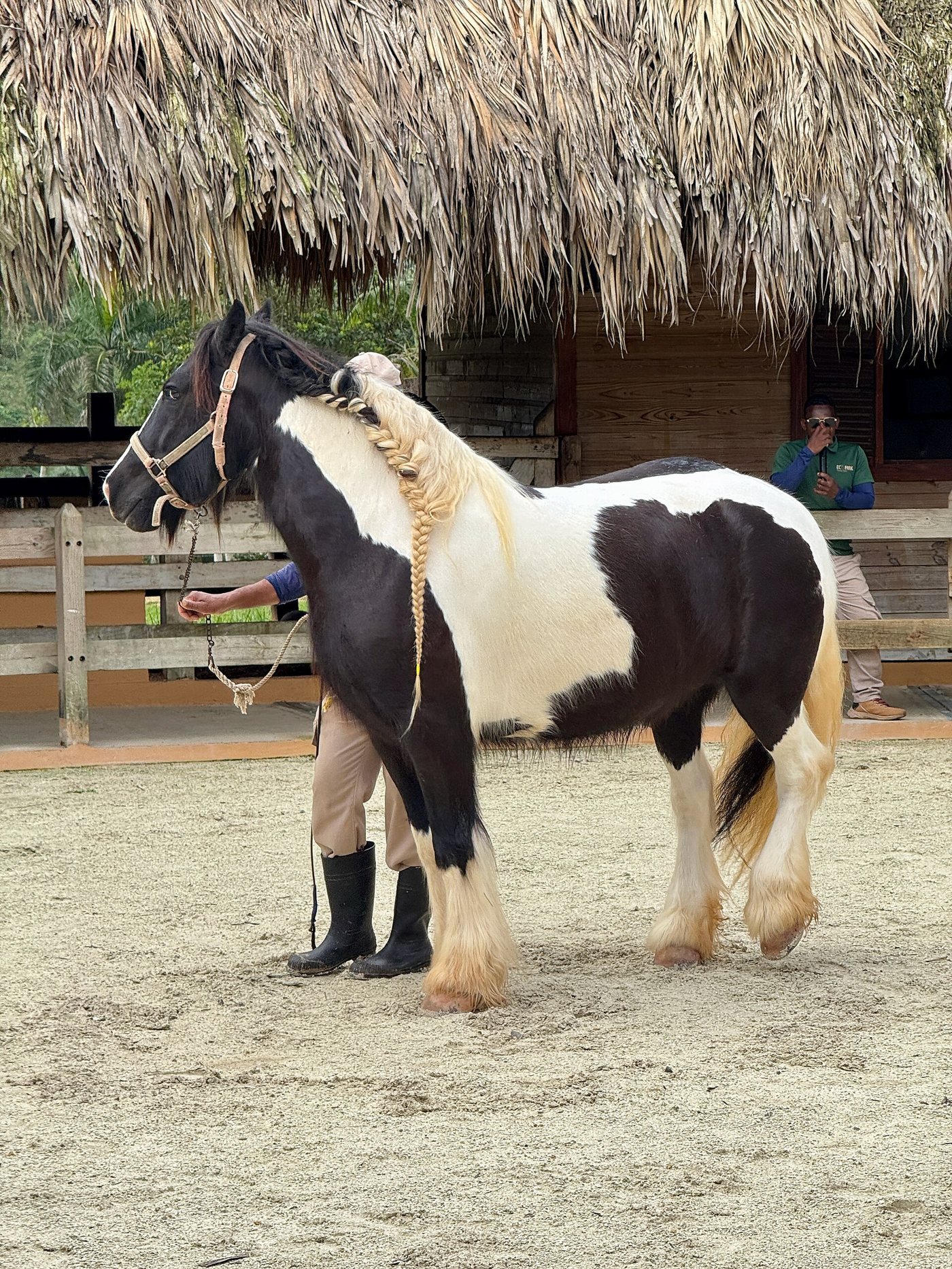
The Gypsy Vanner — in Britain simply the Gypsy Cob or Traditional Cob — was created by the Romani travellers of Britain and Ireland as the perfect caravan horse: strong enough to pull a vardo (the ornate living wagon that was a family's entire home), economical to feed on roadside grazing, flashy enough to be a family's pride and wealth, and gentle enough to be led by children. Built from Shire, Clydesdale, Dales Pony, and Fell blood, it is a small draft horse of enormous feather, hair, and heart — standardised as a named breed only in the 1990s, when it was introduced to North America.
Temperament & personality
Vanners are famously sweet-natured — patient, confident, friendly, and deeply tolerant, with the watchful intelligence of horses raised inside a family's daily life. They are steady in traffic (the road was their home), easy to catch, and keen to be with people. It is among the most beginner-friendly of the heavier types, though its strength and hair-care demands mean 'gentle' should never be confused with 'no management required'.
Appearance
A compact powerhouse: a 'sweet', refined head for a draft type, a short, strong back, heavily muscled hindquarters, and legs dressed in abundant, straight, silky feather flowing over round feet. The mane and tail are profuse — show horses wear them to spectacular length. Piebald and skewbald patterns dominate the popular image, but solids are equally correct. The overall effect is a baroque fairy-tale horse at cob size.
Care & daily life
The glory is the grooming bill: feather, mane, and tail require serious, regular labour — washing, conditioning, detangling, and above all inspection, because the feather conceals the skin conditions this breed is prone to. Legs must be kept as dry as circumstances allow and checked by hand, not by eye. Feeding is cob economics — easy keepers that gain on forage — and feet are round, strong, and often managed barefoot or with light shoes by farriers comfortable with draft-type feet.
Health & lifespan
The Gypsy Vanner is generally known for the following health watch-points:
- Chronic progressive lymphedema (CPL) — the progressive, incurable lower-leg swelling and skin disease of feathered breeds — is a significant burden in Gypsy horses; meticulous feather and leg management is the only control, and legs must be examined by hand at purchase
- Mallenders and sallenders — chronic crusting and thickening of the skin behind the knees and in front of the hocks, characteristic of heavily feathered cobs — need ongoing management
- Feather mites (chorioptic mange) thrive in the leg hair and drive the itching and stamping that opens the door to worse skin disease
- PSSM1 (muscle disease) has been documented in the breed; DNA testing is available
- Easy-keeper obesity and laminitis on rich pasture — the standard cob risks
Living with a Gypsy Vanner
Gypsy Vanners suit drivers, show enthusiasts, and families who want a gentle, fairy-tale horse and genuinely enjoy grooming — with this breed, coat care is a hobby in itself. Costs are moderate: cob-sized feed bills, but real time or money in feather care, across a 20–25-year life. They thrive as part of a family's daily life, which is precisely what they were bred for.
History
Romani families in Britain and Ireland bred the type for generations by word of mouth and eye, valuing a small, hardy, colourful pulling horse; outstanding stallions passed between families and became legend without paperwork. After the Second World War the type consolidated, drawing on Shire and Clydesdale size and Dales and Fell hardiness. In 1996, American breeders Dennis and Cindy Thompson formalised the 'Gypsy Vanner' as a breed in North America — the name honours the caravan, a 'vanner' being a horse fit to pull a van — and founded the first registry; in its homelands, the same horse remains the traditional Gypsy Cob.