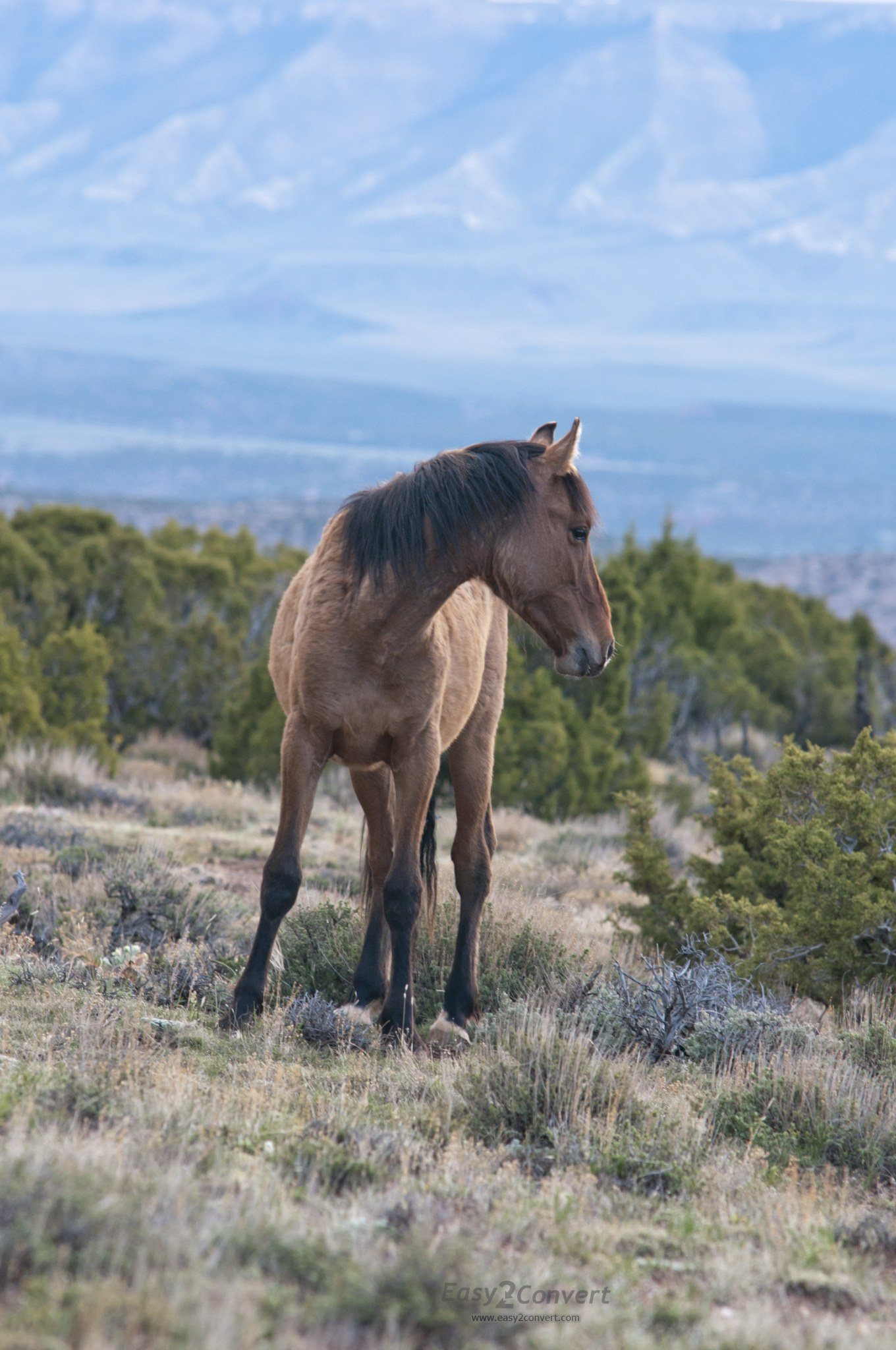
Overview
The Mustang is the horse the American West made: descendant of Spanish colonial stock, shaped by desert, mountain, and winter into a compact, iron-footed survivor. Not a studbook breed but a free-roaming population protected by federal law since 1971, Mustangs now come into domestic life mainly through the Bureau of Land Management's adoption program — where the challenge of gentling a wild horse has created one of the most devoted followings in the horse world.
Temperament & personality
A wild Mustang's first instinct is self-preservation — flight, vigilance, and a sharp intelligence about people and pressure. That same intelligence, given patient and consistent gentling, produces a horse of unusual depth: sure-footed, sensible, economical in its reactions, and famously bonded to the person who earned its trust. Owners consistently say a gentled Mustang watches its rider and thinks — a partner, not a vehicle.
Appearance
'Mustang' describes a type, not a uniform breed: free-roaming horses of Spanish colonial ancestry, typically compact and hardy — 13–15 hands, strong-boned, with tough, excellent feet, a slightly convex or straight profile, and every coat colour including dun, grullo, roan, and pinto patterns. Generations of natural selection removed the frail; what remains looks like survival itself.
Care & daily life
Adopted Mustangs are famously easy keepers: plain forage often suffices, and overfeeding is the commonest beginner mistake — obesity and laminitis stalk the pampered ex-wild horse. Feet are usually superb. The real care work is gentling and training: unhandled horses need weeks of patient, professional-grade groundwork before riding enters the picture, plus secure, tall fencing (they can and do jump or test panels) and quarantine/veterinary catching-up (vaccinations, dental, deworming history may be unknown).
Health & lifespan
The Mustang is generally known for the following health watch-points:
- Remarkably sound as a population — natural selection removed fragile genetics; feet and legs are particular strengths
- Laminitis and obesity are the leading risks in captivity, because easy keepers evolved for scarcity meet rich domestic feeding
- Stress colic during capture, transport, and gentling is a management risk in newly adopted horses
- Unknown vaccination, dental, and parasite histories require a full veterinary work-up on adoption
- Some herds carry higher rates of certain inherited traits depending on local ancestry; most have no systematic DNA disease burden
Living with a Mustang
Mustangs suit patient, experienced owners — or first-time owners who choose a trained, gentled horse — drawn to trail riding, endurance, and the partnership of a horse that chose them back. They are a 25–30-year commitment with a front-loaded investment in training and trust. For the right person, no breed's bond runs deeper: a Mustang's loyalty, once earned, is total.
History
Mustangs descend from horses brought by Spanish colonists from the 1500s onward — 'mustang' comes from the Spanish mesteño, meaning stray or ownerless. Escaped and released horses formed vast free-roaming herds across the West and became central to Native American cultures, the cattle frontier, and American mythology. Persecution in the 20th century drove numbers down until the Wild Free-Roaming Horses and Burros Act of 1971 made them a protected, federally managed population; today the BLM manages herds on public rangelands and runs the adoption program that brings Mustangs into domestic life.