Overview
The Percheron is the draft horse for people who think they don't like draft horses: a French heavy breed with the mass of a workhorse and the bearing of a cavalry mount. Developed in the Le Perche region of Normandy, it hauled France's stagecoaches and farm wagons, then crossed the Atlantic to become the most popular draft breed in America. Black or grey, clean-legged with no heavy feather, and notably active in its gaits, the modern Percheron works show hitches, pulls in weight competitions, logs forests, and increasingly turns up under saddle.
Temperament & personality
Percherons are proud, bright, and comparatively spirited for a heavy breed — horsemen call them the most 'awake' of the drafts. They learn quickly, work willingly, and bond with their handlers, but their intelligence means they notice inconsistency and can test a careless handler. Compared with the slower, phlegmatic Belgian or Clydesdale, a Percheron is a draft horse with opinions and energy, which is exactly why drivers and showmen love them.
Appearance
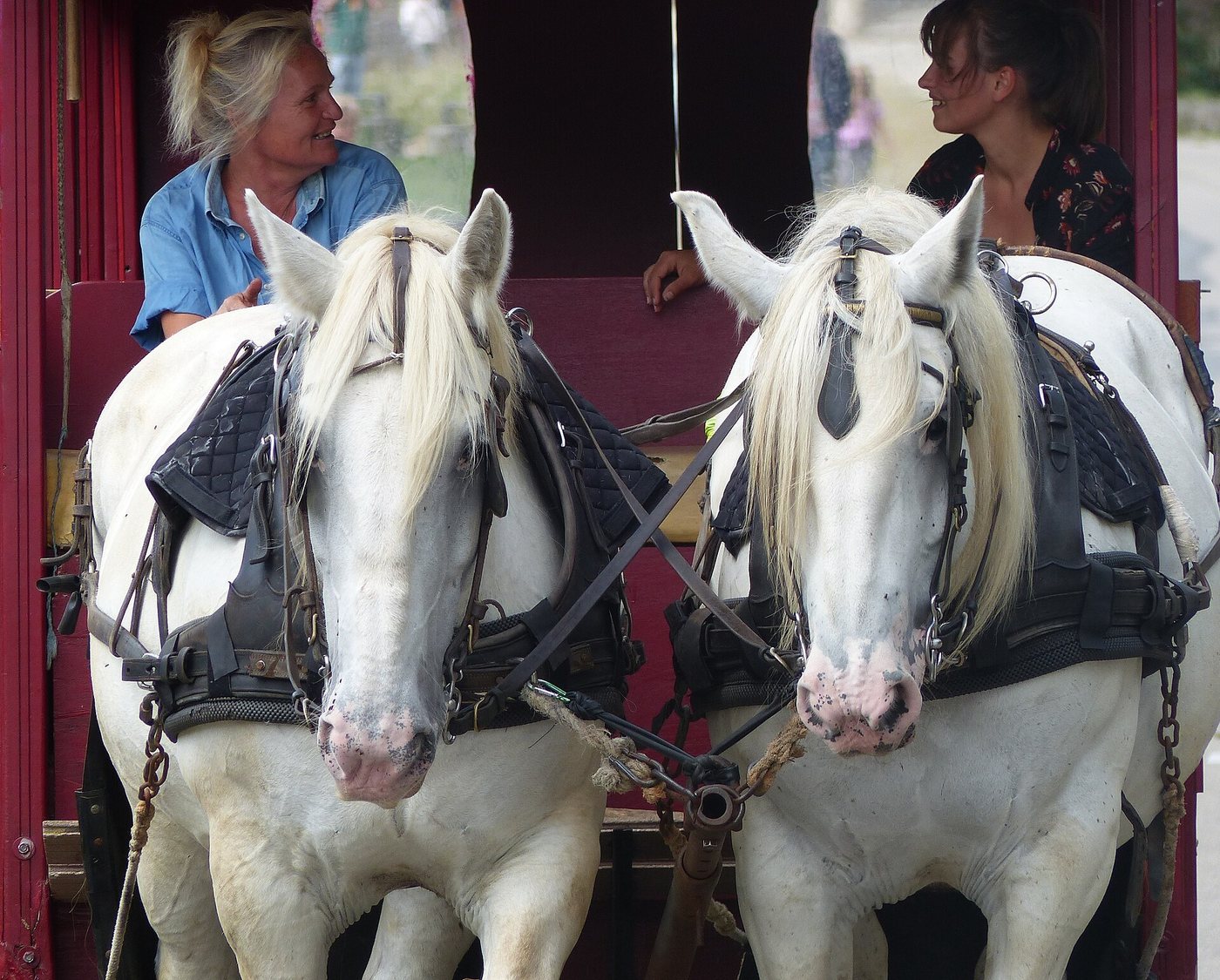
A Percheron is massive but refined about the head: a broad forehead, straight or slightly dished profile, large expressive eyes, and small ears on a clean, elegant head that betrays centuries of Arabian influence. The neck is crested and powerful, the body deep and compact, the legs clean-boned with minimal feather — unusual among drafts. Blacks dominate American show rings; dappled greys are the classic French image of the breed.
Care & daily life
Care is draft-scale: generous forage, measured concentrates for horses in work, big stalls and trailers, and a farrier equipped for horses that may go shod with heavy shoes or trimmed barefoot. The clean legs are a genuine blessing — little feather means far less skin trouble than feathered breeds. Percherons in harness work need real conditioning; these are athletes of mass, and fitness, weight control, and joint care decide how long they stay sound.
Health & lifespan
The Percheron is generally known for the following health watch-points:
- PSSM (polysaccharide storage myopathy, type 1) occurs in the breed — a muscle disorder managed with low-starch, fat-supplemented diets and consistent daily exercise; DNA testing is available
- Shivers — a neuromuscular hind-limb condition seen in draft breeds — can occur
- Draft-scale joint wear (hocks, stifles) and sidebone/ringbone from sheer mass and hard work
- Obesity and laminitis in idle horses on rich pasture — the easy-keeping draft metabolism punishes overfeeding
- Generally one of the soundest drafts; the clean legs largely spare it the chronic progressive lymphedema that burdens heavily feathered breeds
Living with a Percheron
Percherons suit drivers, hitch exhibitors, small farmers and loggers who still work horses, and riders who want draft calm with extra sparkle. Everything costs draft prices — feed, farriery, housing, trailers — across a 20–25-year life. Owners should want daily interaction: this is too intelligent and too large a horse to be a field ornament, and too good a partner to waste.
History
The breed was made in Le Perche, a small region southwest of Paris, where local heavy mares were crossed for centuries with outside blood — tradition credits Arabians obtained after the Battle of Tours in 732, and, more verifiably, Arabian and Barb stallions imported in the 18th and 19th centuries gave the breed its elegance and its grey colour. Percherons pulled the stagecoaches (diligences) of France and artillery in wartime. Imported to the United States from the 1850s, they outnumbered all other draft breeds combined by the early 1900s; mechanisation crashed the population, but hitch showing revived it.