Overview
The Californian wears its biography on its face: a commercial rabbit designed in 1920s California for the meat and fur trade, marked with the dark points of its Himalayan ancestors — and possessed, as a side effect of a century of selection for animals that thrive under handling, of one of the steadiest temperaments in the rabbit world. As a pet it is essentially a 10-pound lap-warmer in a white coat: docile, tolerant, unflappable, and considerably larger than people expect when they fall for the kits.
Temperament & personality
Calm is bred in. Californians are docile, easygoing, and accepting of handling by rabbit standards — the commercial virtues (an animal that doesn't panic, fights less, and eats reliably) translate directly into pet virtues. They are not the most playful breed, but they are notably people-oriented, settle into household routines, and make excellent first big rabbits for patient families. Neutering keeps bucks sweet and does healthier, as everywhere on this page.
Appearance
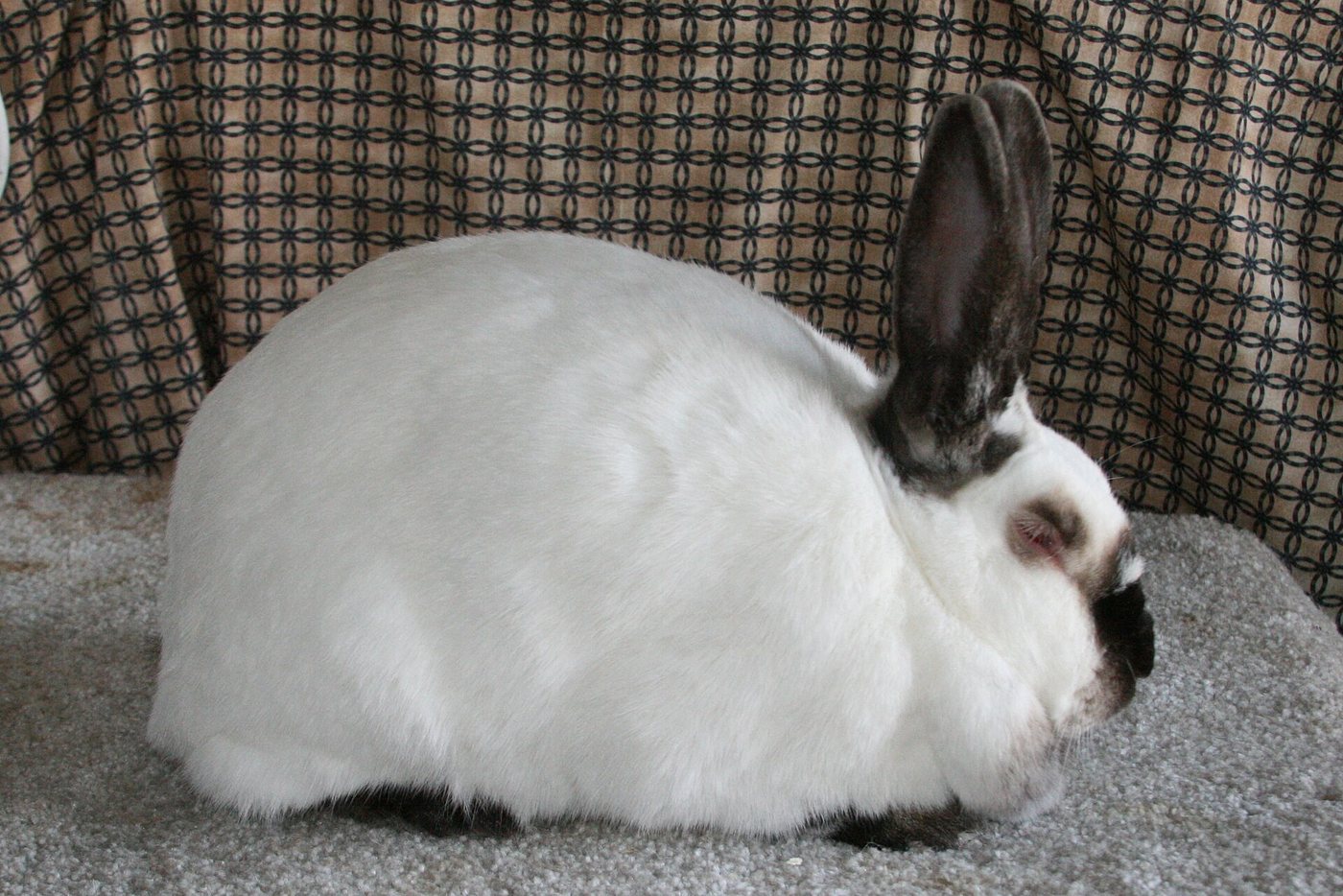
A big, white, businesslike rabbit with a secret: the points — nose, ears, feet, and tail — are dark (black, blue, chocolate, or lilac), coloured by the same temperature-sensitive gene that marks Siamese cats and Himalayan rabbits. Kits are born pure white; the points darken as they grow, deepen in cold weather, and can pale in heat. The body is the classic commercial shape — deep, round, and meaty over the hips — with a short, dense, flyback coat. Red eyes complete the albino-family picture.
Care & daily life
Commercial breeding produced a rabbit that thrives on straightforward care: unlimited grass hay, a measured pellet ration (this breed converts food efficiently and fattens easily — weigh the pellets, don't free-pour), daily leafy greens, and water. Housing needs to be generous — an extra-large pen or room, with daily exercise; an 10-pound rabbit in a small cage is the setup this breed too often gets and shouldn't. Weekly brush, more at moult. Their calm acceptance makes them easy to health-check; use it — weekly hands-on checks of teeth, hocks, and weight are the Californian routine. Spay/neuter pets not intended for breeding.
Health & lifespan
The Californian is generally known for the following health watch-points:
- Obesity — the breed's efficiency at converting food is a liability in pet homes; portion control is health care
- Sore hocks in heavy animals on hard or wire floors
- Dental disease and molar spurs, as in all rabbits
- GI stasis — stop-eating is a same-day emergency
- Heat stress — big, dense-coated rabbits overheat readily; keep summer housing cool
- Uterine cancer in unspayed does
Living with a Californian
Californians suit keepers with space — a room, large pen, or quality shed setup — who want a calm, dog-steady rabbit and can manage big-rabbit logistics and food bills. They are excellent for confident older children at floor level and for first-time owners who have genuinely sized up the housing first. They are not apartment hutch rabbits, and their easy weight gain punishes free-feeding households.
History
The Californian was created in the 1920s by George S. West of Lynwood, California, who crossed Himalayans, Standard Chinchillas, and New Zealand Whites to build the ideal commercial rabbit — a fast-growing, meaty animal in a marketable pelt — and presented it in 1928. It became, and remains, one of the world's dominant meat and show breeds (second only to the New Zealand in commercial use). Its docile, unflappable temperament — deliberately selected, because fractious animals don't thrive commercially — is precisely what now makes it a surprisingly good, if large, pet.