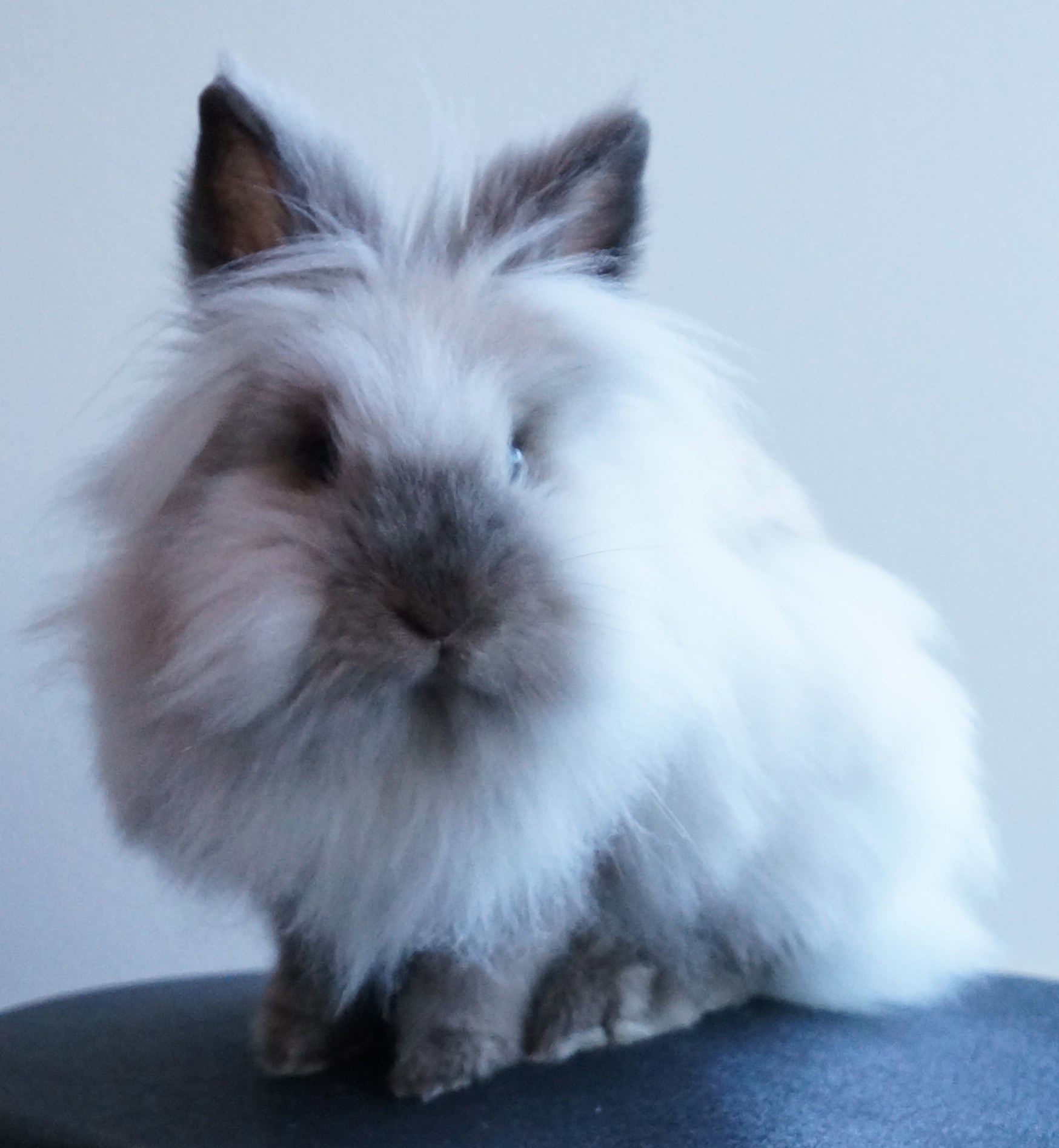
Overview
The Lionhead is the rabbit fancy's newest star: a dwarf breed carrying a single dominant gene that grows a mane of wool around the head — sometimes a modest ruff, sometimes a full leonine halo with matching flank skirts. Developed in Belgium and recognised in Britain in 2002 and America in 2014, it paired the look with a notably sweet, trainable temperament and became a pet-shop favourite within a decade.
Temperament & personality
Lionheads are friendly, patient, and playful — regularly described as one of the easiest small breeds for new owners. They enjoy interaction, learn routines and litter habits quickly, and tolerate the grooming their mane requires when it starts young and stays gentle. Energy is moderate: bursts of binkying play alternating with long, relaxed flops. As with all rabbits, neutering steadies hormones and deepens the bond.
Appearance
A small rabbit wearing a woolly mane: a ring of long fur around the head like a lion's mane — sometimes a double mane that also skirts the flanks — over a short, easy-care body coat. The head is bold and round, the ears upright and short (2–3 inches). Colours are wide-ranging: black, blue, chestnut agouti, orange, white, and tortoiseshell among them. The mane is longest in youngsters and often thins somewhat in adults.
Care & daily life
Lionheads need the standard rabbit foundation — unlimited hay, measured pellets, daily greens, space to run — plus mane management: gentle combing of the mane two or three times a week to prevent mats and wool block, stepping up during moults. Woolly breeds swallow a lot of hair when grooming, so hay volume matters doubly (fibre keeps ingested wool moving). Check under the mane for hidden mats and keep the rear clean and dry, especially in summer. Routine handling from kittenhood keeps grooming stress-free.
Health & lifespan
The Lionhead is generally known for the following health watch-points:
- Wool block — swallowed mane hair can obstruct the gut; high hay intake and regular grooming are the prevention
- Dental disease — the small, short head crowds teeth like other dwarf types
- GI stasis, the universal rabbit emergency
- Mats under the mane can hide skin irritation or flystrike in summer — check by touch, not just sight
- Uterine cancer in unspayed does
- Respiratory infections common to domestic rabbits
Living with a Lionhead
Lionheads suit gentle families, first-time rabbit keepers who are happy to groom, and anyone wanting a small, friendly house rabbit with real visual character. They litter-train well and bond readily, especially in neutered pairs. Budget 7–10 years of daily care with the mane routine as the breed's extra — a few minutes with a comb, several times a week, for a rabbit that looks like a tiny king.
History
The Lionhead is one of the newest rabbit breeds: it appeared in Belgium (reports also credit French development) in the later 20th century, most likely from crosses involving Swiss Fox and dwarf breeds, carrying a new dominant mane mutation. British breeders developed it through the 1990s; the British Rabbit Council recognised it in 2002, and the ARBA followed in 2014 — making it one of the most recent additions to the American standard. Its rise from curiosity to pet-shop staple took barely a generation.