Overview
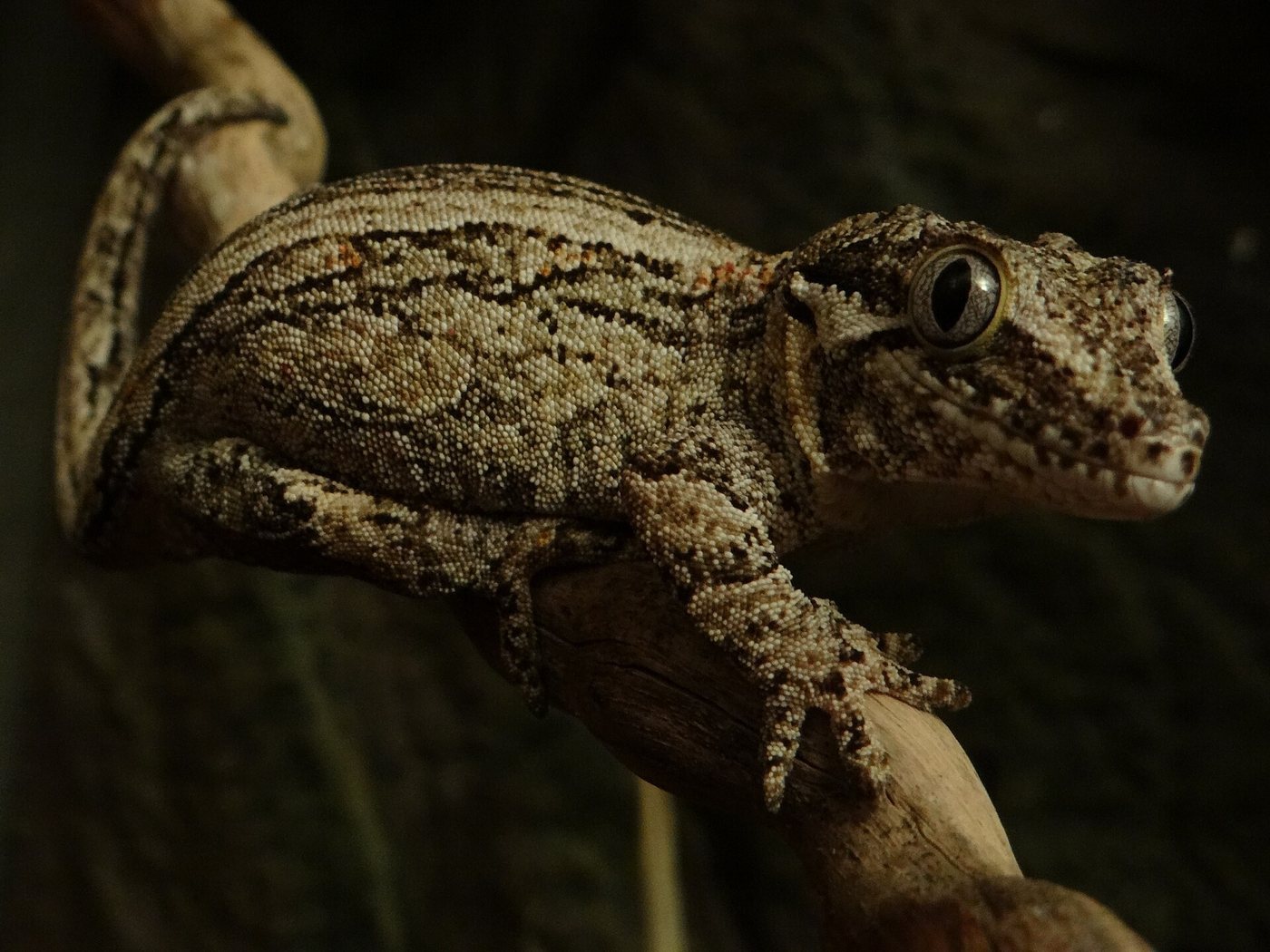
The gargoyle gecko is named for the bumps and horns on its skull, which give it the look of a tiny stone carving come loose from a cathedral. Also from New Caledonia and a close cousin of the crested gecko, it shares the easy room-temperature keeping and powdered-diet convenience, but is a heavier, sturdier, more predatory animal — keener on live insects, more confident in hand, and able (unlike the crested) to regrow a lost tail. Reticulated, striped, and blotched morphs in greys, browns, oranges, and reds make it a collector's favourite too.
Temperament & personality
Gargoyles are the extroverts of the New Caledonian geckos: bolder than cresteds, more inclined to sit out in view, and more enthusiastic hunters that will launch themselves at roaches with real commitment. Handling tolerance is generally good in adults raised with it, though youngsters can be skittish and all individuals can bite cage-mates — they are best kept singly, as tales of bitten toes and tails among cohabitants are common. Like their cousins they are nocturnal, firing into richer colour after dark.
Appearance
A stocky arboreal gecko with a big head armoured in bony knobs and horn-like projections over the eyes and skull — the 'gargoyle' look. The skin has a rough, bark-like texture and comes in three pattern families: reticulated (net-like), striped, and blotched, in palettes of grey, brown, cream, orange, and red, often on the same animal. Colours deepen dramatically at night ('fired up'). The tail is thinner than a crested's and, if lost, regrows — a genuine family distinction.
Care & daily life
Care closely follows the crested gecko recipe: an adult needs a vertical terrarium of about 18×18×24 in or larger, filled with branches, vines, and foliage; room temperature of 72–78°F suits them, and sustained heat over about 82°F is dangerous. Mist nightly to spike humidity toward 70% and let it fall to around 50% by day. Offer a quality powdered gecko diet (formulations made for the New Caledonian species) several times a week — but gargoyles are more insectivorous than cresteds, so live crickets and small roaches, dusted with calcium, should feature regularly, not as a rare treat. A shallow water dish completes the setup. House singly.
Health & lifespan
The Gargoyle Gecko is generally known for the following health watch-points:
- Metabolic bone disease if the diet and calcium dusting slip — kinked tails and soft jaws are warning signs
- Stuck shed on toes and tail tip in dry enclosures
- Regrown tails often come back shorter or differently patterned — not an illness, but note the original loss usually traces to stress or a cage-mate
- Bite wounds and lost toes from cohabitation — house singly
- Mouth rot and retained eggs in breeding females occur
Living with a Gargoyle Gecko
Gargoyle geckos suit keepers who like the crested gecko concept — no heat lamp, powder-mix diet, modest vertical tank — but want a bolder, more interactive hunter. The commitment is 15–20 years of nightly misting and regular live food. They are good first New Caledonian geckos, though their price runs higher than cresteds and their appetite for cage-mates' toes rules out communal setups.
History
Gargoyle geckos (Rhacodactylus auriculatus) come from the southern half of Grande Terre, New Caledonia's main island, where they live in scrub and forest edge, sheltering by day in burrows and low vegetation — more terrestrial in habit than the crested gecko. They were described in 1869 but remained rare in captivity until New Caledonian geckos became legally exportable through captive breeding in the 1990s; today all pets are captive-bred, and selective breeding has produced the vivid red and orange lines the hobby prizes.