Overview
The angelfish is the aquarium's aristocrat: a slow-gliding, tall-finned cichlid that inspects the world with unnerving intelligence and reduces every tank it enters to 'my tank, in which other fish are permitted.' It is gentle by cichlid standards and a fraud by name — angels are ambush predators that will methodically eat the neon tetras they were photographed beside in the shop. Kept with honest stocking, few fish are more rewarding: personable, beautiful, and long-lived.
Temperament & personality
Angels are individuals: keepers distinguish the bold beggar that owns the front glass from the shy one fined-tuned to the plants. Pairs form with real ceremony — lip-locking tests, joint territory patrols, meticulous cleaning of a chosen leaf — and defend eggs and fry against the world. Single angels in communities are usually serene, occasionally lording it over smaller neighbours, and always first to the food.
Appearance
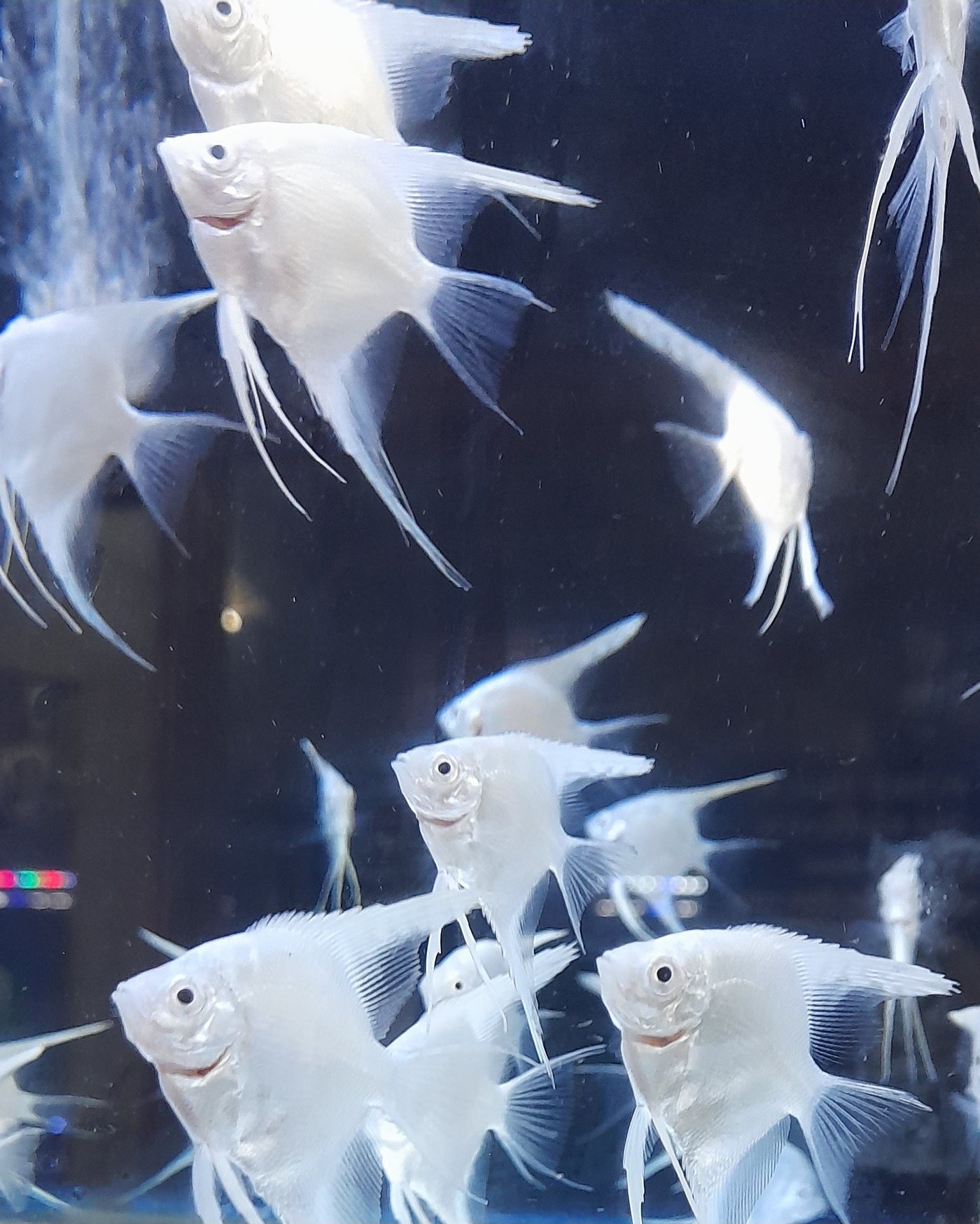
An angelfish is a discus-shaped cichlid drawn by a calligrapher: a deep, laterally compressed diamond body trailed by long, flowing ventral streamers and tall dorsal and anal fins that can double its apparent height. Wild silver fish carry four dark vertical bars that they can darken or pale with mood. Breeders have layered on marble, gold, black, koi (orange-white), platinum, and veil-fin varieties until the domestic angelfish barely intersects the Amazonian original — but the slow, deliberate glide and the intelligent, appraising stare are unchanged.
Care & daily life
Height is the housing currency: choose a tall tank (30 gallons minimum for a pair, a tall 55 for a group), with vertical decor — tall plants, driftwood spires — that gives angels structure to patrol and spawn on. Keep water at 76–82°F, clean and stable, with gentle-to-moderate filtration. Feed a quality cichlid pellet or flake as the base plus frozen bloodworms, brine shrimp, and daphnia; angels are enthusiastic feeders that learn the food cupboard's location quickly. Stocking is the art: one angel, a proven pair, or a group of five or six juveniles that can sort out a hierarchy in space. Tankmates should be mid-sized and calm — and never small enough to be eaten or nippy enough to shred those fins.
Health & lifespan
The Angelfish is generally known for the following health watch-points:
- Angelfish iridovirus — a serious farmed-fish disease causing lethargy and loss of appetite; buy from healthy stock
- Ich and velvet, common after temperature drops or shipping stress
- Hole-in-the-head disease (hexamita-related) in poor water
- Fin rot at the ends of those long fins when water quality slips
- Internal parasites in wild-caught or poorly held stock
Living with a Angelfish
Angelfish suit keepers with a tall tank and a centrepiece-fish mindset — one of the few fish that functions as a room's living focal point for a decade. They fit calm, mid-sized communities and planted setups. They do not suit nano tanks, barb-heavy rowdy communities, or any plan built around neon tetras as permanent residents. A breeding pair is a fascinating project in itself, and angels often spawn readily on a leaf or slate whether you planned it or not.
History
Angelfish come from the slow, flooded forests of the Amazon Basin, where their barred, blade-thin bodies disappear among submerged roots and reeds. Described to science in the 1820s and in the hobby by the early 1900s, Pterophyllum scalare became the mid-century aquarium's defining centrepiece fish. Decades of tank breeding have made domestics far hardier than their wild ancestors — a genuine success story of the ornamental trade — and produced the colour library aquarists now choose from.