Overview
Every veteran aquarist carries a story about a 'small pleco' that became a two-foot tankmate-removal problem; the bristlenose is the hobby's permanent answer to that story. A true dwarf among suckermouths at 4–5 inches, armoured, big-mouthed, and industrious, it delivers the pleco experience at community-tank scale. Two honest asterisks ride along: it eats algae helpfully but not comprehensively, and it manufactures waste on a scale its modest body never warned you about. Plan the filtration for the animal's output rather than its size and it is one of the best-value long-term pets on this shelf.
Temperament & personality
A bristlenose is a nocturnal groundskeeper with strong opinions about real estate. By day it holds its cave or the underside of its log, sucker parked, bristles (if male) displayed; by night it patrols, rasping wood and stone in long circuits. Males guard caves with theatrical flaring at rivals, and a breeding male fans his eggs without leaving to eat. Toward the rest of the tank it is serenely indifferent, and smaller fish treat it as furniture. It is not a fish that performs so much as one that, over years, becomes a tank's senior resident.
Appearance
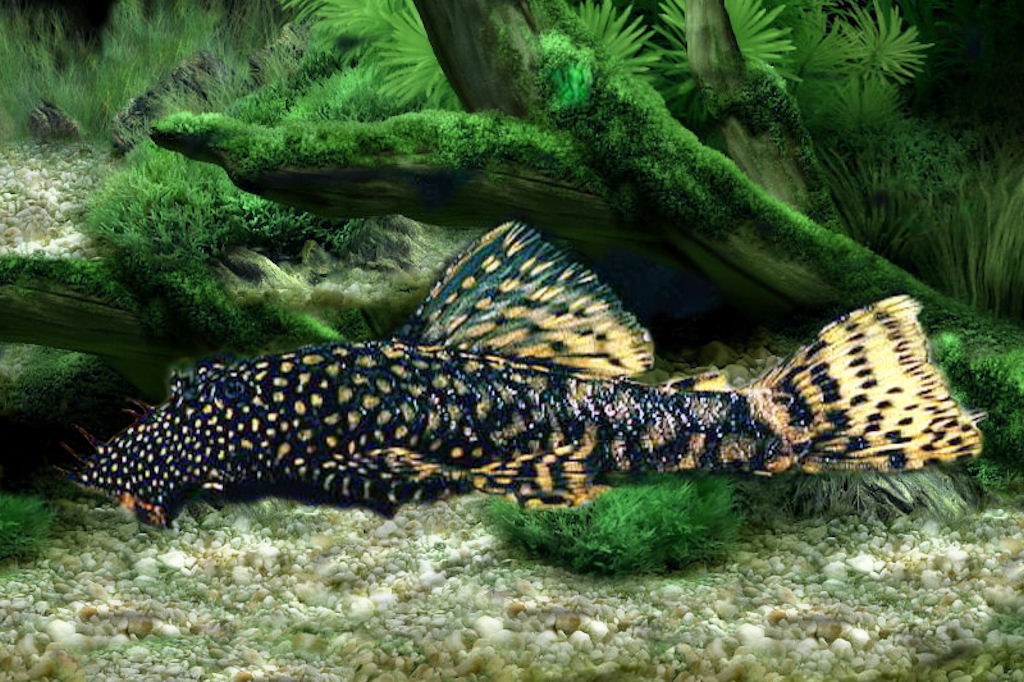
Four to five inches of armoured, speckled bottom-dweller wearing its name on its face: mature males grow a thicket of fleshy tentacles around the snout and head rim, like a beard designed by a committee of surrealists, while females carry few or none. The body is broad, flattened underneath, and studded with bony plates; colour runs from near-black through brown with pale speckles to albino gold and long-finned forms. A row of rasping teeth in the sucker mouth is the working end — an algae-scraping, wood-chewing bulldozer mouth on a fish that otherwise minds its own business.
Care & daily life
Set up a 30-gallon tank with a cave or two, plants that can take a knock, sandy or smooth substrate, and — this one is structural — driftwood, which bristlenoses rasp for fibre their digestion genuinely uses. Water at 73–82°F, decent filtration sized generously, because the waste load is real. Feed as a herbivore with hobbies: algae wafers and grazing foods as the staple, blanched zucchini, cucumber, and peas in rotation, plus occasional bloodworms or shrimp pellets, especially for growing juveniles and conditioning pairs. One male per tank unless the footprint is large and broken by decor — males fight over caves with genuine commitment. Keep a lid on; plecos occasionally wander.
Health & lifespan
The Bristlenose Pleco is generally known for the following health watch-points:
- Constipation and bloat from protein-heavy diets without vegetable fibre and wood
- Hunger in over-clean tanks — sunken belly on a fish surrounded by 'nothing to eat'
- Ich and fin rot in poor water; armoured skin hides early signs, so behaviour is the tell
- Cave-fight injuries between males — torn fins and scraped heads
- Growth stunting and organ damage in chronically undersized, underfiltered setups
Living with a Bristlenose Pleco
Bristlenoses suit community tanks of 30 gallons and up with caves and wood, beginner catfish keepers graduating from corys, and anyone who wants a prehistoric-looking character working the night shift. They are wrong for pristine showcase tanks where their waste strings offend the eye, nano tanks of any description, and tanks with other cave-claiming males of their own kind. The commitment is real: a healthy bristlenose is a ten-to-fifteen-year pet, not a disposable cleaner.
History
Bristlenoses are Ancistrus catfish from the Amazon's tributaries, where they cling to submerged wood in flowing water and rasp its surface. The common aquarium fish is of murky species identity — generations of mixing similar Ancistrus in the trade mean most shop bristlenoses are best called Ancistrus sp. — but the identity hardly matters to the hobby, which adopted the bristlenose wholesale as 'the pleco that stays small' after decades of common plecos outgrowing schoolroom tanks. That practicality, plus albino and longfin forms, made it one of the most-produced catfish on earth.