Overview
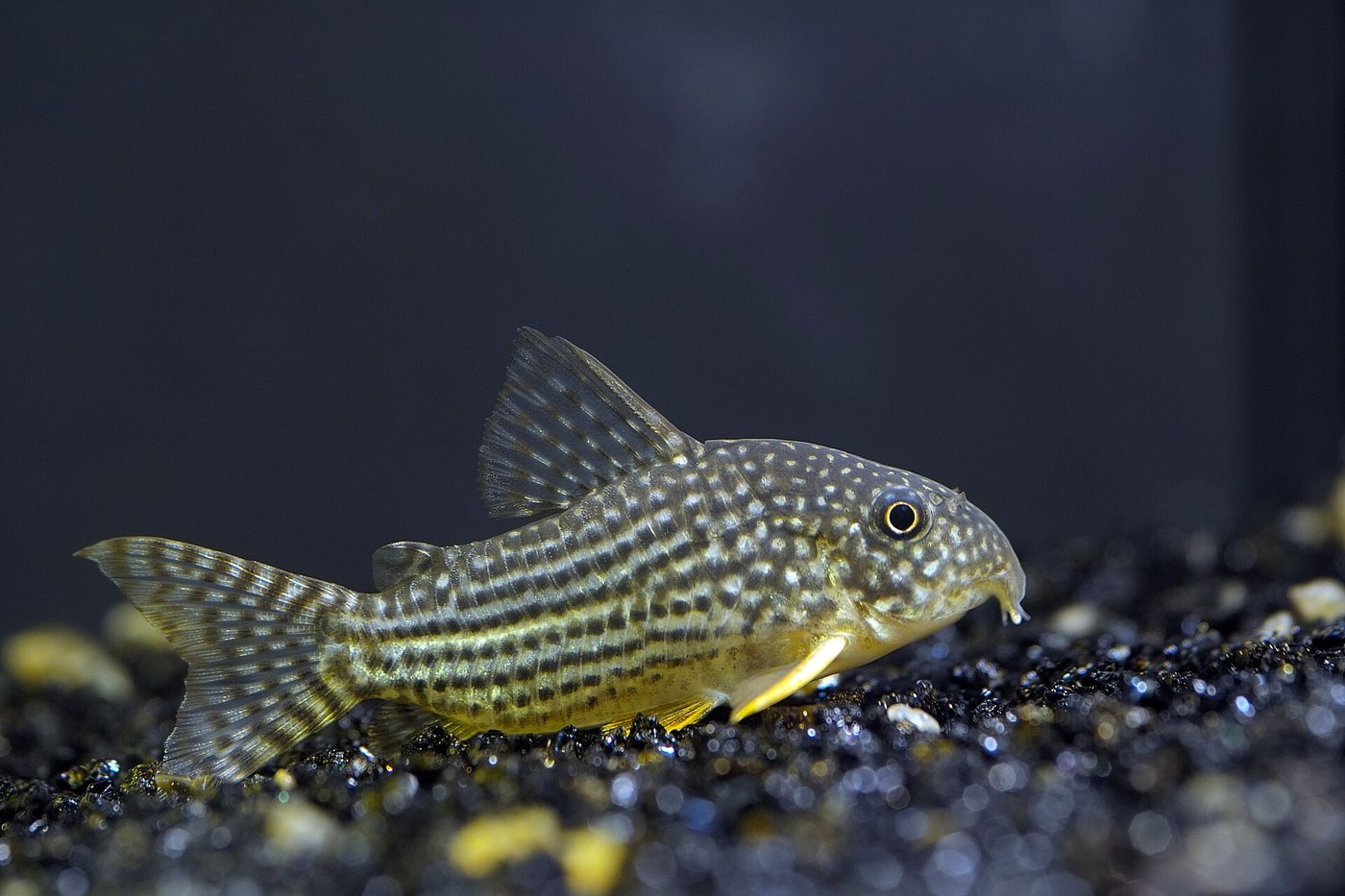
If the aquarium had a staff, corydoras would be the beloved night crew: whiskered, armoured, industrious, and completely unbothered by drama. They truffle through the substrate for morsels, pile up together to rest, wink (a real cory behaviour — they can swivel an eye), and occasionally rocket to the surface for a gulp of air. Hundreds of species strong, cheap, peaceful, and hardy, they might be the most purely likeable fish in the hobby — provided you buy them the group they are wired for.
Temperament & personality
Corys are social bottoms-up comedians: they dig with their whole faces, rest in companionable heaps, and follow each other around like a tiny conga line of vacuum cleaners. Individually shy for the first days, a settled group becomes bold and busy, active morning and evening. Their peacefulness is absolute — a cory has never started an argument in aquarium history — which makes them the standard against which 'peaceful community fish' is judged.
Appearance
Corydoras wear armour: rows of overlapping bony plates (scutes) instead of scales, a blunt whiskered face with three pairs of barbels for tasting the substrate, and a compact, bottom-hugging profile built for rooting around. Colours are workwear rather than evening dress — bronze, peppered black-on-silver, albino pink-white, emerald, the elegant black-and-gold stripes of sterbai — with the pygmy species small enough to vanish into a planted corner. The charm is in the behaviour: a row of corys lined up on the sand like parked blimps is a sight aquarists collect species to repeat.
Care & daily life
The cory brief is simple: soft substrate, same-species company, real food. Sand (or fine, smooth gravel) protects their barbels — the 'corys worn down on sharp gravel' photo is a hobby rite of passage best skipped. Keep six or more of one species, because a bronze cory does not count a panda cory as company in the way it needs. Feed sinking pellets and wafers deliberately at lights-out (tankmates steal slow bottom food), plus frozen bloodworms and daphnia — corys are carnivore-leaning hunters of insect larvae, not algae janitors, and a cory expected to live on leftovers starves politely. Moderate current, clean water, and a filter that doesn't sandblast the bottom complete the picture.
Health & lifespan
The Corydoras Catfish is generally known for the following health watch-points:
- Barbel wear and erosion — from sharp substrate or dirty bottoms; smooth sand and clean gravel are prevention
- Bacterial infections and 'cory rot' in poor water, often starting at the barbels and belly
- Ich and velvet, like most tropicals
- Ammonia burns in new or neglected tanks — bottom-dwellers live where waste settles
- Sensitivity to salt and some medications — dose carefully, and note corys can release a defensive toxin when severely stressed (as in a shipping bag)
Living with a Corydoras Catfish
Corys suit nearly every peaceful community tank of 20 gallons or more, planted setups that reward bottom interest, and beginners who want a fish that is essentially impossible to regret. The commitments are modest: sand, a group of six, deliberate feeding, and stable water. They are poor tankmates only for genuinely aggressive bottom-dwellers that bully them, and poor fits for bare, sharp-gravel tanks — otherwise, they are the hobby's universal solvent: every calm tank is better with corys in it.
History
Corydoras are South American river cats, from Amazonian blackwaters to faster Andean streams, and the genus is enormous — over 170 described species and hundreds more in the trade carrying code names ('C-numbers') while science catches up. Bronze corys were aquarium staples by the early 1900s; the modern hobby collects species like trading cards, spawning many of them with a cool-water change that mimics the rainy season. The air-gulping that surprises new keepers is an adaptation to oxygen-poor dry-season pools.